Chia seeds come from the *Salvia hispanica* plant and are tiny, oval, and dense, with a neutral flavor. Basil seeds, from *Ocimum basilicum*, are larger, smooth, shiny, and have a mild herbal taste. Nutritionally, chia offers more omega-3s, fiber, and protein, while basil seeds provide fiber and minerals. They also differ in how you prepare them—chia seeds are versatile, but basil seeds need soaking first. Continue exploring to discover how these differences can benefit your diet.

Get garden gear delivered free — and shop member deals
- Fast, free delivery on millions of items
- Access to Prime Big Deal Days deals on October 6–7
- Prime Video, Amazon Music and more included
Key Takeaways
- Chia seeds are small, dense, and oval-shaped, while basil seeds are larger, smooth, and glossy.
- Chia seeds are more nutrient-dense, rich in omega-3 fatty acids, fiber, and protein compared to basil seeds.
- Chia seeds have a neutral flavor, whereas basil seeds have a mild, herbal taste.
- Chia seeds can be used directly or soaked, but basil seeds require soaking for 10-15 minutes before use.
- Chia seeds are versatile in both sweet and savory dishes, while basil seeds are mainly used in beverages and specific desserts.
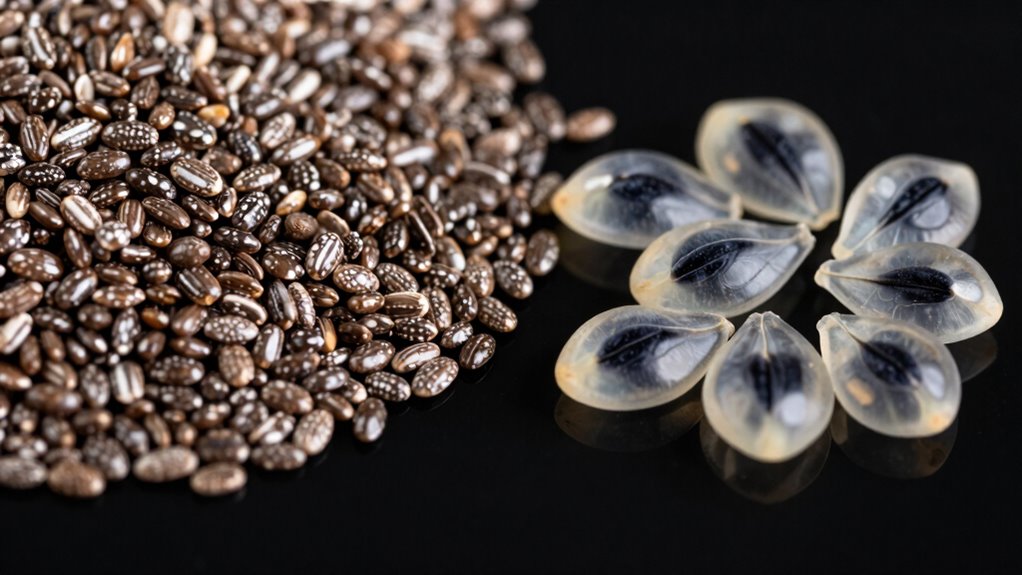
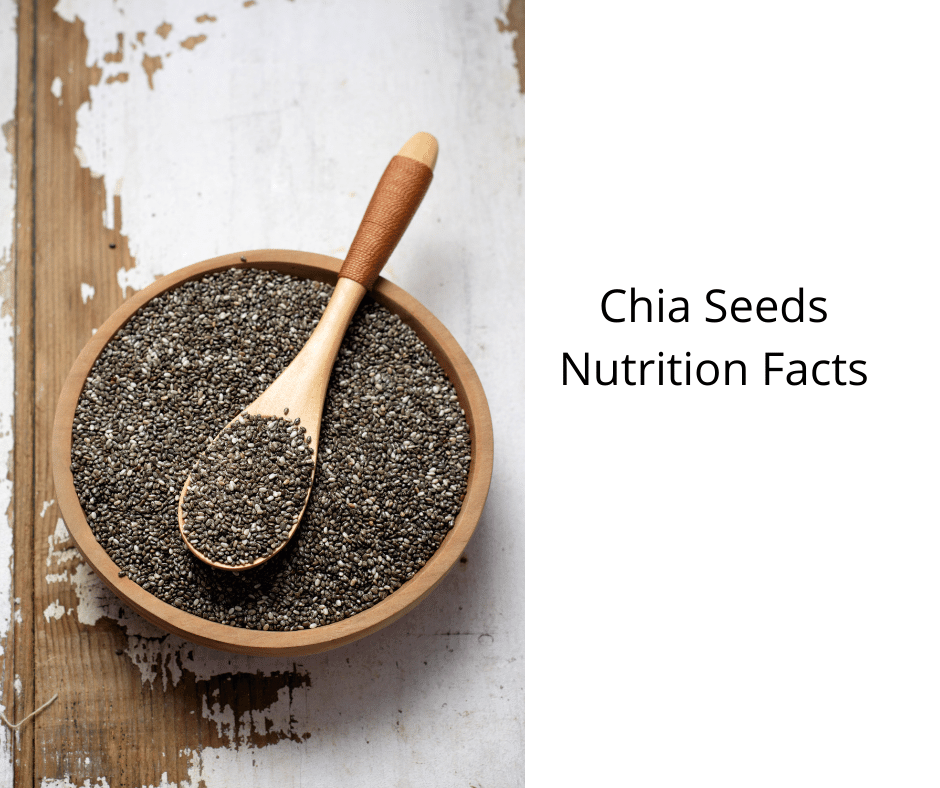
Have you ever wondered how chia seeds compare to basil seeds? Both are popular superfoods with unique qualities, but they differ markedly in their nutritional benefits and culinary uses. Chia seeds are tiny, oval-shaped seeds derived from the Salvia hispanica plant. They’re packed with omega-3 fatty acids, fiber, protein, and various micronutrients. These nutrients contribute to heart health, digestive health, and sustained energy levels. When it comes to culinary uses, chia seeds are incredibly versatile. You can sprinkle them over oatmeal, blend them into smoothies, or use them as an egg substitute in baking. Because they absorb liquid and form a gel-like consistency, they’re perfect for making puddings, thickening soups, or creating hydration-rich snacks.
Basil seeds, also known as sabja or tukmaria seeds, come from the Ocimum basilicum plant, the same herb used in cooking. They are larger than chia seeds and have a smooth, shiny exterior. Nutritionally, basil seeds contain fiber, some protein, and small amounts of minerals like calcium and magnesium. While their nutritional benefits aren’t as concentrated as chia seeds, they still support digestion and provide a cooling effect, especially when soaked in water. Culinary uses for basil seeds are quite different. They are most commonly soaked in water until they swell and develop a mucilaginous coating, which creates a gel. This gel is often used in beverages like flavored drinks or sherbets, especially in Asian and Indian cuisines, for its invigorating and cooling properties. Basil seeds are also added to desserts, such as falooda, or used as a topping for fruit salads and yogurt.
In terms of taste, chia seeds are quite neutral, making them adaptable to both sweet and savory dishes. Basil seeds have a mild, slightly herbal flavor that blends well with sweet drinks, but they’re not as versatile as chia seeds in cooking. When it comes to preparation, chia seeds are straightforward—just sprinkle or soak. Basil seeds require soaking in water for about 10-15 minutes before use, which can be a slight inconvenience but essential for their texture and flavor. Overall, while both seeds can be incorporated into your diet for their health benefits, chia seeds tend to be more flexible in everyday cooking, whereas basil seeds are favored for their unique texture and cooling effects in specific recipes. Understanding these differences helps you choose the right seed depending on your nutritional needs and culinary preferences.
organic chia seeds for smoothies
As an affiliate, we earn on qualifying purchases.
As an affiliate, we earn on qualifying purchases.
Frequently Asked Questions
Are Chia Seeds or Basil Seeds More Nutritious?
Chia seeds are more nutritious than basil seeds because they offer higher levels of omega-3 fatty acids, fiber, and protein, which contribute to better health benefits. In a nutritional comparison, chia seeds provide more antioxidants and essential nutrients that support your heart and digestion. Basil seeds do have some benefits, but chia seeds are generally considered a more concentrated superfood, making them the better choice for boosting your overall health.
Which Seed Is Better for Weight Loss?
Both chia and basil seeds can support weight loss, but chia seeds are generally better for your goals. Their neutral seed flavor makes them easy to add to meals, while their nutritional comparison shows higher fiber and omega-3 content. These qualities help you feel full longer, curb hunger, and boost metabolism. So, if weight loss’s your goal, chia seeds offer a more effective, versatile, and satisfying choice.
Do Both Seeds Have Similar Culinary Uses?
Both seeds have similar culinary uses, but their flavor profiles and texture differences set them apart. Chia seeds have a mild, neutral taste, making them versatile in smoothies, puddings, and baked goods. Basil seeds, however, have a slightly earthy flavor that complements drinks and desserts. Their texture also differs: chia seeds become gel-like when soaked, while basil seeds develop a slimy coating. You can experiment with both to enhance various recipes.
Are There Any Allergy Concerns With Either Seed?
You should be aware of seed allergy risks with chia and basil seeds, especially if you have nut or seed allergies. While rare, some people experience allergic reactions, so it’s best to test a small amount first. Cross reactivity concerns exist, as these seeds can trigger allergies in individuals sensitive to related plants. If you notice symptoms like itching or swelling, consult a healthcare professional before consuming these seeds regularly.
How Long Do Chia and Basil Seeds Stay Fresh?
Chia seeds typically stay fresh for about 2-4 years when stored properly, while basil seeds last around 1-2 years. To maximize seed preservation and maintain their freshness lifespan, keep them in an airtight container in a cool, dark place. Avoid exposure to moisture and direct sunlight. Proper storage guarantees you enjoy their benefits longer, preventing spoilage and preserving flavor and nutritional value.
As an affiliate, we earn on qualifying purchases.
Conclusion
So, when choosing between chia and basil seeds, remember that chia seeds contain about 138 calories per ounce and are packed with omega-3s, making them a great energy boost. Basil seeds, on the other hand, are lower in calories and mainly offer hydration and fiber. Notably, chia seeds can absorb up to 12 times their weight in water, highlighting their incredible thickening ability. Both seeds bring unique benefits, so pick what suits your health goals best!
As an affiliate, we earn on qualifying purchases.
As an affiliate, we earn on qualifying purchases.
Fall yard work Picks
leaf blowers
As an affiliate, we earn on qualifying purchases.