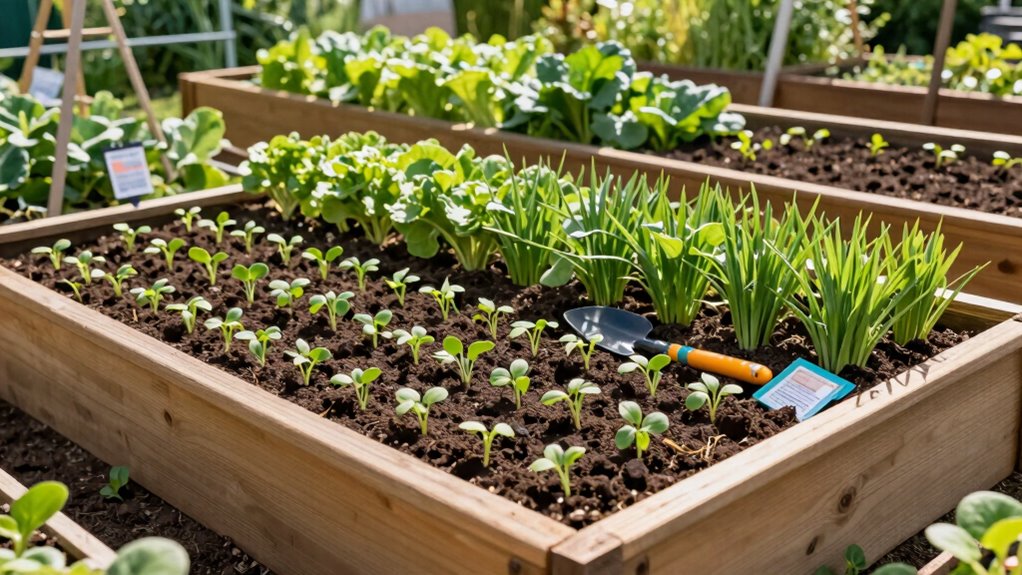
To build the best raised beds for seed crops, choose durable, non-toxic materials like cedar, composite, or recycled plastic to guarantee safety and longevity. Use a nutrient-rich soil mix with compost, peat moss, or coconut coir to improve drainage, warmth, and fertility. Incorporate physical barriers for pest control and design your beds with easy access in mind. Proper watering, mulching, and crop rotation help maintain healthy plants. Keep exploring to discover more expert tips for a thriving seed garden.
Key Takeaways
- Choose durable, safe materials like cedar, composite, or recycled plastic for long-lasting raised beds.
- Opt for a soil mix rich in compost, organic materials, and well-draining components suited to local climate.
- Design beds for easy access, maintenance, and optimal plant spacing to enhance seed germination and growth.
- Incorporate physical pest barriers and maintain plant health to minimize pest problems naturally.
- Mulch and ensure consistent watering to retain moisture, improve soil conditions, and support vigorous seedling development.
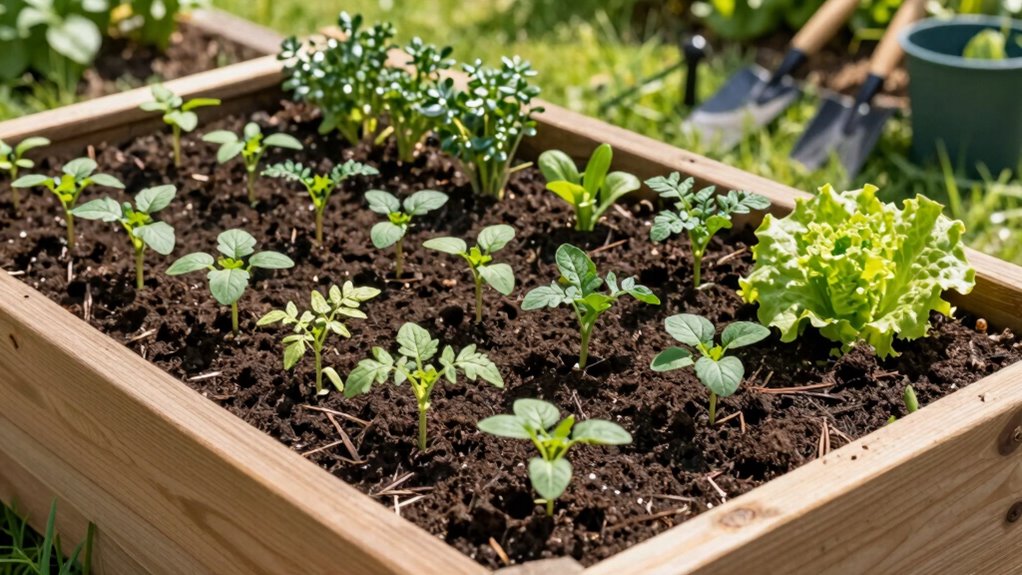
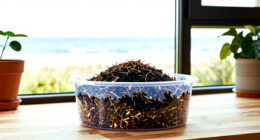
Starting a seed garden with raised beds can markedly improve your gardening success by providing better drainage, soil warmth, and easier access. When you’re setting up your raised beds, choosing the right soil mix is essential, and incorporating compost amendments can be a game-changer. Compost enriches the soil with necessary nutrients, improves structure, and boosts microbial activity, all of which promote healthy seed germination and vigorous growth. You’ll want a mix that’s well-draining yet moisture-retentive, ensuring your seeds have a stable environment to sprout and develop. You can also consider local climate conditions when selecting your soil components to optimize growth. As you fill your beds, blend compost with other organic materials like peat moss or coconut coir to achieve ideal texture and fertility.
Enhance seed growth with nutrient-rich, well-draining compost blended with organic materials in your raised beds.
When selecting materials for your raised beds, durability and safety should be top priorities. Wood is a popular choice, but opt for rot-resistant varieties like cedar or composite materials designed for garden use. Metal or recycled plastic beds are also effective, especially if you’re concerned about chemical leaching. Once your beds are ready, maintaining pest management is essential to protect your seedlings. Raised beds offer some natural advantages here, as you can easily install physical barriers such as row covers, mesh screens, or collars around vulnerable plants. Regularly inspecting your seedlings for pests like aphids, beetles, or snails lets you catch issues early and reduce the need for chemical controls. Implementing integrated pest management strategies can further reduce chemical reliance and promote healthier plants.
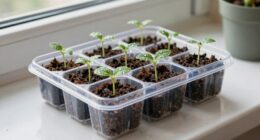
In terms of watering, raised beds tend to dry out faster than in-ground gardens, so you should plan for consistent moisture. Mulching the surface with straw or shredded bark helps retain soil moisture, suppress weeds, and keep soil temperatures steady. This creates a more stable environment for your seeds and young plants, enhancing germination rates. You also want to pay attention to the timing of your planting; starting seeds indoors and transplanting them into your raised beds once they’re strong enough can give you a head start on the growing season. Additionally, understanding foraging techniques can help you identify edible plants that might naturally thrive around your garden area and complement your cultivated crops.
Finally, think about the accessibility of your raised beds. Proper height and layout can make planting, watering, and harvesting easier, especially if you have mobility concerns. Remember that a well-designed raised bed isn’t just about planting; it’s a complete system that supports healthy growth through thoughtful soil amendments, pest management, and maintenance. Using soil testing can help ensure your soil remains balanced and optimal for seed germination. Incorporating plant rotation strategies can also prevent soil depletion and reduce pest buildup over time. With these considerations in mind, your seed garden will become a productive, manageable space that yields vibrant, healthy plants season after season.

Quictent Raised Garden Bed with Cover Outdoor Galvanized Metal Planter Box Kit, w/ 2 Large Screen Windows Mini Greenhouse 20pcs T Tags 1 Pair of Gloves Included for Growing Vegetables 6x3x1ft (Clear)
【Garden Bed with Greenhouse Kit】3 in 1 Galvanized raised garden bed kit, 1 kit equals 3 products: garden…
As an affiliate, we earn on qualifying purchases.
As an affiliate, we earn on qualifying purchases.
Frequently Asked Questions
How Deep Should My Raised Beds Be for Seed Starting?
For seed starting, your raised beds should be at least 8-12 inches deep. This depth guarantees good soil drainage, which prevents waterlogged roots, and provides enough space for seedlings to develop strong root systems. A deeper bed also helps with pest prevention by making it harder for pests to reach your plants’ roots. Maintain consistent moisture and use quality soil for healthy germination and growth.
What Materials Are Best for Constructing Raised Beds?
You should choose durable, non-toxic materials like cedar, composite, or recycled plastic for constructing raised beds. These options resist rot and pests, ensuring longevity. Incorporate quality compost blends to improve soil fertility, and always conduct soil testing beforehand. This helps you determine nutrient levels and pH, guiding amendments for ideal seed germination. Using the right materials and prepared soil creates a healthy environment to kickstart your seed crops successfully.
How Often Should I Water Raised Beds for Seed Germination?
You should water your raised beds daily during seed germination, keeping the soil consistently moist. Check soil temperature; it influences how often you water—warmer soil may need slightly more moisture. Guarantee proper seed spacing to prevent overcrowding, which can cause uneven moisture distribution. Regular watering maintains ideal conditions for germination, supporting healthy seedling growth. Adjust your watering schedule based on weather, soil moisture, and temperature to optimize seed success.
Can I Use Recycled Materials for Raised Bed Construction?
Yes, you can use recycled materials for your raised bed construction, but think of it as giving new life to old treasures. Before building, consider composting benefits and soil testing to guarantee your recycled materials won’t introduce toxins or imbalances. Avoid treated wood or plastics that may leach harmful substances. Using safe, recycled materials creates a sustainable garden that supports healthy seed growth and minimizes environmental impact.
What Are Common Pests to Watch for in Seed Beds?
You should watch for common pests like aphids, flea beetles, and caterpillars in your seed beds. To prevent pests, practice regular pest prevention strategies such as removing debris and encouraging beneficial insects like ladybugs and lacewings. These helpful insects prey on pests naturally, reducing the need for chemical controls. Keep a close eye on your plants, and act early to protect your seedlings from damage.

Maple99 Raised Garden Bed with Legs 48x24x30 – Natural Cedar Wood Elevated Planter Box with Bed Liner for Flowers, Veggies, Herbs – 200lb Capacity
Elevate Your Garden – Opt for a brilliantly engineered raised garden bed to revolutionize your gardening. Its spacious…
As an affiliate, we earn on qualifying purchases.
As an affiliate, we earn on qualifying purchases.
Conclusion
Now that you’ve got the basics down, your raised bed is like a fertile canvas waiting for your seeds to paint a vibrant garden. With careful planning and the right materials, you’re shaping a thriving environment that nurtures your plants from seed to harvest. Think of your raised bed as a nest where each seed finds comfort and strength to grow. Happy gardening—your lush, fruitful masterpiece is just waiting to unfold.

10 X 33 FT Garden Mesh Netting Pest Barrier for Raised Beds, Fruit Tree Netting for Cicadas, Bird Insect Nettings for Gardening, Blueberry Bush Strawberry Nettings Cover for Garden Protection
Ultra-Fine Garden Mesh Netting: Our high-density garden netting has an ultra-fine mesh structure of 0.035 inches, which is…
As an affiliate, we earn on qualifying purchases.
As an affiliate, we earn on qualifying purchases.

Miracle-Gro Indoor Potting Mix for Seed Starting, For Starting Vegetable, Flower, and Herb Seeds Indoors, Excellent for Cuttings, 8 qt. (2-Pack)
Miracle-Gro Indoor Potting Mix for Seed Starting grows stronger roots for seeding success (vs unfed when used as…
As an affiliate, we earn on qualifying purchases.
As an affiliate, we earn on qualifying purchases.