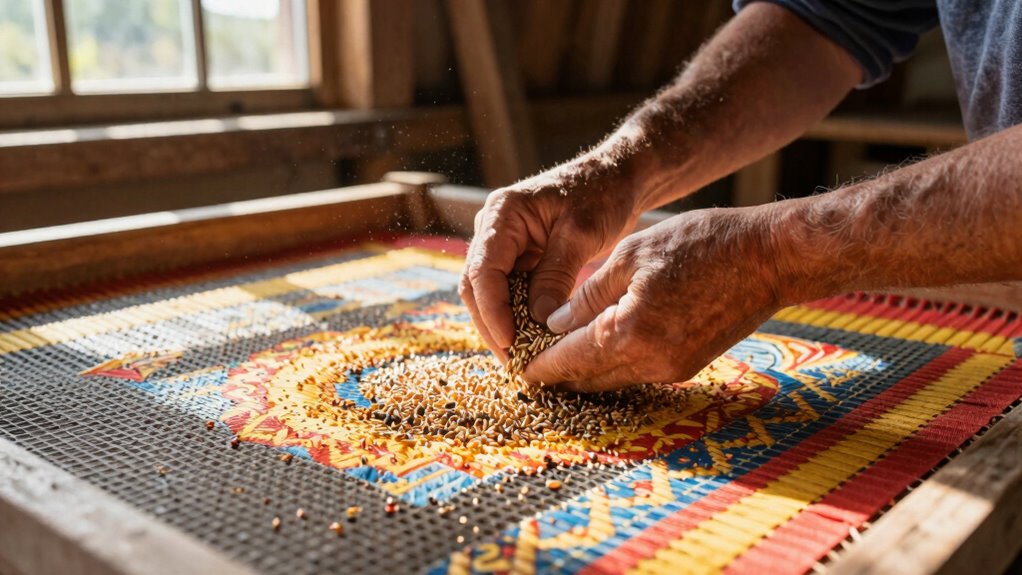

Cleaning seed by hand is slow, and winnowing alone never gets every bit of chaff, dirt, and shriveled seed out of the batch. That is where a set of mesh screens earns its keep: rub dried material across a coarse screen first, then run it through progressively finer mesh, and you end up with clean, storable seed in a fraction of the time. After comparing the options most small growers actually buy, two picks stand out. The ASR Outdoor 4-Piece Classifier Set is my top overall pick because its stackable, bucket-mounted design turns screen cleaning into a hands-free workflow, and its mesh range runs fine enough (down to 1/70-inch) for small seed. The 11.8 Inch 5-Pack Soil Sieve Set is my best value pick, giving you five dedicated mesh sizes in galvanized steel for less fuss and no screen swapping. The main tradeoffs you will weigh throughout this roundup are interchangeable screens versus separate sieves, steel versus plastic construction, and fine-mesh capability versus throughput.

Get garden gear delivered free with Prime
- Fast, free delivery on millions of items
- Prime Video, Amazon Music and more included
- Member-only deals all year
Complete the kit


Key Takeaways
- The ASR Outdoor classifier set wins overall because its stackable bucket-mounted design and 1/20-inch and 1/70-inch meshes handle even small seed, something none of the steel sieve sets can match.
- The 5-pack galvanized sieve set is the best value: five independent sieves mean no screen swapping mid-job, though the finest mesh is 2mm.
- The Vonoso‘s interchangeable 3mm to 12mm screens with an ergonomic handle make it the most comfortable single-unit option for growers with modest batches.
- The Tinyroots stainless set is built for precision work like bonsai and fine seed grading, but its one-cup capacity makes it impractical for processing harvests.
- Interchangeable-screen designs save storage space; separate-sieve sets save time during cleaning sessions — decide which matters more before buying.
| ASR Outdoor 4-Piece Gold Panning Classifier Screen Set |  | Best Overall | Screen Sizes: 1/2″, 1/8″, 1/20″, 1/70″ | Top Diameter: 13.25 inches | Bottom Diameter: 11 inches | VIEW ON AMAZON | See Our Full Breakdown |
| 11.8 Inch Soil Sieve Set, 5 Pack Garden Sifting Screens |  | Best Value | Mesh Sizes: 2mm, 3mm, 6mm, 10mm, 12mm | Diameter: 11.8 inches | Material: Galvanized steel | VIEW ON AMAZON | See Our Full Breakdown |
| Vonoso Multi-Purpose Soil Sifter with Handle and 4 Interchangeable Screens |  | Best for Comfort and Light Batches | Mesh Sizes: 3mm, 6mm, 9mm, 12mm | Diameter (with handle): 13 inches | Weight: 1.1 pounds | VIEW ON AMAZON | See Our Full Breakdown |
| Tinyroots 4-Piece Soil Sieve Set (Joshua Roth M6103) |  | Best for Fine Precision Work | Mesh Sizes: .1″, .2″, .25″ | Diameter: 12 inches | Material: Stainless steel | VIEW ON AMAZON | See Our Full Breakdown |
| seed cleaning screens for small grower | Material | Weight | Design | Mesh Sizes |
|---|---|---|---|---|
| ASR Outdoor 4-Piece Gold Panni | ABS plastic frames with 304 stainless steel mesh | 5.2 pounds | Stackable, interlocking, bucket-mounted | — |
| 11.8 Inch Soil Sieve Set | Galvanized steel | — | Independent, stackable sieves | 2mm, 3mm, 6mm, 10mm, 12mm |
| Vonoso Multi-Purpose Soil Sift | Rust-resistant metal | 1.1 pounds | Single frame with interchangeable screens | 3mm, 6mm, 9mm, 12mm |
| Tinyroots 4-Piece Soil Sieve S | Stainless steel | Approximately 0.5 pounds | — | .1", .2", .25" |
More Details on Our Top Picks
ASR Outdoor 4-Piece Gold Panning Classifier Screen Set
This classifier set takes the top spot for one reason that matters more than anything else in seed cleaning: its 1/20-inch and 1/70-inch meshes. Most soil sieves bottom out at 2mm, which is too coarse to separate small seed from grit and fines. With this set, a grower can build a genuine grading line — 1/2-inch breaks up dried pods and stalks, 1/8-inch drops most seed through while holding back chaff, and the two fine meshes finish the job. No other product in this lineup offers that range.
The stackable, interlocking design is the second differentiator. Each screen locks onto the next and the whole stack sits on a standard 5-gallon bucket, so material cascades from coarse to fine in a single pour. Compared with the Vonoso, where you must swap mesh inserts between passes, this workflow saves real time once batches get above a few cups. The ABS plastic frames keep the set light enough to shake one-handed, though that plastic is the honest weakness here: drop a loaded screen on concrete or pry at a jammed screen and a corner can crack, something the all-steel 5-pack set never worries about.
The stainless mesh itself is 304-grade and rust-resistant, so washing seed under a hose will not degrade it. This pick makes the most sense for growers who want a complete, fine-enough system and already own a bucket. Compared with the Tinyroots set, you give up premium frame materials but gain four working sizes and bucket-mount convenience instead of a one-cup handheld scoop.
Pros:- Mesh range down to 1/70-inch handles small seed no soil sieve in this lineup can grade
- Stackable, interlocking screens mount on a standard 5-gallon bucket for hands-free cascade cleaning
- 304 stainless steel mesh resists rust through wet seed washing
- Lighter than steel sieve sets, easy to shake aggressively
Cons:- ABS plastic frames can crack under heavy or rough handling
- No handle, so shaking requires gripping the frame rim directly
- Coarsest screen (1/2-inch) is wider than needed for most seed work
Best for: Small growers who clean a range of seed sizes and want a stack-and-pour grading system fine enough for small seed
Not ideal for: Growers who want an all-metal setup or who are rough on tools and worried about cracked plastic frames
- Screen Sizes:1/2″, 1/8″, 1/20″, 1/70″
- Top Diameter:13.25 inches
- Bottom Diameter:11 inches
- Material:ABS plastic frames with 304 stainless steel mesh
- Weight:5.2 pounds
- Design:Stackable, interlocking, bucket-mounted
- Manufacturer:ASR Outdoor
- Model Number:GRSCCMB-4PC
Our verdict“The most complete seed cleaning system here, with the only mesh range fine enough for true small-seed grading.”
11.8 Inch Soil Sieve Set, 5 Pack Garden Sifting Screens
If the ASR set is a precision grading system, this 5-pack of independent sieves is the workhorse. Instead of one frame with swappable inserts, you get five complete sieves at 2mm, 3mm, 6mm, 10mm, and 12mm, each in galvanized steel. For seed cleaning, that means setting up two or three sieves side by side and moving material through them in sequence without ever stopping to change a screen — a workflow advantage over both the Vonoso and the Tinyroots sets.
The build is where this set justifies its value position. Galvanized steel holds its shape under repeated rubbing and scraping, and the mesh resists rust well enough for outdoor storage between seasons. At 3.5 pounds total across five sieves, each unit has reassuring heft compared with the 1.1-pound Vonoso, which translates to less flexing when you press dried seed heads against the mesh. The stackable design also means the whole set stores in the footprint of one sieve.
The honest limitation is the 2mm floor on mesh fineness. That is fine for tomato, pepper, squash, and most bean seed, but small seed like lettuce, onion, or poppy will pass right through with the fines — which is precisely why the ASR set ranks above it. This model is better suited to growers whose seed crops are medium to large in size and who value durability and speed over fine grading. For pure dollars-per-working-screen value, nothing else here comes close.
Pros:- Five independent sieves mean no mesh swapping mid-cleaning session
- Galvanized steel construction resists rust and holds shape under rubbing
- Stackable for compact storage
- Finer starting point (2mm) than most soil sieve sets for better seed grading
Cons:- Finest mesh is 2mm, too coarse for small seed
- No handle on any sieve, so shaking means gripping the rim
- Heaviest set in the lineup at 3.5 pounds total
Best for: Growers cleaning medium-to-large seed who want durable steel sieves and fast multi-screen workflow on a budget
Not ideal for: Anyone grading small seed, since the finest 2mm mesh lets it fall through with the debris
- Mesh Sizes:2mm, 3mm, 6mm, 10mm, 12mm
- Diameter:11.8 inches
- Material:Galvanized steel
- Number of Sieves:5
- Total Weight:3.5 pounds
- Dimensions:11.8 x 11.8 x 3.5 inches (stacked)
- Design:Independent, stackable sieves
Our verdict“The best combination of durability, mesh variety, and price for growers whose seed is big enough for 2mm mesh.”
Vonoso Multi-Purpose Soil Sifter with Handle and 4 Interchangeable Screens
The Vonoso solves a problem none of the other sets address: grip. Seed cleaning means minutes of vigorous shaking and rubbing, and the ergonomic handle on this 13-inch sifter makes that motion far less tiring than rim-gripping a bare sieve. For growers with wrist or hand issues, or anyone processing smaller batches at a table rather than over a bucket, that handle alone can decide the purchase.
The four interchangeable screens (3mm through 12mm) slot into a single frame, so storage stays compact — one unit, four discs — versus the five separate sieves of the 5-pack set. The rust-resistant metal frame and 1.1-pound weight make it pleasant to use one-handed. Where it falls short is throughput and fine grading: the 13-inch diameter limits how much dried material you can work per pass, and the 3mm finest mesh matches the 5-pack set’s weakness with small seed while offering one fewer size option overall.
Compared with the Tinyroots set, the Vonoso wins on capacity and versatility — it doubles as a genuine soil and compost sifter between seed seasons. Compared with the 5-pack, it wins on comfort and storage but loses on workflow speed, since swapping screens between grading passes interrupts momentum. This option stands out for the hobby grower who cleans seed a few times a year and wants one tool that earns its shelf space doing double duty in the garden.
Pros:- Ergonomic handle reduces hand and wrist fatigue during long shaking sessions
- Four interchangeable screens store compactly in one unit
- Rust-resistant metal stands up to outdoor use and washing
- Featherweight at 1.1 pounds for easy one-handed operation
Cons:- 13-inch diameter limits batch size
- Finest 3mm mesh excludes small-seed grading
- Screen swapping slows down multi-pass cleaning compared with separate sieves
Best for: Hobby growers with small batches who value a comfortable grip and a tool that doubles for soil sifting
Not ideal for: Growers processing large harvests or grading any seed smaller than 3mm
- Mesh Sizes:3mm, 6mm, 9mm, 12mm
- Diameter (with handle):13 inches
- Weight:1.1 pounds
- Material:Rust-resistant metal
- Volume:5,500 cubic centimeters
- Design:Single frame with interchangeable screens
- Brand:Vonoso
Our verdict“The most comfortable single tool here, best for light-duty growers who want grip and versatility over throughput.”
Tinyroots 4-Piece Soil Sieve Set (Joshua Roth M6103)
The Tinyroots set is the boutique option of this lineup, and it behaves like one. Its three interchangeable screens at .1″, .2″, and .25″ (roughly 2.5mm, 5mm, and 6.4mm) sit in a stainless steel frame that feels noticeably more refined than the galvanized 5-pack sieves. For growers who save tiny quantities of high-value seed — rare peppers, specialty flowers, breeding lines — that precision and finish have real appeal.
Where this set struggles is volume. It holds roughly one cup of material at a time, which is workable when grading a handful of breeding-line seed and painful when cleaning a season of beans. Every other product in this roundup processes multiples of that per pass: the ASR set takes a bucket-load at once, and both steel sieve sets offer wider working surfaces. The pricing also runs high for what is, mechanically, a small stainless sieve, and that premium is easier to justify for bonsai soil blending — its original purpose — than for bulk seed work.
Two things earn it a place despite those drawbacks. First, the .1-inch screen is among the finest in this lineup, genuinely useful for separating small seed from grit when the ASR’s 1/70-inch mesh is more than needed. Second, replacement screens are sold separately, so a torn mesh does not retire the whole set — a longevity point none of the competitors can claim. This pick makes the most sense for the meticulous small-scale seed saver; everyone else should buy the 5-pack or the ASR set instead.
Pros:- Stainless steel frame with the most refined build quality in the lineup
- .1-inch mesh handles fine grading for small seed lots
- Replacement screens available separately, extending the set’s life
- Compact footprint for bench-top and indoor use
Cons:- Holds only about one cup per pass, the smallest capacity here
- Premium price for a mechanically simple tool
- Three mesh sizes offer the narrowest range of the roundup
Best for: Meticulous seed savers and bonsai growers working in small, high-value batches
Not ideal for: Anyone processing volume — the one-cup capacity makes harvest-scale cleaning tedious
- Mesh Sizes:.1″, .2″, .25″
- Diameter:12 inches
- Material:Stainless steel
- Number of Pieces:4 (frame plus 3 screens)
- Capacity:Approximately 1 cup
- Weight:Approximately 0.5 pounds
- Model Number:M6103
- Brand:Joshua Roth Limited / Tinyroots
Our verdict“A precision instrument for small, valuable seed lots rather than a harvest-processing tool.”

How We Picked
Since seed cleaning is a niche use for products mostly marketed toward soil sifting and gold prospecting, I judged each set against what a small-scale seed grower actually needs. My first criterion was mesh range: cleaning seed well means starting coarse to break up pods and chaff, then stepping down to separate good seed from fines, so sets with a wide range of sizes scored higher. Second, I weighed workflow design — whether screens stack, fit a bucket, or require swapping mesh inserts mid-job, because that directly affects how quickly a harvest moves through the line. Third, I considered build material: galvanized and stainless steel resist rust when screens stay damp after washing, while plastic frames trade durability for weight savings. Fourth, I looked at capacity and throughput, since a grower cleaning a season’s worth of tomato or pepper seed has different volume needs than someone grading a handful of rare flower seed. Finally, I factored in storage footprint and whether the set includes redundant or genuinely useful sizes. No single set wins every category, which is exactly why the ranking below orders them by distinct strengths.
| seed cleaning screens for small grower | Material | Design | Model Number | Brand |
|---|---|---|---|---|
| ASR Outdoor 4-Piece Gold Panni | ABS plastic frames with 304 stainless steel mesh | Stackable, interlocking, bucket-mounted | GRSCCMB-4PC | — |
| 11.8 Inch Soil Sieve Set | Galvanized steel | Independent, stackable sieves | — | — |
| Vonoso Multi-Purpose Soil Sift | Rust-resistant metal | Single frame with interchangeable screens | — | Vonoso |
| Tinyroots 4-Piece Soil Sieve S | Stainless steel | — | M6103 | Joshua Roth Limited / Tinyroots |
Factors to Consider When Choosing Seed Cleaning Screens For Small Growers
Choosing a seed cleaning screen comes down to four questions: how fine your seed is, how much you process at once, how you want to work, and where the screens will live between seasons. Here is how I would think through each one.Match Mesh Size to Your Seed
Mesh size is the single most important spec. As a rule, your final screen should be fine enough to hold good seed back while letting broken seed, grit, and dust fall through. Tomato and pepper seed (roughly 2-4mm) works with a 2-3mm final mesh; lettuce, onion, poppy, and many flower seeds need mesh at 1mm or finer, which only the ASR set’s 1/20-inch and 1/70-inch screens provide in this lineup. Beans, squash, and corn are forgiving — nearly any mesh here handles them. Check your actual seed size against the mesh chart before buying, not after.
Interchangeable Screens vs. Separate Sieves
Interchangeable-screen sets (Vonoso, Tinyroots) store compactly and cost less per mesh size, but every grading pass means stopping, emptying, and swapping the insert. Separate sieve sets (the 5-pack) let you line up three meshes and work through them in sequence without breaking rhythm. For occasional small batches, either works; for processing a real harvest, separate sieves or the ASR’s stackable cascade design will save meaningful time.
Material and Longevity
Galvanized and stainless steel frames shrug off the damp conditions that follow seed washing, and steel mesh resists the puncturing that comes from rubbing woody pods and dried stalks. Plastic-framed screens like the ASR set trade some impact resistance for light weight and rust-proof frames. If your screens live in a shed and get washed often, lean steel; if weight or grip fatigue matters more, plastic has its place.
Capacity, Workflow, and Storage
Think through your actual cleaning session. A bucket-mounted stack lets you pour material through coarse-to-fine in one motion. A handled sifter works best at a table with a tray underneath. And a handheld precision sieve suits bench work with small lots. Also consider stackability: sets that nest or interlock take a fraction of the shelf space, which matters in a small grow room or tool shed.
Frequently Asked Questions
Can I use a soil sieve for cleaning seed, or do I need a dedicated seed screen?
Soil sieves work well for seed cleaning because the underlying task is identical — separating particles by size. The catch is mesh range: soil sieves are usually designed to remove rocks and debris from potting mix, so their finest mesh is often 2mm or coarser, which lets small seed fall through with the dust. For medium and large seed like beans, squash, tomatoes, and peppers, a standard soil sieve set handles the job. For small seed, look for sets with sub-millimeter mesh, such as the ASR classifier’s 1/20-inch and 1/70-inch screens, since nothing coarser will hold that seed back.
What mesh sizes do I actually need for cleaning common garden seed?
A practical two- or three-screen line covers most crops. Start with a coarse screen around 6-12mm to break apart dried pods, heads, and stalks, then move to 2-3mm to drop the seed through while chaff stays behind, and finish with a fine mesh if you need to separate plump seed from shriveled seed and grit. For beans and corn, coarse plus 6mm is often enough. For tomatoes and peppers, add a 2-3mm step. For lettuce, onion, celery, and most flower seed, you need mesh finer than 1mm, which is where most soil sieve sets fall short and a fine classifier set earns its place.
Is galvanized steel safe for seed cleaning, or should I choose stainless?
Both are safe for dry seed cleaning. Galvanized coatings can show wear over years of scraping, but the zinc exposure is minimal and irrelevant for seed that will be planted rather than eaten unwashed. Stainless steel, as on the Tinyroots frame and the ASR mesh, is more corrosion-resistant and easier to keep clean if you wash seed in water — a common step for tomato and pepper seed fermentation and rinsing. If wet processing is part of your routine, lean stainless; if your screens stay dry, galvanized is a durable and economical choice.
How do I clean and maintain my seed screens between seasons?
Brush out dry residue with a stiff brush before it absorbs moisture, then wash the screens with warm soapy water and let them dry fully before storing — trapped moisture is what shortens a screen’s life, not the work itself. Check mesh for stretched or torn sections, especially at the rim where rubbing pressure concentrates. With interchangeable-screen sets, inspect the frame’s retention mechanism so screens stay seated. Store screens stacked in a dry spot away from soil and compost contact, and never leave one sitting wet in a bucket, which invites rust even on coated steel.
Is a gold prospecting classifier set really suitable for seed work?
Yes, and in some ways it is better suited than purpose-built soil sieves. Classifier sets are designed to sort material through a graded sequence of mesh sizes, which is exactly what seed cleaning requires, and their fine mesh options go well below what soil sieve sets offer. The bucket-mounting design is also a genuine advantage: you lock the stack onto a 5-gallon bucket, pour your material in at the top, and shake gently while each layer catches its fraction. The tradeoff is plastic frames, which need more careful handling than steel, but for mesh range and workflow, a classifier set is one of the strongest seed cleaning values available to a small grower.
Conclusion
The right pick depends mostly on what you grow and how much of it you clean. If you save a variety of seed, including anything small like lettuce, onion, or flowers, the ASR Outdoor classifier set is the clear choice — its fine mesh and stackable bucket workflow handle every grading step the other sets cannot. If your seed crops are beans, squash, corn, tomatoes, and other medium-to-large seed and you want durable tools at the best value, go with the 11.8-inch 5-pack galvanized sieve set. Growers with hand or wrist issues, or anyone who wants one comfortable tool that doubles for soil sifting, will be happy with the Vonoso handled sifter. And if you work in small, high-value lots — breeding lines, rare peppers, tiny flower seed — the Tinyroots stainless set rewards the precision it demands. Whichever you choose, buy for your smallest seed, not your biggest batch; mesh that is too fine can always be worked around, but mesh that is too coarse cannot.