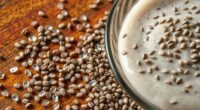
Consuming ALA from chia seeds helps support your heart health by reducing inflammation, lowering blood pressure, and improving cholesterol levels. As a plant-based omega-3, ALA promotes a healthier balance of fats in your bloodstream and can be converted into longer-chain benefits like EPA and DHA. Incorporating chia into your diet is simple and effective for ongoing heart support. To discover more about how ALA works and its benefits, keep exploring this essential nutrient.
Key Takeaways
- ALA from chia supports heart health by reducing inflammation and lowering blood pressure.
- Consuming chia seeds increases omega-3 intake, promoting healthier blood lipid profiles.
- ALA helps replace harmful saturated fats with beneficial plant-based fats in the diet.
- The body converts some ALA into EPA and DHA, which are vital for cardiovascular function.
- Regular chia consumption contributes to long-term heart health through sustained omega-3 intake.

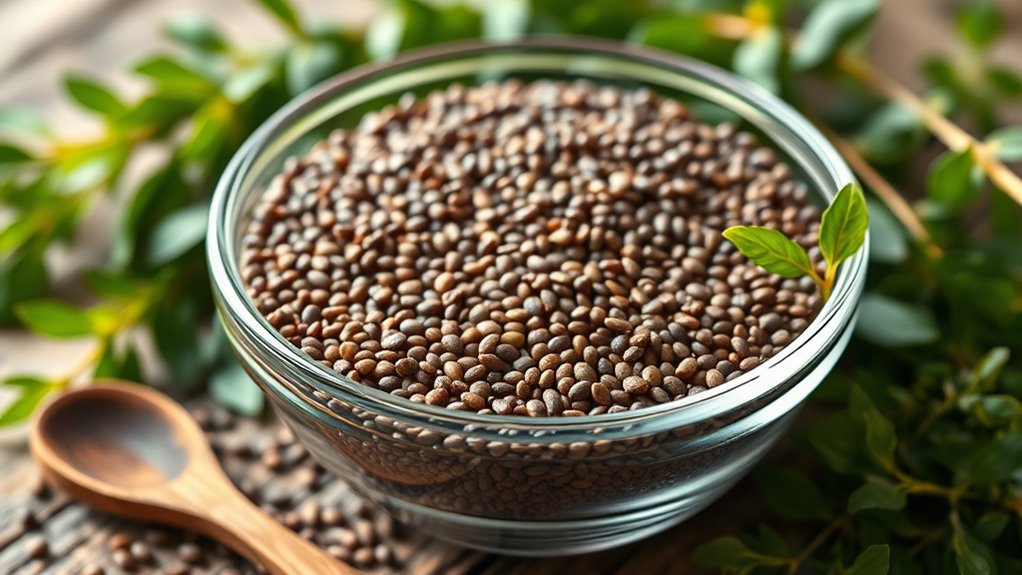
If you’re looking to support your heart health, incorporating chia seeds into your diet can be a smart choice. Chia seeds are rich in alpha-linolenic acid (ALA), a plant-based omega-3 fatty acid that plays a key role in cardiovascular wellness. Unlike fish oils, which are well-known omega-3 sources, chia provides a plant-based alternative perfect for vegetarians or anyone aiming to diversify their omega-3 intake. These tiny seeds are packed with healthy fats, primarily plant-based fats, that help reduce inflammation and improve overall heart function. Including chia seeds regularly can contribute to lowering blood pressure, decreasing triglyceride levels, and reducing the risk of heart disease.
Supporting heart health with chia seeds boosts omega-3 intake and promotes cardiovascular wellness naturally.
ALA from chia is an essential fatty acid, meaning your body can’t produce it on its own. You need to obtain it through diet. When you consume chia, your body converts some of the ALA into longer-chain omega-3s like EPA and DHA, which are directly linked to heart health benefits. Although the conversion rate isn’t very high, the presence of ALA itself is beneficial because it helps promote a healthier balance of fats in your bloodstream. This balance is vital since an excess of unhealthy saturated and trans fats can elevate your risk of cardiovascular issues. By replacing some of those fats with plant-based fats from chia, you’re giving your heart a natural shield.
Adding chia seeds to your meals is simple and versatile. Toss them into smoothies, sprinkle over oatmeal, or stir into yogurt. They absorb liquid and develop a gel-like consistency, making them a convenient thickener for puddings or dressings. Because they’re rich in fiber as well, chia seeds support healthy cholesterol levels, further protecting your heart. Their combination of omega-3s, fiber, antioxidants, and plant-based fats makes them a powerful, heart-friendly addition to your diet.
While omega-3 sources like fatty fish are often highlighted, chia offers a plant-based alternative that aligns well with vegetarian or vegan lifestyles. Consuming chia seeds regularly ensures you’re getting a steady supply of ALA, which can contribute to long-term heart health. Incorporating these seeds into your daily routine doesn’t require much effort but can have a significant impact on your cardiovascular health. With their rich profile of plant-based fats, chia seeds are an accessible, effective way to boost your intake of omega-3s and protect your heart naturally.
Frequently Asked Questions
Can ALA From Chia Prevent Heart Attacks?
ALA from chia can help reduce your risk of heart attacks by supporting a heart-healthy diet with good Omega 3 sources. While it may not directly prevent heart attacks, including chia seeds as part of a balanced diet can improve your cardiovascular health. Consuming Omega 3s from chia complements other heart-healthy habits, lowering inflammation and promoting better circulation, which are key factors in preventing heart issues.
How Much Chia Should I Eat Daily for Heart Benefits?
You might think you need a mountain of chia, but just 1 to 2 tablespoons daily is enough for heart benefits. That’s about 10 grams of ALA, which helps support your heart health. So, instead of trying to eat endless chia seeds, incorporate a manageable amount into your daily consumption—say, sprinkled on yogurt or smoothies. Your heart will thank you for that simple, effective daily chia intake.
Are There Any Side Effects of Consuming Ala-Rich Chia?
You might experience some side effects from consuming ALA-rich chia, especially if you have chia seed allergies, which can cause reactions like itching or swelling. Additionally, eating too much chia can lead to digestive discomfort, including bloating or gas, due to its high fiber content. To avoid these issues, start with small amounts and gradually increase your intake, and watch for any allergic symptoms.
Does ALA From Chia Interact With Heart Medications?
You should be aware that ALA from chia can interact with heart medications, especially blood thinners and blood pressure drugs. These drug interactions may enhance or reduce medication effectiveness, so it’s important to consult your healthcare provider before adding chia to your diet. Always follow medication precautions, and inform your doctor about any supplements to avoid unexpected side effects or interference with your treatment plan.
Can ALA From Chia Improve Cholesterol Levels Quickly?
Yes, consuming chia seed nutrition can help improve your cholesterol levels, thanks to its heart-healthy fats like ALA. While some individuals may notice changes within a few weeks, it generally takes consistent intake over several months to see significant improvements. Incorporate chia seeds into your diet regularly, such as adding them to smoothies or oatmeal, to support your heart health and better manage cholesterol levels over time.
Conclusion
Incorporating chia seeds into your diet can markedly boost your heart health, thanks to their high ALA content. Studies show that just one tablespoon of chia provides about 2.5 grams of ALA, which can help reduce inflammation and lower blood pressure. By making small, consistent changes like adding chia to your meals, you support your cardiovascular system and potentially cut your risk of heart disease by up to 25%. Small steps can make a big difference in your health.