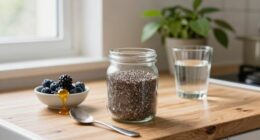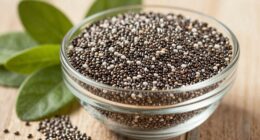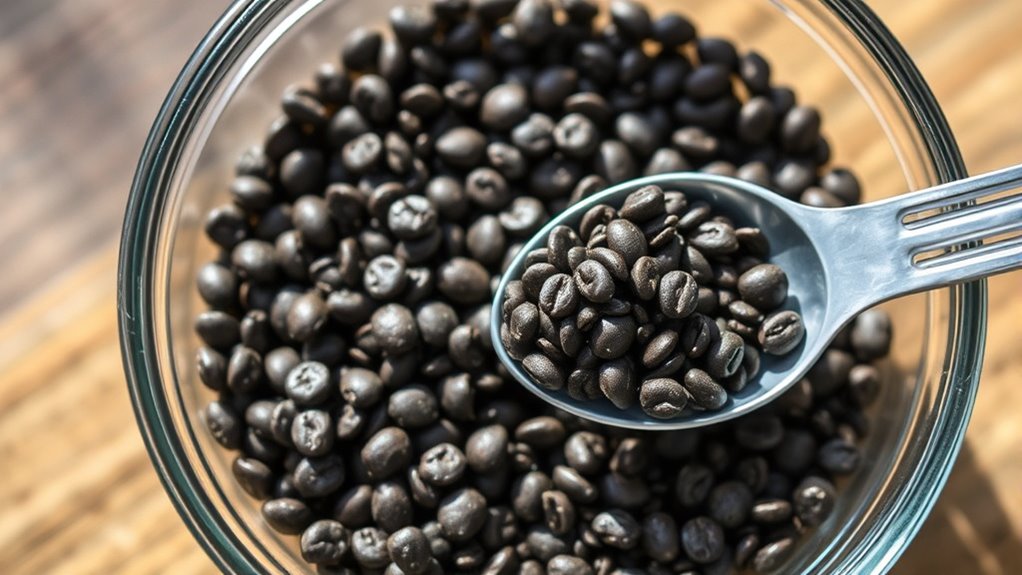

To manage chia seed portions, use measuring tools like tablespoons or a kitchen scale to avoid overeating. Since they pack about 138 calories per ounce, sticking to small servings such as 1 tablespoon (roughly 69 calories) helps you enjoy their health benefits without excess calories. Remember that chia seeds absorb liquid and expand, so moderate amounts help you stay full and on track with your nutritional goals. To discover more smart tips, keep exploring how proper portions can optimize your intake.
Key Takeaways
- Measure chia seeds with spoons or a scale to control serving size and prevent calorie overconsumption.
- Stick to small portions, such as one tablespoon (~69 calories), for balanced intake.
- Remember chia seeds absorb liquid, so use moderate amounts to avoid excessive volume.
- Incorporate chia into meals like yogurt or smoothies in controlled portions for maximum benefit.
- Be mindful of total daily intake to ensure calorie density aligns with your nutritional goals.
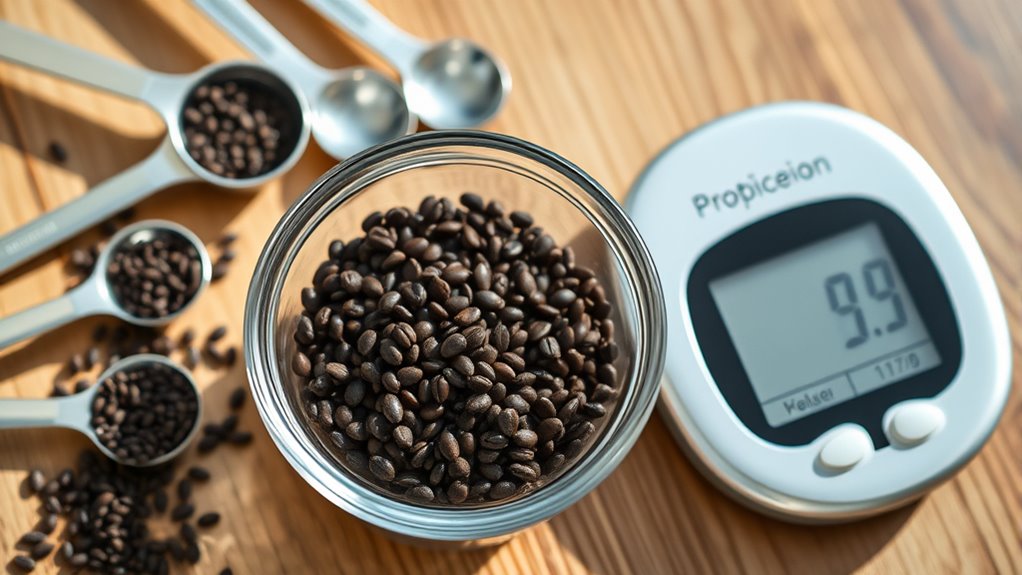
Chia seeds are often celebrated for their nutritional benefits, but understanding their caloric density can help you incorporate them more effectively into your diet. These tiny seeds pack a punch in terms of nutrient concentration, offering fiber, omega-3 fatty acids, protein, vitamins, and minerals in small servings. However, because they are calorie-dense relative to their size, portion control becomes essential to prevent unintentional calorie excess. Knowing how much to eat ensures you enjoy their health benefits without undermining your dietary goals.
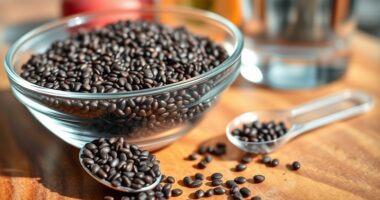
When you consider their caloric density, you’ll notice that chia seeds contain approximately 138 calories per ounce (about 2.5 tablespoons). That might seem modest, but if you’re not mindful of portions, it’s easy to overconsume and inadvertently increase your daily calorie intake. This is where portion control plays a pivotal role. By measuring your servings, you avoid the trap of mindless eating, which can happen when you use loose seeds directly from the package. Using a tablespoon or a kitchen scale helps you keep track, ensuring your intake aligns with your nutritional plan.
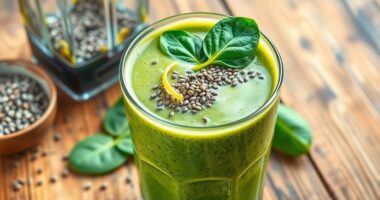
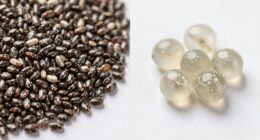
Incorporating chia seeds into your diet doesn’t mean you have to eat large quantities. Small portions can deliver the same benefits without excess calories. For example, a tablespoon of chia seeds adds around 69 calories—a manageable amount that boosts your fiber and omega-3 intake. You can sprinkle them on yogurt, blend them into smoothies, or stir them into oatmeal. Because they absorb liquid and expand, they create a feeling of fullness, which aids in controlling overall calorie consumption and curbing hunger.
Understanding nutrient concentration helps you make smarter choices. Chia seeds are a concentrated source of nutrients, so a little goes a long way. Instead of loading up on large servings, focus on balanced portions that complement your meals. This way, you get the health benefits—improved digestion, heart health, and sustained energy—without overdoing it on calories. Remember, the key is moderation; small, controlled servings allow you to enjoy chia seeds’ advantages without risking calorie overload.
Additionally, knowing how to properly shift gears on a gravel bike can help you maintain a steady cadence, which supports consistent energy expenditure and better control during your rides. Ultimately, managing your portions is the best way to harness the nutritional power of chia seeds while respecting their caloric density. By paying attention to serving sizes and integrating them thoughtfully into your meals, you maximize their benefits without compromising your dietary goals. Whether you’re aiming for weight management or simply seeking healthier eating habits, portion control ensures that chia seeds remain a beneficial, not burdensome, addition to your diet.

AUEAR, 5 Pack Tablespoon Coffee Scoop Plastic Measuring for Milk Powder Fruit Seed Spices
Material: The Coffee Measuring Spoons Made of Pp, Constructed of , Lightweight But Heavy – Duty
As an affiliate, we earn on qualifying purchases.
As an affiliate, we earn on qualifying purchases.
Frequently Asked Questions
Are Chia Seeds Suitable for All Dietary Restrictions?
Yes, chia seeds suit most dietary restrictions. They’re a great vegan option, providing plant-based omega-3s and fiber, and are naturally gluten-free, making them an excellent gluten-free choice. You can incorporate chia seeds into smoothies, oatmeal, or baked goods without worry. Just guarantee you’re mindful of portion sizes, especially if you’re watching caloric intake, but overall, they fit well into many specialized diets.
How Do Chia Seeds Affect Blood Sugar Levels?
You might be surprised by how chia seeds influence blood sugar levels. They promote blood sugar regulation by slowing the absorption of carbohydrates, which helps prevent spikes. Their high fiber content and healthy fats reduce the carbohydrate impact, making them a smart choice for steady energy. Incorporate chia seeds carefully into your diet, and you’ll notice a smoother blood sugar response, supporting overall metabolic health and keeping cravings in check.
Can Chia Seeds Be Consumed Daily Without Health Risks?
Yes, you can consume chia seeds daily without health risks. They offer impressive nutritional benefits, like omega-3 fatty acids, fiber, and antioxidants. Just make sure to include them in your diet in moderation, as part of a balanced diet. Drinking plenty of water helps prevent digestive discomfort. Listening to your body and consulting with a healthcare provider guarantees your daily consumption supports your health goals safely.
Do Chia Seeds Interfere With Medication Absorption?
Chia seeds can interfere with medication absorption if you consume them around the same time, due to their high fiber content. This fiber may slow down or reduce the absorption of certain medications, especially those taken orally. To avoid medication interactions, it’s best to wait at least one to two hours after taking medication before adding chia seeds to your diet. Always consult your healthcare provider for personalized advice.
What Are Creative Ways to Incorporate Chia Seeds Into Meals?
Imagine a vibrant splash of color and texture on your plate—chia seeds can do that. You can sprinkle them over yogurt or oatmeal as breakfast toppings, adding crunch and nutrition. Blend them into smoothies for natural thickening and extra fiber, or mix into pancake batter for a nutritious boost. Their versatility makes it easy to elevate your meals with creative smoothie enhancements and eye-catching breakfast additions.
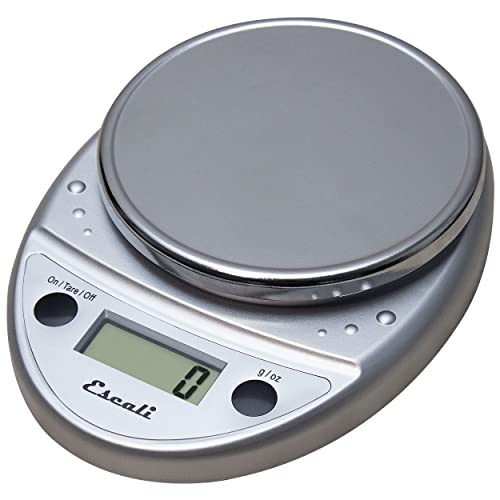
Escali Primo Digital Food Scale Multi-Functional Kitchen Scale and Baking Scale for Precise Weight Measuring and Portion Control, 8.5 x 6 x 1.5 inches, Chrome
The Escali Primo Digital Food Scale is multifunctional and feature an easy to use two-button operation; Sealed control…
As an affiliate, we earn on qualifying purchases.
As an affiliate, we earn on qualifying purchases.
Conclusion
Now that you know how chia seeds pack a caloric punch, it’s up to you to manage your portions wisely. But here’s the twist—what if the key to revealing their full potential lies in how you prepare and enjoy them? Could small tweaks make all the difference? Stay curious, experiment, and discover the surprising ways chia seeds can fit into your healthy lifestyle. The next step might just change everything—are you ready to find out?
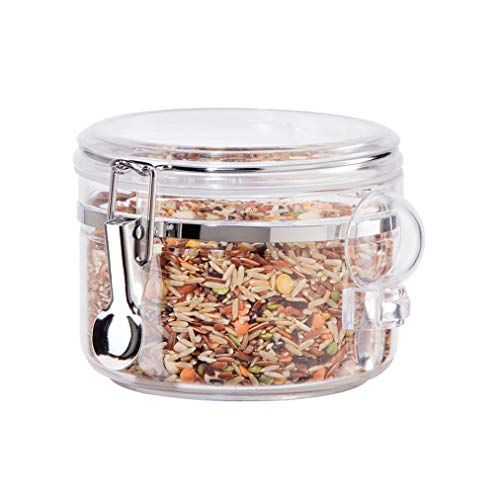
OGGI Clear Canister Airtight 28oz – Clamp Lid & Spoon – Airtight Food Storage Containers, Ideal for Kitchen & Pantry Storage of Bulk, Dry Food Including Flour, Sugar, Coffee, Rice, Tea, Spices & Herbs
VERY VERSATILE 28 fl oz CONTAINER: Great for storing cookies, sugar, flour, cereal, pasta, coffee, tea, spices, candy,…
As an affiliate, we earn on qualifying purchases.
As an affiliate, we earn on qualifying purchases.
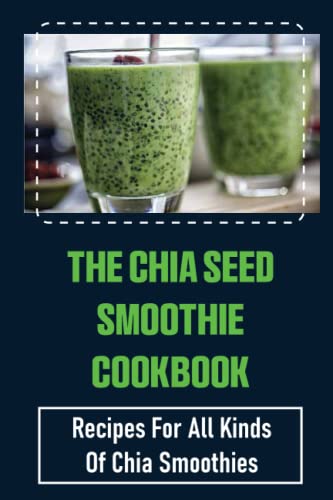
The Chia Seed Smoothie Cookbook: Recipes For All Kinds Of Chia Smoothies
As an affiliate, we earn on qualifying purchases.
As an affiliate, we earn on qualifying purchases.