Chia seeds contain both soluble and insoluble fiber, each offering unique health benefits. Soluble fiber dissolves in water to form a gel-like substance that helps regulate blood sugar and lower cholesterol, while insoluble fiber adds bulk to your stool and promotes regular digestion. Together, they create a balanced gut environment, support digestion, and boost satiety. To discover how these fibers work together to improve your health, keep exploring.
Key Takeaways
- Chia seeds contain both soluble and insoluble fiber, each offering unique health benefits.
- Soluble fiber forms gel-like substances that help regulate blood sugar and lower cholesterol.
- Insoluble fiber adds bulk to stool, promoting regular bowel movements and preventing constipation.
- The combination of both fibers enhances overall digestion and nutrient absorption efficiency.
- Including chia seeds in your diet supports gut health, satiety, and weight management through dual fiber benefits.
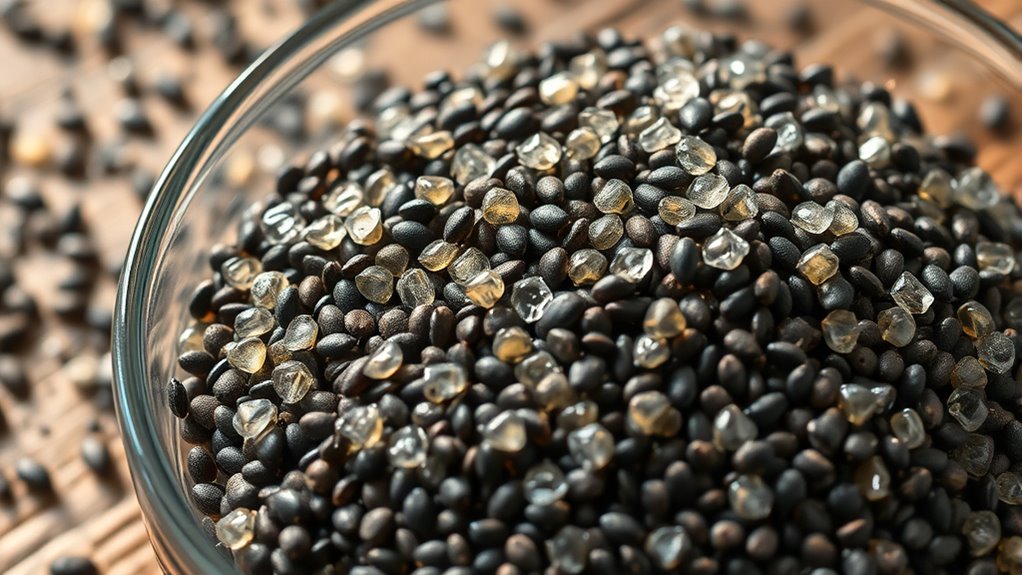
Have you ever wondered why chia seeds are praised as a superfood? It’s largely because of their impressive fiber content, which plays a vital role in your overall health. When you incorporate chia seeds into your diet, you’re not just adding a tiny nutritional boost—you’re supporting your digestion and promoting better gut health. One of the reasons chia seeds are so effective is their ability to enhance chia seed digestion. The fiber in these tiny seeds forms a gel-like substance when it absorbs water, which helps slow down digestion and allows your body to better process nutrients. This gel acts as a buffer in your stomach, giving your digestive system more time to extract nutrients efficiently. As a result, your fiber absorption efficiency improves, meaning your body makes the most of the fiber’s benefits.
Understanding the types of fiber in chia seeds is key. They contain both soluble and insoluble fiber, each offering distinct advantages. Soluble fiber dissolves in water, creating that gel-like consistency that you notice when you soak chia seeds. This type of fiber is especially good at helping regulate blood sugar levels and lowering cholesterol, which can support your heart health. Insoluble fiber, on the other hand, doesn’t dissolve in water. Instead, it adds bulk to your stool and helps move waste through your digestive tract more smoothly. Together, these fibers create a balanced environment in your gut, promoting regularity and preventing issues like constipation.
When you eat chia seeds regularly, the combination of soluble and insoluble fiber works synergistically to optimize digestion. The soluble fiber slows down the breakdown of food, giving your body more time to absorb nutrients, while insoluble fiber ensures waste moves swiftly through your intestines. This dual action enhances the overall efficiency of fiber absorption, making sure your body benefits from the full range of chia seed nutrients. Plus, because chia seeds swell and form that gel, they can help you feel full longer, which can support weight management efforts. Additionally, the fiber’s water-absorbing properties facilitate better digestion by maintaining hydration levels in your gut, further boosting nutrient absorption.
Incorporating chia seeds into your meals is simple. You can sprinkle them on yogurt, mix them into smoothies, or add them to oatmeal. Just remember to soak them beforehand to maximize their gel-forming properties and facilitate better digestion. When you do, you’re not only harnessing the power of their fiber but also promoting a healthier, more efficient digestive process. This improved fiber absorption efficiency means you get more nutrients from your food while supporting your gut health, making chia seeds an easy, effective addition to a balanced diet.
Frequently Asked Questions
How Much Chia Seed Fiber Should I Consume Daily?
You should aim for about 1.5 to 2.5 tablespoons of chia seeds daily to meet your fiber intake needs. This amount provides roughly 5 grams of fiber, contributing to your overall daily fiber consumption. Incorporate chia seeds into smoothies, yogurt, or oatmeal to easily boost your intake. Always listen to your body and increase your daily consumption gradually to avoid digestive discomfort.
Can Chia Seeds Help With Specific Digestive Issues?
You might find chia seeds helpful for digestive issues, as they support digestive health through their fiber benefits. The soluble fiber forms a gel-like substance that soothes your gut, while the insoluble fiber adds bulk, promoting regularity. This dual action helps alleviate constipation, reduce bloating, and improve overall digestion. Incorporate a tablespoon daily to enjoy these benefits, but always listen to your body’s response and consult a healthcare professional if needed.
Does Fiber From Chia Seeds Affect Blood Sugar Levels?
Yes, the fiber in chia seeds can influence blood sugar regulation by slowing carbohydrate absorption, which helps prevent spikes. This fiber also boosts insulin sensitivity, making your body respond better to glucose. When you include chia seeds in your diet, you support steady energy levels and better overall blood sugar management. Just remember to consume them with balanced meals for ideal benefits and to avoid any digestive discomfort.
Are There Any Side Effects From Eating Too Much Fiber?
Be careful—eating too much fiber can lead to fiber overload, causing unexpected digestive discomfort. You might experience bloating, gas, or even constipation if your intake exceeds your body’s capacity. While fiber is essential, overdoing it strains your digestion and can disrupt absorption of nutrients. Keep your intake balanced and gradually increase fiber to avoid these side effects, ensuring your gut stays happy and healthy.
How Does Soaking Chia Seeds Change Their Fiber Content?
Soaking chia seeds increases their fiber solubility, making the fiber easier for your body to digest. The seed soaking effects soften the seeds, releasing more soluble fiber that forms a gel-like consistency. This process enhances digestion, helps regulate blood sugar, and promotes feelings of fullness. By soaking, you improve nutrient absorption and make the fiber more beneficial, especially for gut health.
Conclusion
By incorporating chia seeds into your diet, you enjoy the combined benefits of soluble and insoluble fiber, supporting digestion and overall health. For example, imagine someone with occasional digestive discomfort adding chia to their smoothies; over time, they notice improved regularity and fewer bloating issues. This simple addition can make a meaningful difference, demonstrating how understanding fiber types empowers you to make smarter nutritional choices for lasting wellness.