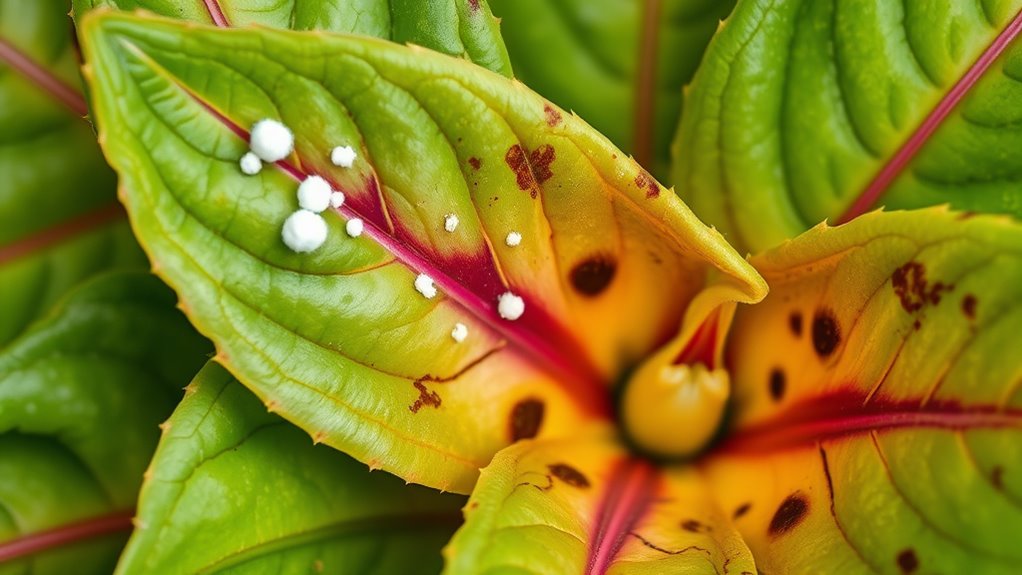

To safeguard your chia plants, watch out for pests like aphids, spider mites, and cutworms, which can cause damage and spread disease. Regularly inspect undersides of leaves and soil, and act quickly by removing pests manually or using organic options like neem oil or insecticidal soap. To prevent diseases, guarantee good drainage, avoid overwatering, and maintain airflow around plants. Keep these tips in mind to keep your chia healthy—more details await if you keep exploring.
Key Takeaways
- Regularly inspect chia plants for pests like aphids, spider mites, and cutworms, focusing on undersides of leaves and soil areas.
- Use biological controls such as ladybugs and organic insecticides like neem oil to manage pest populations effectively.
- Ensure proper watering, good soil drainage, and air circulation to prevent fungal diseases and root rot.
- Remove infected plant material promptly and practice crop rotation to reduce soil-borne diseases.
- Maintain sanitation, use disease-resistant varieties, and apply organic fungicides when necessary to control fungal infections.
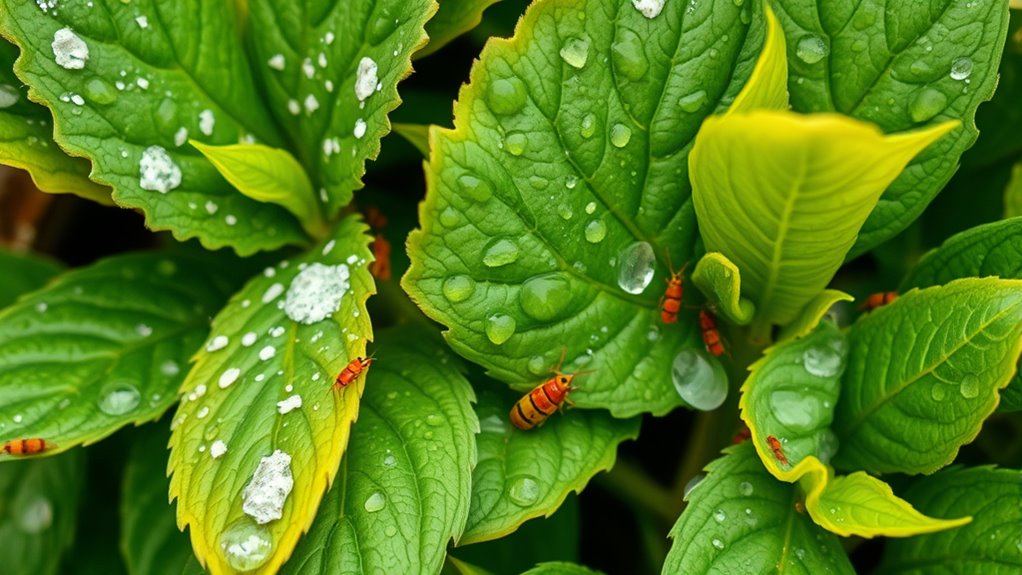
Chia plants, while relatively hardy, can still fall prey to various pests and diseases that threaten their growth and yield. Recognizing these issues early is essential for effective management. Pest identification is your first step; knowing what pests look like and how they behave helps you target the right control methods. Common pests include aphids, spider mites, and cutworms. Aphids are tiny, soft-bodied insects that cluster on new growth and can transmit plant viruses. Spider mites are minuscule, often causing stippling or webbing on leaves, which leads to leaf drop and weakened plants. Cutworms are caterpillars that cut down young seedlings at the base, often causing sudden wilting. Regularly inspecting your chia plants, especially the undersides of leaves and soil near the base, allows you to catch these pests early before they cause significant damage. Using integrated pest management strategies, such as introducing beneficial insects or applying organic insecticides, can effectively control pest populations without harming your plants or the environment.
Chia plants are hardy but susceptible to pests like aphids, spider mites, and cutworms.
Disease prevention methods are equally important to keep your chia healthy. Many diseases stem from overwatering, poor drainage, or contaminated tools. To prevent fungal infections like root rot or mold, ensure your soil drains well and avoid watering excessively. Using disease-resistant seed varieties can provide added protection. Good sanitation practices also play a key role—remove and destroy infected plant material promptly to prevent the spread of pathogens. Rotate crops annually to reduce soil-borne diseases and avoid planting chia in the same location year after year. Applying organic fungicides or neem oil can help create a protective barrier against fungal spores, especially during humid conditions that favor disease development.
If you notice pests on your chia plants, act swiftly. For aphids and spider mites, introducing natural predators like ladybugs or applying insecticidal soap can be effective. For cutworms, physically removing them or using barriers around seedlings can prevent further damage. When dealing with diseases, proper cultural practices are your best defense. Adjust watering habits, improve air circulation around your plants, and avoid overhead watering to minimize humidity and fungal growth. Keep tools sanitized to prevent spreading disease, and remove fallen debris that might harbor pathogens. Ensuring proper air circulation around your chia plants can significantly reduce the risk of disease development. If a disease becomes severe, applying organic fungicides as a last resort can help control its spread.
Ultimately, staying vigilant with pest identification and implementing sound disease prevention methods will keep your chia plants healthy and productive. Regular monitoring, good cultural practices, and quick responses to issues are your best tools for managing pests and diseases effectively. With these strategies, you can enjoy a healthy, flourishing chia crop and maximize your harvest.
Frequently Asked Questions
How Can I Prevent Pests From Appearing in My Chia Garden?
To prevent pests in your chia garden, start by choosing pest-resistant varieties that naturally deter insects. Regularly inspect your plants for early signs of pests and remove any affected leaves. Use natural repellents like neem oil or insecticidal soap to keep pests at bay without harming beneficial insects. Maintaining healthy soil and proper watering also helps your chia plants stay strong and resistant to pests naturally.
Are Organic Solutions Effective Against Chia Plant Diseases?
Organic solutions can be quite effective against chia plant diseases when you use organic pesticides and natural remedies. These eco-friendly options help control issues without harmful chemicals, making your garden healthier. You should regularly monitor your plants for early signs of disease and apply organic pesticides or natural remedies like neem oil or compost teas. Consistent use of these methods strengthens your plants’ defenses and keeps diseases at bay effectively.
What Environmental Factors Increase Pest Infestations in Chia Plants?
Imagine your chia plants thriving when soil moisture stays balanced and temperatures remain steady. However, if you experience frequent temperature fluctuations or overly moist soil, pests like aphids can quickly infest your crop. These conditions create a hospitable environment for pests to reproduce and spread. To prevent this, monitor soil moisture carefully and keep temperature variations minimal, helping protect your chia plants from potential pest problems.
Can Companion Planting Reduce Pest Problems in Chia Cultivation?
Companion planting can definitely help reduce pest problems in your chia cultivation. By incorporating beneficial insects through crop diversity, you create a natural pest control system that keeps harmful pests at bay. Planting diverse crops attracts beneficial insects like ladybugs and predatory beetles, which target pests. This eco-friendly approach minimizes the need for chemical pesticides and promotes a healthier, more balanced chia garden.
How Do I Identify Early Signs of Disease in Chia Plants?
You might think early signs are hard to spot, but symptom recognition is key. To detect disease early, regularly inspect your chia plants for discoloration, wilting, or unusual spots on leaves. Look for consistent changes in plant health and growth patterns. Early detection allows you to address issues promptly, preventing major damage. Stay attentive, and you’ll catch problems before they spread, ensuring healthy, thriving chia crops.
Conclusion
So, despite all the pests and diseases that threaten your chia plants, it’s almost amusing how simple solutions can keep them thriving. You’d think these tiny invaders would have the upper hand, but with a little vigilance and care, you’re in control. Ironically, the biggest challenge is just staying attentive—because if you ignore these problems, even the hardiest chia might struggle. Stay proactive, and your plants will thank you with a bountiful harvest.