In the 20th-century health movement, you witness chia reemerging as a powerful superfood, blending ancient traditions with modern science. Once valued by ancient civilizations like the Aztecs and Mayans for energy and spiritual purposes, chia was rediscovered for its impressive health benefits—high in omega-3s, fiber, and antioxidants. Its popularity soared among health-conscious individuals seeking nutrient-dense foods. If you keep exploring, you’ll uncover more about how chia became a symbol of natural wellness today.
Key Takeaways
- Chia’s nutritional benefits were rediscovered by modern researchers during the late 20th-century health movement.
- Its high omega-3, fiber, and antioxidant content made it a popular superfood among health-conscious consumers.
- The revival linked ancient cultural significance with contemporary wellness trends, emphasizing natural, nutrient-dense foods.
- Increased media attention and scientific studies propelled chia’s popularity in health food markets and among athletes.
- Its versatility in meals symbolized a bridge between traditional foods and modern holistic health approaches.
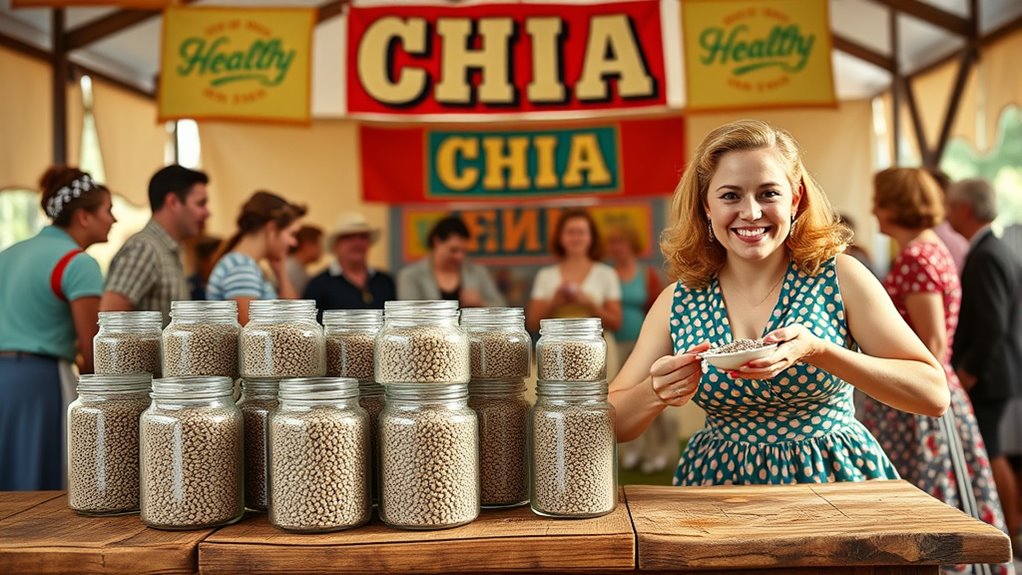
During the 20th century health movement, chia emerged as a popular superfood, gaining recognition for its nutritional benefits and versatility. You might be surprised to learn that this tiny seed has been valued for centuries, but it was during this period that its significance truly resurfaced. As health-conscious individuals sought nutrient-dense foods, chia’s rich profile gained widespread attention. Its nutritional benefits include a high concentration of omega-3 fatty acids, fiber, protein, antioxidants, and essential minerals like calcium, magnesium, and phosphorus. These qualities made chia an attractive addition to various diets aimed at improving overall health, weight management, and heart health. The seeds are easy to incorporate into your meals—sprinkling on yogurt, blending into smoothies, or adding to baked goods—making them a versatile superfood.
The historical adoption of chia is rooted in ancient civilizations, particularly the Aztecs and Mayans, who relied on it as a staple in their diet. They recognized its energy-boosting properties and used it during long journeys and athletic activities. When you explore its history, you realize that chia was more than just food; it held cultural and spiritual significance. It was considered a sacred seed, often used in religious rituals and offerings. Despite its ancient popularity, chia’s prominence waned after the decline of these civilizations, and it remained relatively obscure until its resurgence in the late 20th century.
During the health movement’s rise, researchers and health advocates rediscovered chia’s potential, emphasizing its impressive nutritional benefits. This led to a renewed interest in traditional superfoods, and chia quickly gained popularity among athletes, nutritionists, and health-savvy consumers. Its ability to absorb water and form a gel made it especially appealing for those seeking natural ways to stay hydrated and feel full longer. Additionally, the process of changing gears on a gravel bike can be an important skill for maintaining control during various terrains, just as understanding how to properly prepare and incorporate chia can enhance your diet. As you incorporate chia into your diet, you’re tapping into a food with a rich history and proven health benefits, bridging ancient wisdom with modern nutritional science. The past and present converge in chia’s story, making it a powerful symbol of how traditional foods can be rediscovered and celebrated for their health-promoting qualities.
Frequently Asked Questions
How Did Chia Seeds Become Popular in Mainstream Diets?
You see, chia seeds gained popularity in mainstream diets through clever marketing strategies that highlighted their health benefits. As cultural perceptions shifted towards wellness, consumers became more receptive to superfoods, making chia a trendy choice. Companies promoted its versatility and nutrient density, which helped it stand out. This combination of marketing and evolving health attitudes made chia seeds a staple in many households, fueling their rise in popularity.
What Are the Nutritional Benefits of Chia Compared to Other Seeds?
Think of chia seeds as tiny treasure chests of health. They pack more Omega 3 benefits and fiber content than many other seeds, helping your heart and digestion thrive. Their high fiber keeps you full longer, supporting weight management. Compared to flax or sunflower seeds, chia’s concentrated nutrients make it a powerhouse for overall wellness, turning small bites into big health benefits.
Were There Any Controversies Surrounding Chia’s Health Claims?
You might have heard some controversies about chia’s health claims, but scientific evidence largely debunks these myths. While chia is praised for fiber and omega-3s, some exaggerate its benefits. It’s important to rely on credible studies rather than hype. Myth debunking shows that, although chia is healthy, it’s not a miracle food. You should include it as part of a balanced diet, not a cure-all.
How Did Chia Influence Modern Superfood Trends?
You’ll see that chia markedly influenced modern superfood trends through savvy marketing and its reputation as a nutrient-dense powerhouse. Its popularity propelled superfood marketing, turning chia into a household name. This shift marked a key moment in health trend evolution, inspiring new superfoods and healthier eating habits. Chia’s rise also encouraged consumers to seek natural, plant-based options, shaping the way health food markets develop today.
What Are the Traditional Uses of Chia in Indigenous Cultures?
Imagine ancient Mayans gathering at dawn, using chia seeds in traditional rituals that honor health and spirituality. You see indigenous knowledge guiding their use of chia to boost energy, sustain fasting, and promote healing. These practices, passed down through generations, reveal how chia was more than food—it was sacred. Today, these traditional uses continue to inspire modern health trends, connecting us to a rich cultural heritage rooted in natural wisdom.
Conclusion
As you explore chia’s role in the 20th-century health movement, you’ll see how this tiny seed became a symbol of natural wellness. Imagine a busy mother adding chia to her children’s breakfast, knowing she’s giving them a boost of fiber and omega-3s. Just like her, you can incorporate chia into your daily routine, reconnecting with nature’s simple remedies. Embrace chia’s legacy and take a small step toward a healthier, more vibrant you.