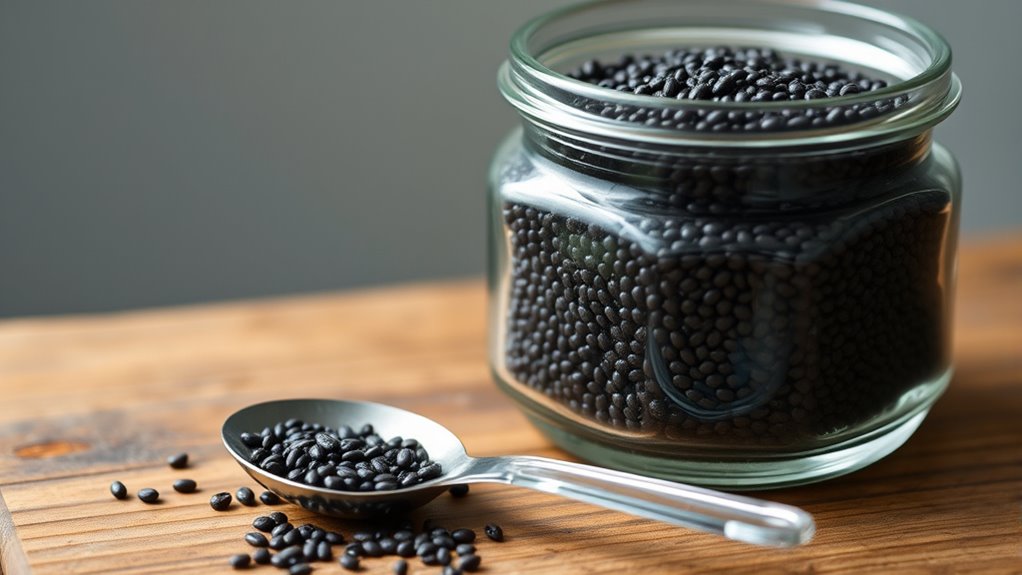

To enjoy the health benefits of chia seeds safely, stick to about 1 to 2 tablespoons per day. This amount provides fiber, omega-3s, and nutrients without causing bloating, gas, or digestive discomfort. Using a tablespoon helps you measure accurately and maintain moderation. Starting with smaller servings can also help your body adjust. Keep these guidelines in mind, and you’ll better understand how to incorporate chia seeds into your diet effectively. More tips follow if you keep going.
Key Takeaways
- Limit intake to 1-2 tablespoons (about 15-30 grams) daily for safety.
- Starting with smaller amounts is advisable if new to chia seeds.
- Use measuring spoons for accurate portion control.
- Avoid excessive consumption to prevent bloating and digestive discomfort.
- Consistently stick to recommended serving sizes to maximize benefits and minimize risks.
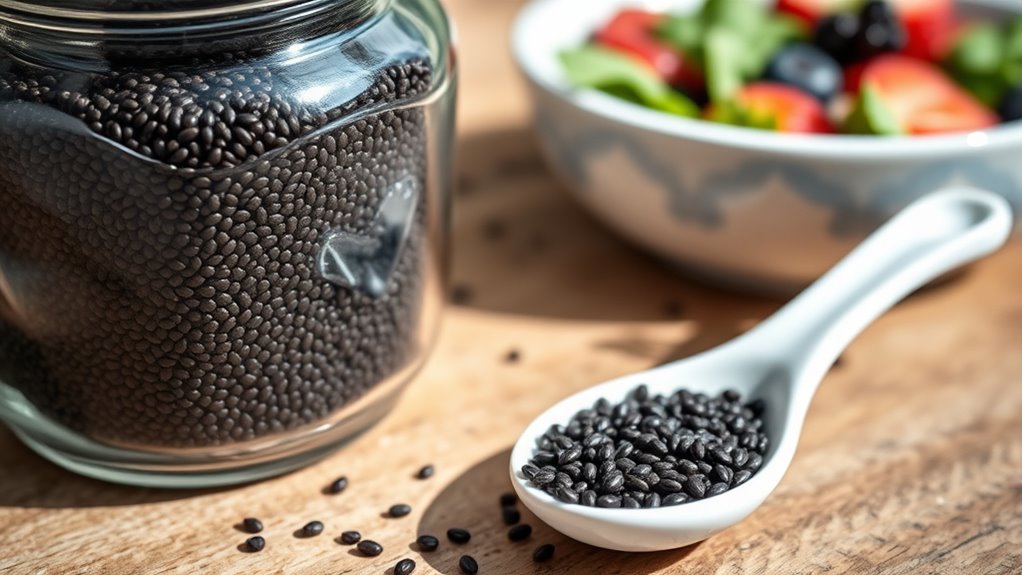
Chia seeds are a popular superfood known for their health benefits, but consuming them in appropriate amounts is essential to avoid potential side effects. These tiny seeds pack a punch when it comes to nutritional benefits, offering a rich source of fiber, omega-3 fatty acids, protein, vitamins, and minerals. They can help improve digestion, support heart health, and boost your energy levels. However, like any superfood, moderation is key. Knowing the right serving size ensures you enjoy these benefits without overdoing it or risking discomfort.
In terms of nutritional benefits, a typical serving size of chia seeds is about 1 to 2 tablespoons, which provides roughly 150 calories, 5 grams of protein, 9 grams of fat, and 12 grams of carbs, mostly fiber. This amount is enough to add a nutritional boost to your diet without overwhelming your digestive system. Consuming too many chia seeds at once can cause bloating, gas, or even constipation, especially if your body isn’t used to such high fiber intake. That’s why sticking to recommended serving sizes helps you enjoy the health advantages without side effects.
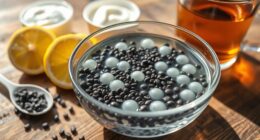
Culinary uses make chia seeds incredibly versatile. You can sprinkle them over yogurt, oatmeal, or salads, mix them into smoothies, or use them as an egg substitute in baking. When soaked in liquid, they turn into a gel-like consistency that can be used to thicken puddings or create healthy jams. Incorporating chia seeds into your meals is simple and convenient, but it’s important to measure your servings carefully. Using a tablespoon or a small measuring cup helps ensure you’re not exceeding the ideal amount, especially if you’re just starting out.
Frequently Asked Questions
Can Children Safely Consume Chia Seeds Daily?
Yes, children can safely consume chia seeds daily if you consider child safety and their nutritional requirements. You should start with small amounts, like a teaspoon, and gradually increase as tolerated. Make sure they stay hydrated, as chia seeds absorb water. Always consult your child’s healthcare provider before making significant dietary changes. When used properly, chia seeds can be a nutritious addition to your child’s diet, supporting their growth and health.
Are There Any Health Risks From Eating Too Many Chia Seeds?
Eating too many chia seeds is like opening Pandora’s box—you risk health issues. You could face potential choking hazards if seeds swell in your throat or stomach. Plus, overdoing it might lead to mineral overdose risks, especially with calcium or magnesium. Moderation keeps you safe, so stick to recommended serving sizes and stay aware of these potential risks to enjoy chia seeds healthily.
How Does Chia Seed Intake Vary for Athletes?
As an athlete, your chia seed intake may be higher to support your training needs, but you should focus on peak chia seed absorption. Consuming about 1-2 tablespoons daily can boost your energy and hydration, enhancing athletic performance effects. Be mindful of hydration and balance your diet to maximize benefits. Adjust your intake based on activity level, and always listen to your body to avoid potential digestive discomfort.
Can Pregnant Women Eat Chia Seeds Regularly?
Yes, pregnant women can eat chia seeds regularly, as they offer great nutritional benefits like omega-3s, fiber, and calcium that support pregnancy. However, you should be mindful of potential allergies and consume them in moderation, following recommended serving sizes. Always consult your healthcare provider before adding chia seeds to your diet, especially if you have allergies or any health concerns, to verify they’re safe for you.
Do Chia Seeds Interact With Any Medications?
You should be aware that chia seeds can interact with medications like blood thinners, affecting their effectiveness. For example, a person on anticoagulants might experience increased bleeding risk if they consume large amounts of chia seeds. When considering dietary considerations, it is crucial to consult your healthcare provider, especially if you’re on medication, to avoid potential medication interactions and guarantee safe consumption aligned with your treatment plan.
Conclusion
Now that you know the safe serving sizes for chia seeds, think of them as tiny treasure chests filled with health gems. When you sprinkle a manageable amount into your day, you’re opening the door to vibrant energy and wellness without overloading your system. Just like a gentle breeze guides a sailboat smoothly across the water, sticking to these guidelines helps your body sail effortlessly on the sea of good health. Enjoy your chia journey!