After harvesting chia seeds, you need to properly dry them to reduce moisture and prevent mold, typically using air drying or mechanical systems to reach around 8-12% moisture content. Winnowing follows, where you remove husks, debris, and broken seeds by using air blowers or sieves to improve seed cleanliness and quality. Proper drying and winnowing are vital for preserving freshness and safety; continue exploring to learn more about optimizing these steps for the best results.
Key Takeaways
- Proper drying reduces moisture content to 8-12%, preventing mold and spoilage during storage.
- Air drying or mechanical dryers are commonly used to achieve optimal seed moisture levels.
- Winnowing separates chia seeds from chaff and debris, ensuring purity and safety for consumption.
- Effective drying and winnowing enhance seed appearance, quality, and shelf life.
- Monitoring temperature and humidity during processing maintains seed integrity and prevents damage.
Have you ever wondered what happens to crops after they’re harvested? When it comes to chia seeds, the process doesn’t end once they’re picked from the plant. Instead, they undergo several vital steps to guarantee they’re clean, safe, and ready for your pantry. Two key parts of this process are seed cleaning and moisture control, both of which are essential for producing high-quality chia seeds.
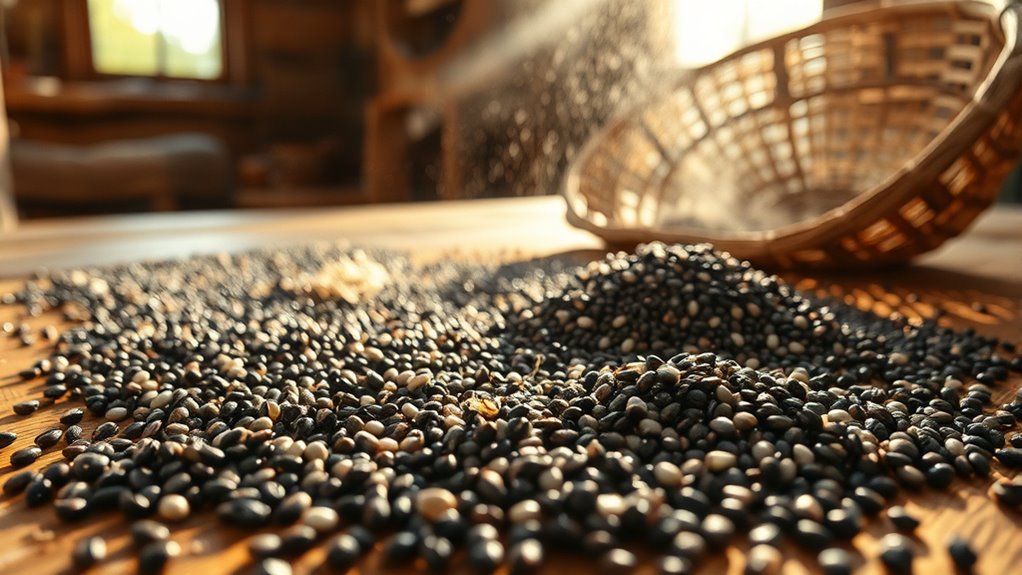
Seed cleaning is your first priority after harvest. You want to remove any debris, broken seeds, or plant matter that might have mixed in during harvesting. This step isn’t just about appearance; it’s about ensuring the seeds are pure and safe for consumption. You might use specialized equipment like air classifiers or sieves to separate out unwanted material. The process is quick but precise, helping to improve the overall quality of your chia seeds. Clean seeds not only look better but also have a longer shelf life and maintain their nutritional value. It’s important to be thorough here, as leftover plant debris can harbor mold or pests, which could spoil your crop or reduce its market value.
Moisture control is another critical aspect of harvest processing. After cleaning, you need to carefully regulate the moisture content of your chia seeds. If they’re too moist, they’re prone to mold growth and spoilage during storage. Conversely, if they’re too dry, they could become brittle and break apart, diminishing their quality. To manage this, you’ll often use drying techniques such as air drying or mechanical drying systems, which help bring the moisture level down to a safe range—usually around 8 to 12 percent. Proper moisture control not only preserves the seeds during storage but also ensures they retain their crunch and nutritional integrity. You’ll want to monitor humidity and temperature carefully throughout this process, making adjustments as needed to prevent any mold development or damage.
Once seed cleaning and moisture control are complete, your chia seeds are nearly ready for packaging and distribution. Guaranteeing these steps are done meticulously can make a significant difference in the final product’s quality. Proper seed cleaning removes impurities that could compromise flavor or safety, while effective moisture control extends shelf life and maintains freshness. By paying close attention to these details, you’re helping to deliver a premium product that consumers will trust and enjoy. It might seem like small steps, but they’re fundamental to turning harvested chia seeds into a healthy, high-quality food that meets industry standards and your own expectations.
Frequently Asked Questions
How Long Does Drying Typically Take for Chia Seeds?
Drying chia seeds usually takes about 1 to 2 hours, depending on the moisture content and drying conditions. You should aim for a moisture content of around 8-10% to guarantee proper storage. Keep the seeds in a well-ventilated, dry area and regularly check their dryness. If they feel crisp and no moisture is visible, your drying duration has been sufficient. Adjust the time if needed based on your environment.
What Are Common Mistakes During the Winnowing Process?
You might accidentally contaminate your seeds by not properly separating chaff during winnowing. Using poor winnowing techniques, like blowing too hard or in a dusty environment, can leave debris or damaged seeds behind. To avoid seed contamination, gently toss the seeds and use a fan or a screen to help separate the lighter chaff from the seeds. Keep your workspace clean and focused to guarantee a high-quality, clean harvest.
Can Drying Methods Affect Seed Nutritional Quality?
Drying methods can considerably influence seed nutritional quality. If you use improper drying techniques, like high heat or prolonged exposure, you risk degrading sensitive nutrients such as omega-3 fatty acids and antioxidants. To preserve nutritional value, opt for gentle drying processes, like air drying or using low-temperature dehydration. This ensures you maintain the seed’s nutritional preservation, keeping the chia seeds healthy and nutrient-rich for consumption.
Is Special Equipment Needed for Large-Scale Drying?
Yes, for large-scale drying, you’ll need special equipment like mechanical dryers or solar dehydration systems. Mechanical dryers efficiently handle big quantities and control temperature to prevent seed damage. Solar dehydration is a cost-effective, eco-friendly option, especially in sunny regions. Both methods guarantee uniform drying, preserving seed quality. Investing in the right equipment makes the process more efficient, saving you time and maintaining the nutritional integrity of your chia seeds.
How to Store Dried Chia Seeds Properly?
To store dried chia seeds properly, use airtight storage containers to keep them fresh. Make sure you control moisture by choosing containers that prevent humidity from entering, as excess moisture can cause mold or spoilage. Keep the containers in a cool, dark place away from direct sunlight and heat sources. This way, your chia seeds stay crisp, dry, and ready for use whenever you need them.
Conclusion
So, after all that effort, you’d think drying and winnowing chia seeds would be straightforward. But surprise—you’ll find yourself chasing tiny seeds, fighting against stubborn moisture, and pondering if you’ll ever get it right. Ironically, the more you try to perfect the process, the more chaotic it feels. Yet, in the end, that tiny seed’s journey from field to table becomes a little victory, reminding you that patience really is a virtue—especially in harvest season.