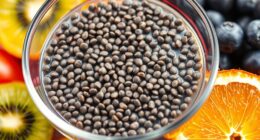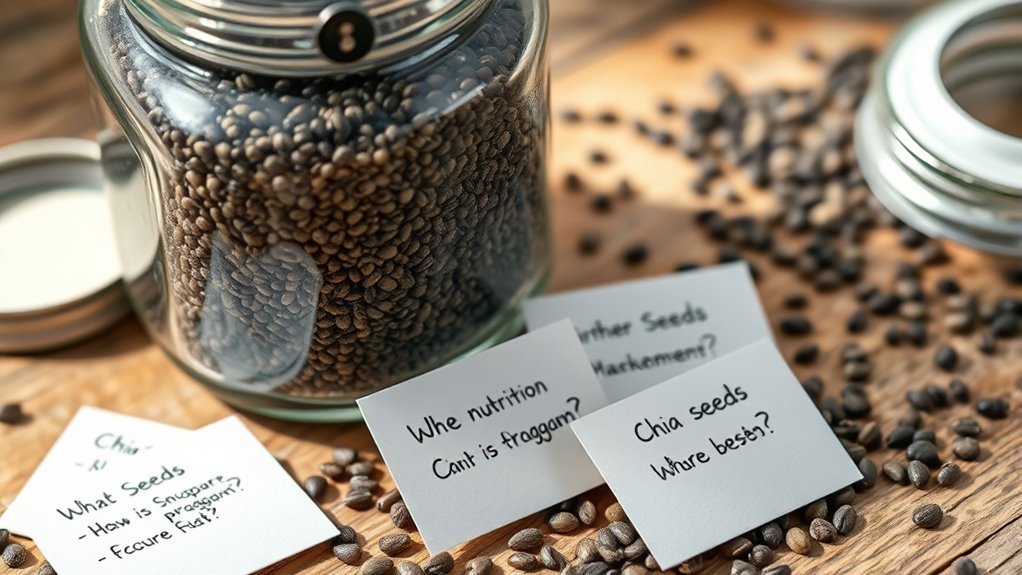
Chia seeds are a tiny superfood packed with omega-3s, fiber, antioxidants, calcium, and minerals that support your overall health. They’re easy to add to your diet—just sprinkle over food, soak for pudding, or blend into drinks. They help boost energy, improve digestion, and promote bone health. Curious about their uses, benefits, or how to incorporate them? Stick with us to uncover more about these versatile seeds.
Key Takeaways
- Chia seeds are rich in omega-3s, fiber, minerals, and antioxidants, supporting overall health.
- They can be eaten raw, soaked to form a gel, or incorporated into various recipes like puddings and baked goods.
- Common questions include appropriate serving sizes, potential allergies, and how to prepare chia seeds safely.
- Chia seeds help with hydration, digestion, weight management, and bone health due to their nutrient profile.
- They are versatile, easy to add to beverages, snacks, breakfast dishes, and are suitable for vegan and gluten-free diets.
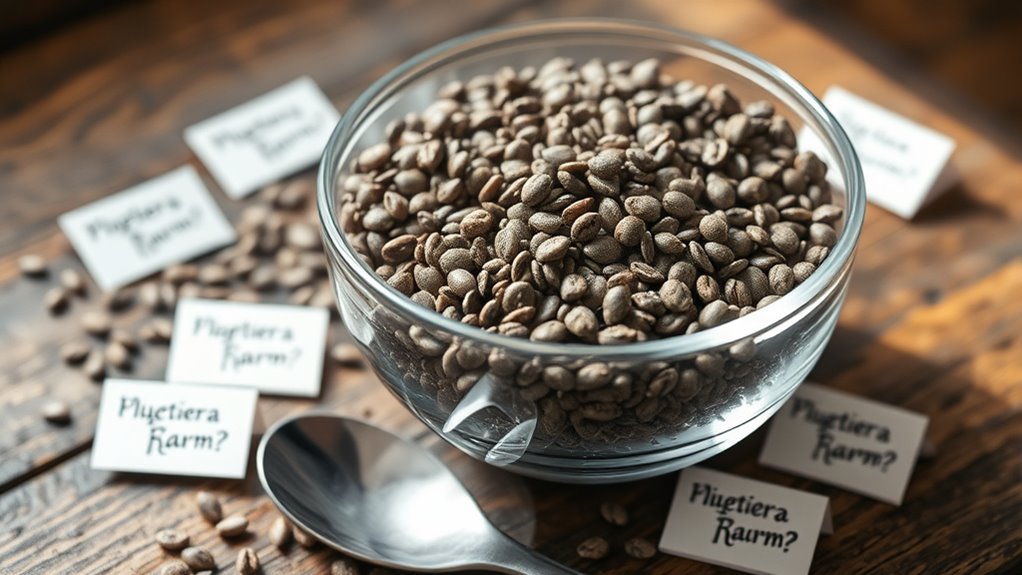
Are you curious about chia seeds and wondering what makes them so popular? These tiny powerhouses have gained a lot of attention in recent years, thanks to their impressive nutritional benefits and versatile culinary uses. Chia seeds are packed with nutrients that can support your overall health, making them an easy addition to your diet. They’re rich in omega-3 fatty acids, fiber, antioxidants, and essential minerals like calcium, magnesium, and phosphorus. With such a nutrient-dense profile, incorporating chia seeds into your meals can help boost your energy, improve digestion, and support bone health. Their nutritional benefits make them a smart choice for anyone looking to enhance their diet naturally.
When it comes to culinary uses, chia seeds are incredibly versatile. You can sprinkle them over your breakfast oatmeal, yogurt, or smoothie bowls for added texture and nutrition. Because they absorb liquid and form a gel-like consistency, they’re often used as a thickening agent in recipes like puddings or smoothies. Many people enjoy making chia seed pudding by soaking the seeds in milk or plant-based alternatives for a few hours or overnight, creating a creamy, satisfying treat. You can also add them to baked goods, such as muffins or bread, to boost fiber content without altering the flavor markedly. Their mild nutty taste blends seamlessly into both sweet and savory dishes, making them a flexible ingredient in your kitchen.
Another common use of chia seeds is in beverages. Mixing a spoonful into water, juice, or homemade sports drinks creates a hydrating, nutrient-rich sip perfect for post-workout recovery or staying refreshed throughout the day. Because they expand and develop a gel-like texture, chia seeds can help you feel fuller longer, making them a helpful addition if you’re trying to manage your appetite or lose weight. They’re also easy to incorporate into salads, energy bars, or even as a topping for fruit salads, adding a pleasant crunch and nutritional boost. Incorporating chia seeds into pinball-inspired recipes or themed snacks can make healthy eating more fun and engaging.
Despite their small size, chia seeds are a nutritional powerhouse and a culinary chameleon. They’re simple to prepare and adapt well to various recipes, making healthy eating more accessible and enjoyable. Whether you’re looking to increase your intake of healthy fats, fiber, or minerals, chia seeds offer an efficient way to do so. Their popularity isn’t just a trend; it’s backed by their impressive array of health benefits and practical culinary applications. So, next time you’re at the store, don’t overlook these tiny seeds—they could become your new favorite ingredient for a healthier lifestyle.
Frequently Asked Questions
Can Chia Seeds Cause Allergic Reactions in Some People?
Yes, chia seeds can cause allergic reactions in some people, especially if they have seed sensitivity or allergies to similar plants. You might experience symptoms like itching, swelling, or difficulty breathing. To stay safe, start with small amounts and watch for any adverse reactions. If you notice any allergic symptoms, stop consuming chia seeds and consult a healthcare professional promptly to determine if you’re allergic.
How Should Chia Seeds Be Stored to Maintain Freshness?
Think of your chia seeds as tiny treasures that need proper protection. To maintain freshness, store them in an airtight container in a cool, dark place like your pantry. Use clear, resealable jars for easy access and freshness preservation. Keep them away from heat, light, and moisture, which can cause spoilage. Follow these storage tips, and your chia seeds will stay fresh and ready to boost your meals whenever you need them.
Are There Any Medications That Interact Negatively With Chia Seeds?
You should be aware that chia seeds can have medication interactions, especially with blood thinners like warfarin, due to their high omega-3 content. They may also affect blood sugar levels, so if you’re on diabetes medication, consult your doctor first. Always check drug food warnings and discuss any supplements with your healthcare provider to avoid negative interactions, ensuring chia seeds complement your medication regimen safely.
Can Chia Seeds Be Used as an Egg Substitute in Recipes?
Think of chia seeds as a magic wand for vegan baking—they can easily replace eggs. Mix 1 tablespoon of chia seeds with 3 tablespoons of water, let it sit until gel-like, and you’ve got a vegan egg replacer. Use this chia seed baking trick in muffins, pancakes, or cookies. It binds ingredients well and adds nutrition, making your recipes both plant-based and delicious.
What Are the Environmental Impacts of Chia Seed Cultivation?
You should know that chia seed cultivation has environmental impacts, especially regarding water usage. Growing chia requires moderate water, but overwatering can strain local resources. Sustainable farming practices help reduce these effects, ensuring chia is grown responsibly. By choosing chia from farms that prioritize water conservation and eco-friendly methods, you support healthier ecosystems and minimize environmental harm, making chia a more sustainable food choice.
Conclusion
Now that you know the essentials about chia seeds, you’re ready to incorporate them into your diet confidently. Did you know that just one ounce of chia seeds contains 11 grams of fiber? That’s over a third of your daily fiber needs in a small serving! So, whether you sprinkle them on yogurt or blend them into smoothies, chia seeds are a simple, nutritious boost for your health. Start experimenting today and enjoy the benefits!