Transporting chia seeds involves managing their sensitivity to humidity, heat, and light, which can cause spoilage or nutrient loss. Proper packaging, like moisture-proof containers, is essential, and environmental controls during transit help maintain freshness. River levels can disrupt routes, causing delays or rerouting, especially during floods or low water periods. Handling carefully and monitoring conditions throughout the journey is crucial. To learn more about overcoming these logistical hurdles, keep exploring how best to safeguard your shipment.
Key Takeaways
- Environmental factors like humidity, heat, and light can degrade chia seed quality during transit without proper packaging.
- Moisture-proof containers and environmental controls are essential to prevent mold, rancidity, and spoilage.
- River level fluctuations can disrupt shipping routes, causing delays or rerouting that affect transit times and seed freshness.
- Handling practices and continuous monitoring during transport help detect and mitigate environmental or physical damage early.
- Choosing appropriate transportation methods and flexible logistics plans address risks from weather, water levels, and infrastructure challenges.
Transporting chia seeds presents unique challenges that can impact their quality and market value. Since these tiny seeds are highly valued for their nutritional benefits, maintaining their freshness during transit is essential. One of the main concerns during transportation is ensuring storage stability; if the seeds are exposed to humidity, heat, or light, they can lose their nutritional integrity and become prone to spoilage. Proper packaging and controlled environments are vital to prevent moisture absorption, which can cause mold or rancidity. When you handle transportation logistics, you need to prioritize quality preservation by selecting containers that shield the seeds from environmental factors, ensuring they arrive in the same condition they left the point of origin.
In addition to environmental controls, understanding the impact of transportation methods on storage stability plays a significant role. For example, shipping chia seeds via air freight might be faster but can expose them to temperature fluctuations and pressure changes, which could compromise their quality. Conversely, sea freight, although cost-effective for large quantities, might involve longer transit times and greater exposure to humidity if not properly sealed. These factors can influence storage stability, so you must plan logistics carefully, using moisture-proof packaging and temperature regulation when necessary. Proper handling techniques and regular monitoring during transit help you catch potential issues early, avoiding quality loss and ensuring the seeds’ market value remains high.
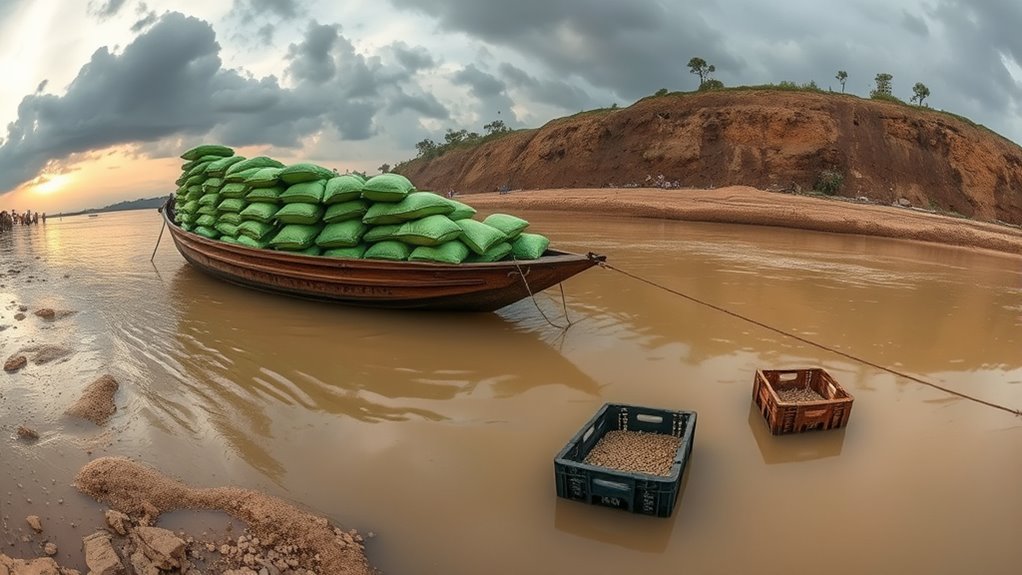
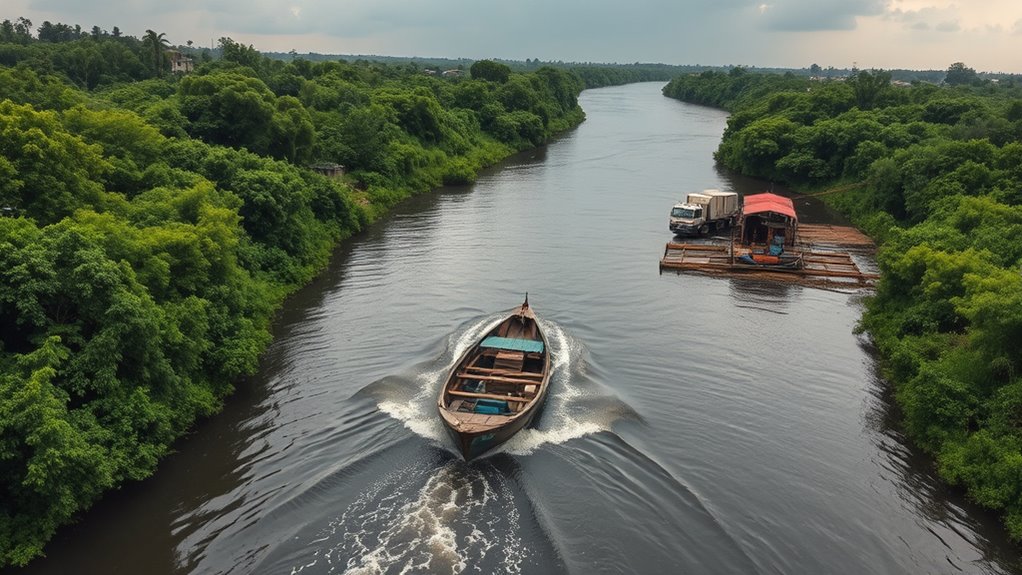
Another challenge involves fluctuating river levels that can affect the transportation routes, especially when you’re relying on river barges or inland waterways. If river levels drop too low, ships and barges may be unable to navigate certain routes, causing delays or rerouting that extend transit times. Conversely, high water levels or flooding can damage infrastructure or make routes inaccessible altogether. These unpredictable conditions demand that you stay closely informed about weather and water level reports, so you can adapt your logistics plans accordingly. Flexibility in scheduling and alternative routing becomes necessary to prevent disruptions that could compromise the freshness and safety of the chia seeds.
Frequently Asked Questions
How Do Seasonal Weather Changes Affect Chia Seed Transportation?
Seasonal rainfall can substantially impact your chia seed transportation by increasing flood risks, which may delay shipments or damage goods. Heavy rains can cause rivers to swell, making it harder for you to navigate waterways and transport seeds efficiently. During rainy seasons, you need to plan ahead, monitor weather forecasts, and consider alternative routes or methods to guarantee your chia seeds reach their destination safely and on time.
What Are Alternative Routes During High River Levels?
Imagine a river as a highway, and when its level rises, alternative routes become your new pathways. During high river levels, you can reroute your chia seed shipments via inland roads, railways, or even air freight. Employ river level strategies like monitoring water gauges and coordinating with transport authorities to make certain of smooth transit. These alternative routes help you avoid flood-prone areas and keep your chia seed deliveries on schedule.
How Is Chia Seed Quality Maintained During Long-Distance Transport?
To maintain chia seed quality during long-distance transport, you should focus on preserving seed freshness and packaging integrity. Use airtight, moisture-proof packaging to prevent contamination and spoilage. Keep the seeds in a cool, dry environment to avoid exposure to heat and humidity, which can degrade quality. Regularly check the packaging during transit to ensure it remains sealed, helping to maintain ideal freshness and prevent damage.
What Customs Procedures Impact Chia Seed Logistics?
Customs procedures like customs clearance and import regulations considerably impact your chia seed logistics. You need to make certain all paperwork, such as phytosanitary certificates and import permits, are in order to avoid delays. Complying with specific country regulations helps speed up customs clearance, preventing hold-ups. Staying updated on any trade restrictions or tariffs allows you to plan your transportation efficiently, reducing the risk of costly delays and ensuring your chia seeds arrive on time.
Are There Specific Storage Conditions for Chia Seeds During Transit?
You should guarantee proper storage conditions during transit by maintaining temperature control to keep chia seeds fresh and prevent spoilage. Store them in a cool, dry, and well-ventilated environment, avoiding excessive heat or humidity. Using sealed, airtight containers helps protect against moisture and contamination. By monitoring temperature and humidity levels, you can assure your chia seeds arrive in ideal condition, preserving their quality and nutritional value during transportation.
Conclusion
In steering the nuances of nourishing nature, you must master the maze of logistical labyrinths and fluctuating river levels. By balancing boldness with caution, you can overcome obstacles, optimize operations, and guarantee chia seeds reach their destination safely. Remember, perseverance and preparedness pave the path to progress. So, stay strategic, stay vigilant, and turn transportation troubles into triumphant triumphs, transforming challenges into chances for growth and greatness.