Many believe that eating chia seeds will automatically cause weight loss or that you can eat unlimited amounts without issues. However, these are misconceptions. Chia seeds support health when used properly, but overdoing it can lead to digestive discomfort and won’t guarantee quick results. They should be part of a balanced diet and active lifestyle. To learn more about how to use chia seeds effectively, keep exploring the facts behind these common myths.
Key Takeaways
- Chia seeds are a nutrient-dense supplement, not a magic weight-loss solution or sole diet component.
- Excessive fiber intake from chia seeds can cause digestive discomfort without proper hydration.
- They should be incorporated gradually into a balanced diet, not used to replace fruits, vegetables, or proteins.
- Small portions provide high nutrients with controlled calories; overconsumption may undermine health goals.
- Chia seeds support health when used properly but do not automatically induce weight loss or cure health issues.
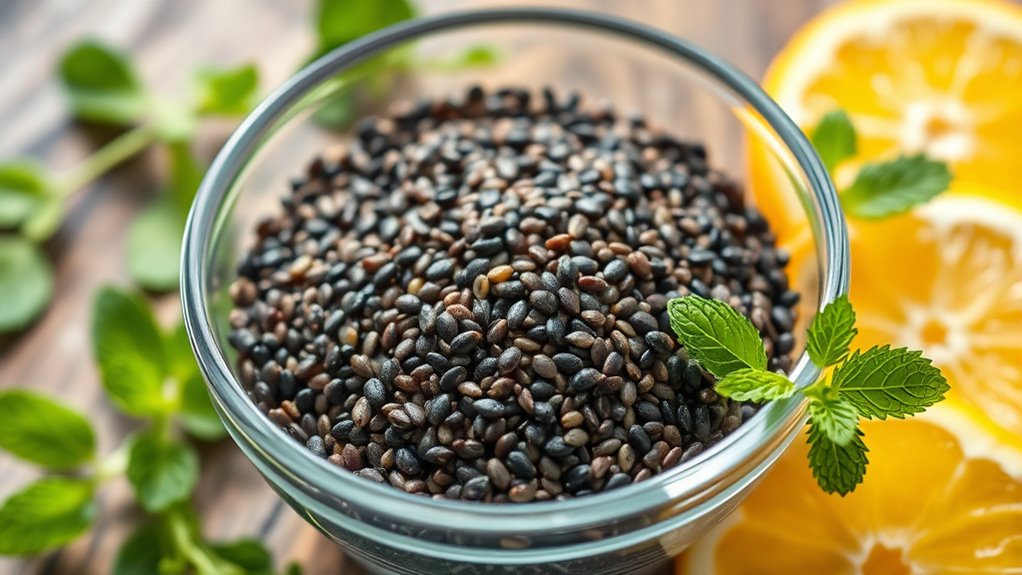
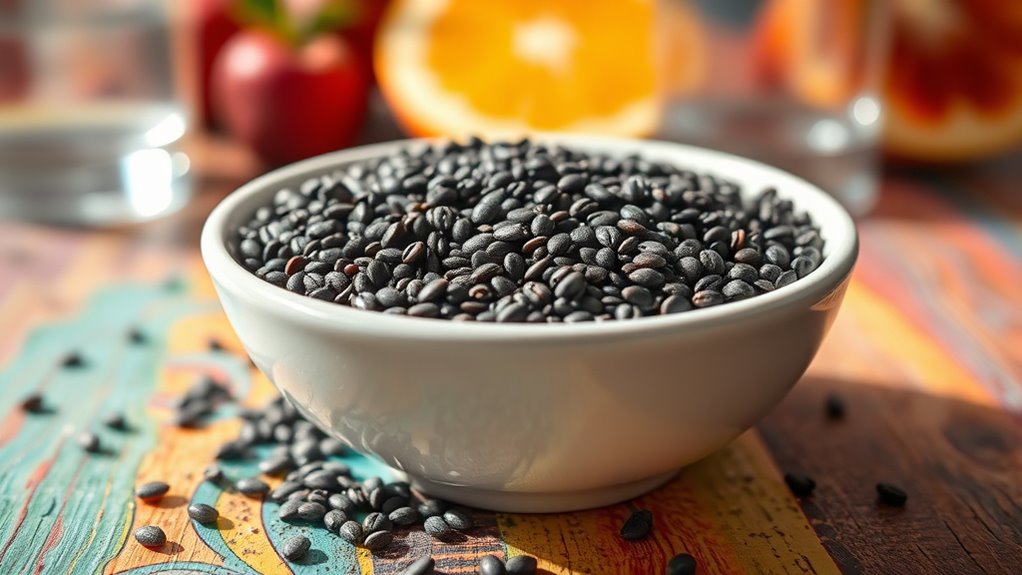
Chia seeds are often praised as a superfood, but many misconceptions cloud their true benefits and potential drawbacks. One common myth is that eating chia seeds automatically leads to weight loss. While they can support weight management, they’re not magic bullets. Instead, their fiber benefits play a vital role in helping you feel full longer, which can reduce overeating and curb cravings. When you add chia seeds to your diet, you’re getting a dense source of soluble fiber that absorbs water and expands in your stomach, creating a sense of satiety. This can help you eat less during meals and snacks, contributing to healthier weight control over time. However, it’s important to understand that chia seeds alone won’t cause significant weight loss unless combined with a balanced diet and active lifestyle.
Many people assume that because chia seeds are high in fiber, they can be consumed in unlimited amounts without consequences. But, that’s not true. Eating too many chia seeds too quickly can lead to digestive discomfort, such as bloating or constipation, especially if you don’t drink enough water. The fiber benefits of chia seeds work best when you hydrate properly, as the seeds need liquid to swell and do their job effectively. Incorporating them gradually into your diet allows your body to adapt without discomfort.
Another misconception is that chia seeds are a miracle food that can replace other nutrient-dense foods. In reality, they’re a supplement, not a substitute. They provide healthy omega-3s, fiber, and protein, but they shouldn’t replace fruits, vegetables, whole grains, or lean proteins. A balanced diet remains essential for overall health. It’s also worth noting that some people worry about calories and think chia seeds are calorie-dense, but a small serving packs a lot of nutrients for relatively few calories. Just be mindful of portion sizes, especially if you’re counting calories or managing weight.
Frequently Asked Questions
Can Chia Seeds Replace All Other Sources of Omega-3 Fatty Acids?
Chia seeds can’t replace all other sources of omega-3 fatty acids because they mainly provide ALA, a plant-based omega-3. While they’re a great nutritional substitute for some people, you still need other omega-3 sources like fatty fish or algae oil for EPA and DHA, which are vital for brain and heart health. Incorporating a variety ensures you get a balanced intake of all essential omega-3 fatty acids.
Are Chia Seeds Suitable for People With Nut Allergies?
Yes, you can typically eat chia seeds if you have a nut allergy, but watch out for nut allergy risks and cross reactivity concerns. Chia seeds aren’t tree nuts or peanuts, so they usually don’t trigger nut allergies. However, since cross-reactivity can happen with some seed allergies, it’s best to consult your allergist first. Start with small amounts to see how your body reacts and stay safe.
Do Chia Seeds Cause Weight Gain When Consumed in Excess?
Imagine you’re in the Renaissance, pondering health trends—chia seeds won’t cause weight gain when eaten in excess if you practice portion control. While they do have a caloric impact, consuming too much can contribute to weight gain. To stay balanced, measure your servings and incorporate them as part of a diverse diet. Overdoing it isn’t the key; moderation keeps chia seeds a healthy addition without unwanted weight gain.
Is It Necessary to Grind Chia Seeds for Better Absorption?
You don’t need to grind chia seeds for better absorption. Eating them whole still offers many benefits, such as providing fiber and healthy omega-3s. However, grinding can enhance digestion by making nutrients more accessible, especially if you want to maximize nutrient intake. If you prefer convenience or texture, whole seeds work well, but grinding may boost digestion enhancement for those seeking to optimize nutritional benefits.
Can Children Safely Consume Chia Seeds Regularly?
Yes, children can safely consume chia seeds regularly when incorporated into a balanced diet. In pediatric nutrition, chia seeds offer fiber, omega-3s, and protein, supporting growth and development. However, you should introduce them gradually and guarantee proper hydration to prevent choking or digestive issues. Always consult a pediatrician if you have concerns about safe consumption or if your child has food allergies or sensitivities.
Conclusion
Think of chia seeds as tiny sailors steering your body’s ocean. Misconceptions are like storm clouds, blurring their true strength and versatility. Once you clear the fog, you’ll see they’re not just a fad but a trusted vessel of nutrients. Embrace their genuine power, and your health journey becomes a voyage of discovery, not confusion. Trust in their true nature, and watch your wellness horizon expand with clarity and confidence.