
Understanding chia seed supply chains means following how seeds move from small-scale farms to your local market. It involves organic cultivation practices that protect the environment, fair trade standards ensuring fair pay for farmers, and careful processing to maintain quality and safety. Distribution stages focus on efficiency and transparency, allowing consumers to make responsible choices. If you want to discover how each step impacts quality and sustainability, keep exploring these essential connections behind your chia seeds.
Key Takeaways
- Chia seed supply chains connect farmers to markets through a complex network ensuring traceability and transparency.
- Organic cultivation practices involve soil management and pest control, enhancing seed quality and sustainability.
- Fair trade agreements support small-scale farmers with fair compensation and promote ethical trading practices.
- Processing includes cleaning, drying, and packaging to maintain seed integrity and meet certification standards.
- Distribution and retail focus on logistical efficiency, with consumer choices influenced by ethical and sustainable sourcing.

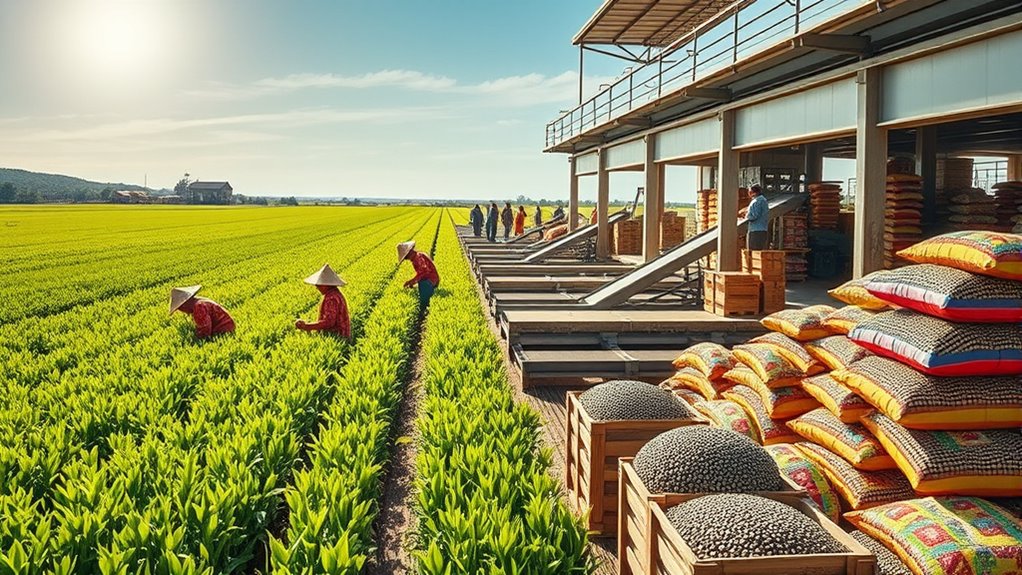
Chia seed supply chains are complex networks that connect farmers, processors, distributors, and retailers across the globe. As you follow the journey of chia seeds from farm to market, you’ll see that each step involves careful coordination to guarantee quality, sustainability, and ethical standards. One key aspect of this process is organic cultivation. Farmers committed to organic practices avoid synthetic pesticides and fertilizers, which not only protect the environment but also produce healthier seeds that meet consumer demand for clean, chemical-free products. Organic cultivation requires diligent soil management, crop rotation, and pest control, making it more labor-intensive but ultimately more sustainable. When you buy chia seeds that are labeled organic, you’re supporting farmers who prioritize ecological balance and long-term land health, which can influence the entire supply chain to adopt more environmentally friendly practices. Additionally, the integrity of the supply chain is strengthened when transparency and traceability are maintained at each stage. Fair trade practices play a fundamental role in ensuring that farmers receive fair compensation for their work. In many regions, small-scale farmers face economic challenges and often lack access to fair markets. By adhering to fair trade standards, these farmers are paid equitable prices, which helps improve their livelihoods and promotes community development. When you choose chia seeds certified under fair trade standards, you’re contributing to a system that values ethical labor, transparent trading relationships, and social responsibility. These practices also encourage farmers to adopt better working conditions, invest in sustainable farming methods, and retain control over their crops, fostering a more equitable supply chain overall. Once farmers harvest the chia seeds, processors step in to clean, dry, and package them. The processing stage is fundamental in maintaining seed integrity and safety. Many processors focus on organic certification and fair trade compliance, ensuring that the seeds meet strict quality standards. They often work closely with farmers to verify that cultivation practices align with organic and fair trade principles. This collaboration helps prevent contamination and preserves the seeds’ nutritional value. After processing, the seeds are shipped to distributors who distribute them to wholesale and retail outlets. Throughout this phase, logistical efficiency and quality control are essential to prevent spoilage and maintain freshness. As the seeds move through each stage, adherence to preppy dog names and other relevant standards can help enhance consumer trust and market appeal. As the chia seeds reach markets, retailers and consumers play their part by choosing products rooted in ethical and sustainable practices. Understanding the supply chain reveals that every link, from organic cultivation to fair trade practices, influences the final product’s quality and ethical standing. By being informed and intentional in your purchasing choices, you support a supply chain that values environmental sustainability, fair treatment, and health. Your decisions can help promote more responsible farming and trading practices worldwide, ensuring that chia seeds continue to be a nutritious and ethically sourced food for years to come.
Frequently Asked Questions
How Do Climatic Conditions Affect Chia Seed Quality?
Climatic conditions directly impact your chia seed quality by influencing soil composition and pest management. Hot, dry weather can improve seed maturity but may reduce soil nutrients if not managed properly. Excess moisture increases pest risks, harming seed integrity. You should monitor weather patterns closely, adjust irrigation, and implement pest control strategies to maintain ideal seed quality. Proper climate management ensures your chia seeds are nutritious, clean, and market-ready.
What Certifications Ensure Ethical Chia Seed Sourcing?
Did you know that over 80% of consumers seek ethically sourced products? To guarantee you’re getting ethical chia seeds, look for certifications like Fair Trade and Organic Certification. These labels guarantee fair wages, sustainable farming practices, and toxin-free seeds. By choosing certified products, you support ethical sourcing, protect the environment, and promote social responsibility. Always check for these certifications to make sure your chia seeds align with your values.
How Is Chia Seed Storage Managed During Transportation?
During transportation, you guarantee chia seed storage is well-managed by maintaining packaging integrity and temperature control. Proper packaging prevents contamination and preserves freshness, while temperature control keeps seeds dry and cool, preventing spoilage. Use insulated containers or climate-controlled vehicles for ideal conditions. Regularly monitor and record temperatures to detect any fluctuations, ensuring the chia seeds arrive at market in perfect condition, maintaining quality and safety throughout the supply chain.
What Are the Main Challenges in Chia Seed Export Markets?
You face challenges like fluctuating market demand and complex export logistics when entering chia seed export markets. High demand can cause supply shortages, while inconsistent logistics can delay shipments and increase costs. Steering international regulations and maintaining quality standards add to these hurdles. Staying adaptable and building strong logistics partnerships help you overcome these issues, ensuring you meet market needs efficiently and stay competitive in the global chia seed trade.
How Do Local Regulations Impact Chia Seed Farming Practices?
Local regulations, especially seed regulation, directly influence your chia seed farming practices. If seed regulation is strict, you must follow specific standards for seed quality and certification, which can increase costs and slow down farming processes. Local farming rules may also dictate pesticide use, land management, and water conservation methods. By adhering to these regulations, you guarantee your chia seeds meet market standards and avoid legal issues, ultimately supporting sustainable farming.
Conclusion
Now that you understand the chia seed supply chain, you see how each step, from farm to market, is essential—like links in a chain holding everything together. By paying attention to each stage, you guarantee quality and sustainability. Just as a river flows smoothly when each part moves in harmony, a well-managed supply chain delivers healthy, fresh chia seeds to your table. Your awareness helps support ethical practices and better choices.