Chia seeds hold a rich history among Native American tribes beyond Mexico, serving as essential foods, spiritual symbols, and sources of resilience. Tribes across North America valued chia for its nourishing properties during long journeys, rituals, and times of scarcity. They saw it as a sacred gift linking them to ancestors and the land. If you explore further, you’ll discover how these traditions reflect deeper cultural values and environmental ties that continue today.
Key Takeaways
- Native tribes across North America historically used chia seeds for nutrition, ritual practices, and spiritual symbolism beyond Mexico.
- Chia served as an essential food source during long journeys and seasonal migrations in indigenous communities.
- Seeds were incorporated into traditional healing drinks and ceremonies honoring natural gifts and ancestors.
- Chia’s role symbolized resilience, life, and renewal, reinforcing cultural identity and environmental harmony.
- Preservation of these practices highlights the importance of chia in Native American food sovereignty and spiritual traditions.
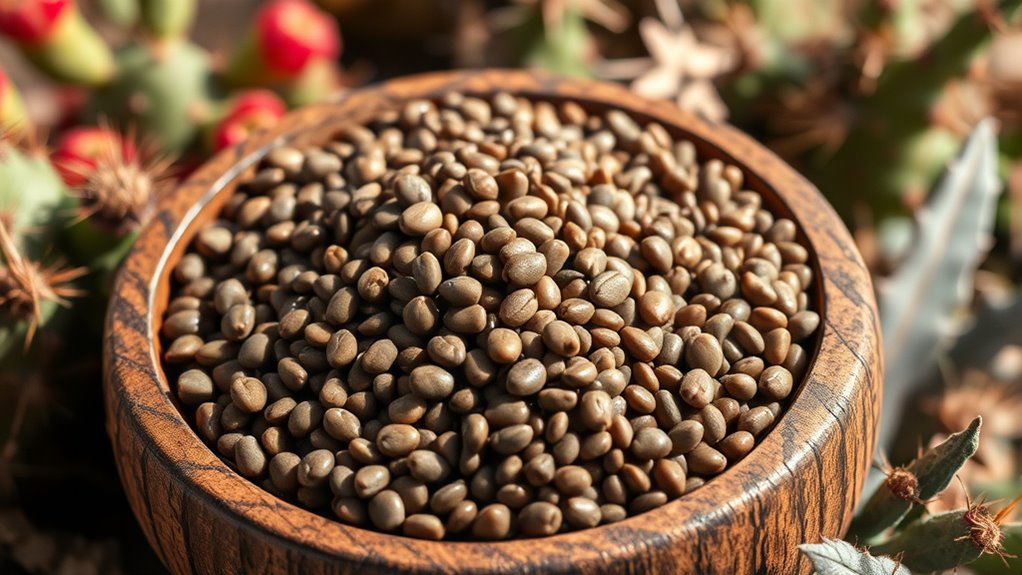
Have you ever wondered how ancient Native American tribes incorporated nutritious foods into their daily lives? One example is chia seeds, which hold a rich history beyond their recent popularity. While many associate chia with Mexico and Central America, tribes across North America also recognized its value. For these tribes, traditional uses of chia extended beyond simple consumption; it carried deep cultural significance that connected them to their land and ancestors. Chia seeds were more than just a food source—they symbolized sustenance, resilience, and spiritual connection.
In many Native American tribes, chia seeds were used in various traditional practices. They were often ground into powders or mixed with water to create nourishing drinks that sustained warriors and hunters during long journeys or seasonal migrations. These uses were not solely practical—they were embedded within rituals and ceremonies that honored the earth’s gifts. The seeds served as a symbol of life and renewal, representing the importance of harmony with nature. Their traditional uses varied from tribe to tribe, but they universally reflected a respect for natural resources and an understanding of their medicinal and nutritional properties.
Cultural significance played an essential role in how tribes viewed chia seeds. For some tribes, chia was considered a sacred plant that connected them to their ancestors and spiritual beliefs. Its ability to provide energy and nourishment was seen as a gift from the Creator, emphasizing the importance of gratitude and mindful consumption. These seeds weren’t just food; they embodied the tribe’s relationship with the environment and their reliance on sustainable harvesting practices. The traditional uses of chia often involved rituals that honored the plant’s life cycle, reinforcing their spiritual connection to the land and its offerings. Additionally, understanding the nutritional properties of chia was integral to their health and well-being.
Moreover, chia seeds played an indispensable role during times of hardship or scarcity. Tribes relied on their stored seeds as a reliable source of nutrition when food was scarce, making them a crucial part of their food sovereignty. Their cultural significance extended into storytelling and oral traditions, where the seeds represented resilience and survival. Through generations, these stories reinforced the importance of respecting natural resources and maintaining a balanced relationship with the environment.
In essence, the traditional uses and cultural significance of chia seeds among Native American tribes reflect a profound understanding of nature’s gifts. They serve as a reminder that food is more than sustenance—it’s a essential part of cultural identity, spiritual practice, and community resilience. When you explore their history, you gain insight into a worldview that values harmony with nature and underscores the importance of preserving these connections for future generations.
Frequently Asked Questions
How Did Native Americans Discover Chia Seeds’ Health Benefits?
You discover that Native Americans learned about chia seeds’ health benefits through observation and experimentation. They noticed how the seeds provided sustained energy and improved stamina during long journeys and physical activities. Over time, they incorporated chia seeds into their diets, recognizing their nutritional value. This seed discovery came from practical use and careful attention to how the seeds affected their health, making chia an essential part of their traditional diets.
Were Chia Seeds Used in Traditional Native American Rituals?
You’ll find that chia seeds were indeed used in traditional native American rituals. During spiritual ceremonies, they symbolized fertility, endurance, and health, often playing a role in ritual symbolism. Participants believed chia seeds carried spiritual significance, helping connect them with nature and their ancestors. Incorporating chia into these ceremonies highlighted its importance beyond nutrition, emphasizing its cultural and spiritual value in native traditions.
How Did Chia Seeds Influence Native American Trade Networks?
You know what they say, “A journey of a thousand miles begins with a single step.” Chia seeds influenced Native American trade networks by becoming a valuable commodity along trade routes, fostering cultural exchange. They moved between tribes and regions, strengthening relationships and sharing culinary and medicinal knowledge. These seeds helped establish connections, making trade more than just exchange — it became a way to build community and preserve cultural traditions.
Are There Specific Native American Tribes Known for Chia Seed Cultivation?
You’ll find that the Apache and the Pima tribes are known for their chia seed cultivation within Native American agriculture. They historically valued chia seeds for their nutritional benefits and incorporated them into their diets. These tribes cultivated chia seeds in arid regions, adapting their farming techniques to the environment. Their expertise in native chia seed cultivation played a significant role in sustaining their communities and maintaining traditional agricultural practices.
How Have Modern Native American Diets Integrated Chia Seeds Today?
Think of your diet as a tapestry, where ancient threads weave with modern patterns. Today, you see chia seeds as a symbol of cultural adoption in Native American cuisine. They’re integrated into smoothies, salads, and baked goods, blending tradition with innovation. This modern use honors heritage while embracing health benefits, showing how native foods evolve and thrive in contemporary settings, enriching your culinary experience with history and energy.
Conclusion
As you explore the rich history of chia seeds beyond Mexico, remember they once nourished entire civilizations, much like the Native American tribes who valued them. Today, these tiny seeds symbolize resilience and tradition amid modern diets focused on convenience. While technology advances, don’t forget the power of simple, natural foods that connect you to centuries of cultural heritage. Embrace chia seeds not just as nutrition, but as a bridge to the past that sustains your future.