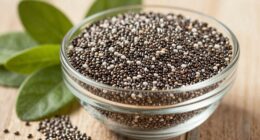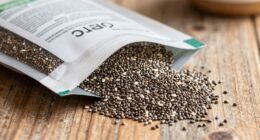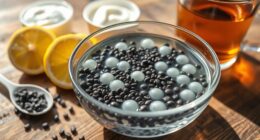

Chia seeds really can help with weight loss by keeping you fuller longer thanks to their high fiber content, which absorbs water and expands in your stomach. They also provide healthy fats and protein that stabilize blood sugar and curb cravings. While they’re not a magic fix, adding chia seeds to your diet supports appetite control and calorie management. Stay tuned to discover how to incorporate them effectively for the best results.
Key Takeaways
- Chia seeds are high in soluble fiber, which absorbs water and promotes a feeling of fullness, reducing appetite.
- They contain healthy omega-3s and protein, helping stabilize blood sugar and curb cravings.
- The fiber and nutrient density support digestion and satiety, aiding in calorie control.
- When incorporated into meals, chia seeds add volume without many calories, assisting weight management.
- They are a helpful supplement, but effective weight loss mainly depends on overall diet and lifestyle.
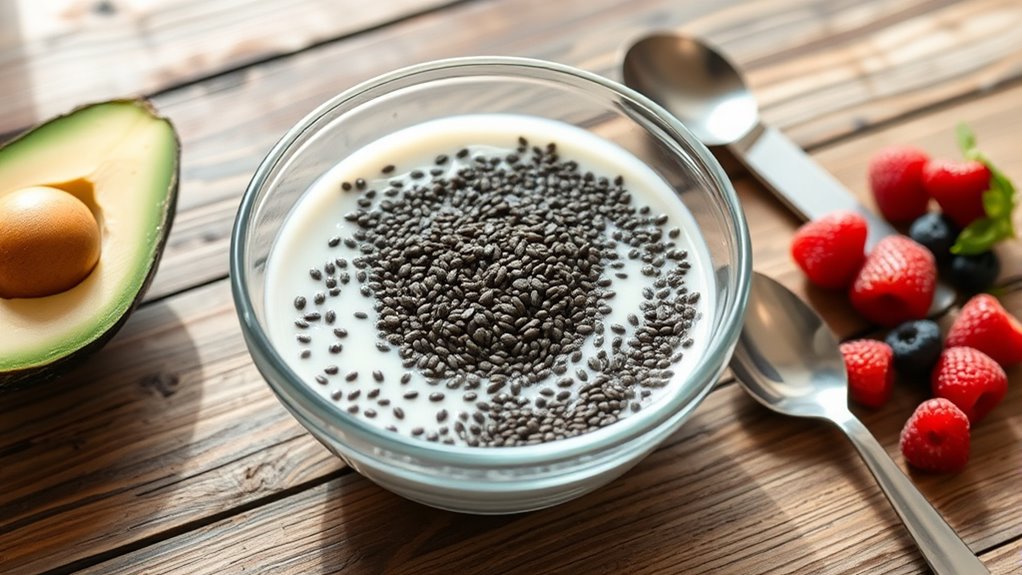
If you’re looking to support your weight loss goals, adding chia seeds to your diet might be a smart move. These tiny seeds are packed with fiber benefits, which play an essential role in helping you feel full longer and reducing overall food intake. When you consume chia seeds, their high fiber content absorbs water and expands in your stomach, creating a sensation of fullness that curbs hunger. This natural appetite suppression can markedly assist in calorie control, making it easier to stick to a calorie deficit—an indispensable factor in losing weight. Plus, because chia seeds are low in calories but high in nutrients, they allow you to add volume to your meals without piling on extra calories.
Beyond their fiber benefits, chia seeds are rich in healthy omega-3 fatty acids, antioxidants, and protein, which support overall health and satiety. The combination of these nutrients helps stabilize blood sugar levels, reducing cravings for sugary snacks that can sabotage your weight loss efforts. When your blood sugar stays steady, you’re less likely to experience those energy crashes that lead to overeating. Incorporating chia seeds into your meals can be as simple as sprinkling them over yogurt, blending them into smoothies, or adding them to oatmeal. Their neutral flavor makes them versatile and easy to include without altering the taste of your favorite dishes.
Many people wonder whether chia seeds truly aid in weight loss or if it’s just a myth. The science suggests that their role in promoting fullness and supporting calorie control can contribute to weight management, especially when combined with a balanced diet and regular exercise. However, it’s important to remember that chia seeds aren’t magic. They work best as part of an overall healthy lifestyle. Relying solely on chia seeds without addressing other aspects of your diet and activity levels won’t produce substantial results. Instead, think of them as a helpful tool that complements your efforts.
Additionally, because chia seeds are easy to prepare and incorporate, they are a convenient way to boost your fiber intake. The fiber benefits not only help with appetite regulation but also support digestive health, which is indispensable when you’re aiming to lose weight. Incorporating diverse sources of fiber, like chia seeds, can further enhance your weight loss efforts. The fiber benefits not only help with appetite regulation but also support digestive health, which is indispensable when you’re aiming to lose weight. Just keep in mind that moderation is key—eating excessive amounts of chia seeds can cause digestive discomfort. A typical serving size is about one to two tablespoons, which provides enough fiber benefits and calorie control without overdoing it. When used wisely, chia seeds can be a valuable addition to your weight loss journey, helping you stay full, satisfied, and on track toward your goals.
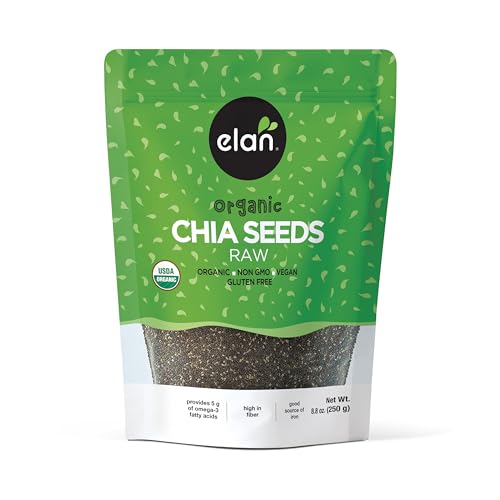
Elan Organic Chia Seeds, 8.8 oz, Natural Raw Black Chia Seeds, Plant-Based, Non-GMO, Vegan, Gluten-Free, Kosher, Gels Easily, Superfood
NUTRITIOUS SUPERFOOD: Elevate your healthy snacks with Elan Organic Chia Seeds. These small crunchy seeds gel easily, offering…
As an affiliate, we earn on qualifying purchases.
As an affiliate, we earn on qualifying purchases.
Frequently Asked Questions
Can Chia Seeds Replace Meals for Weight Loss?
You might wonder if chia seeds can serve as a meal replacement for weight loss. While they boost satiety enhancement, they shouldn’t completely replace meals, as they lack essential nutrients. Instead, add them to your diet to help control hunger and support your weight loss goals. Incorporating chia seeds into balanced meals makes them a beneficial supplement, but relying solely on them isn’t recommended for proper nutrition.
Are There Any Side Effects From Eating Chia Seeds Daily?
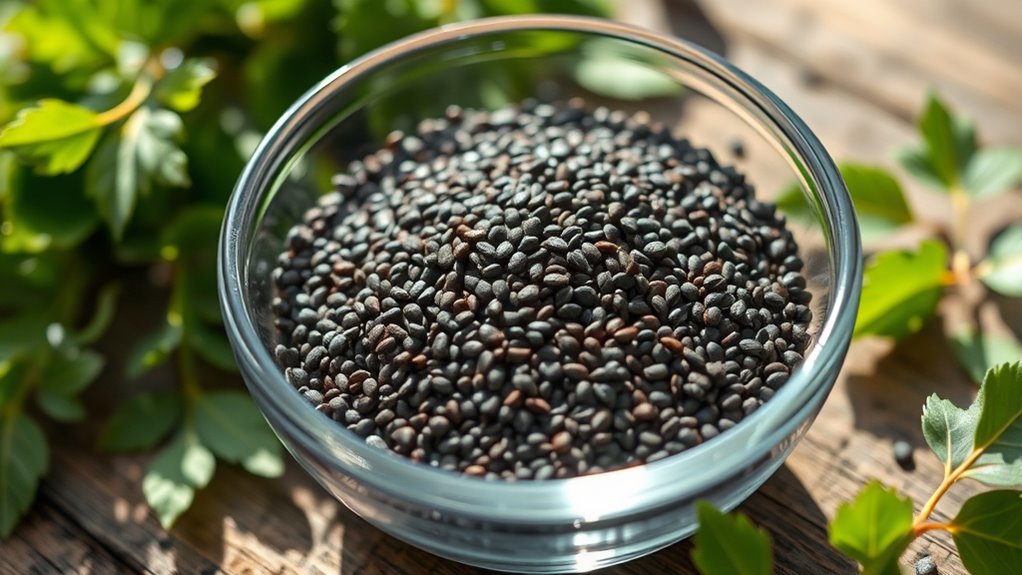
Imagine a garden thriving with vibrant chia seeds, but even the best plants can have issues. Daily consumption may pose potential allergen risks and cause digestive discomfort if you eat too much or don’t hydrate well. While generally safe, overdoing it can lead to bloating or allergic reactions in sensitive individuals. It’s best to enjoy chia seeds in moderation and stay alert for any adverse effects.
How Much Chia Seeds Should I Consume for Weight Loss?
For weight loss, aim for about 1 to 2 tablespoons of chia seeds daily. This helps with portion control and provides the ideal dosage for benefits without overdoing it. Start by adding them to smoothies, yogurt, or oatmeal. Remember, consuming too much can cause digestive discomfort. Stick to moderate amounts to support your weight loss goals while enjoying their health benefits.
Do Chia Seeds Work Better When Combined With Other Foods?
Did you know combining chia seeds with other foods can boost their effectiveness? When you mix them into meals, you create a fiber synergy that keeps you fuller longer and may improve nutrient absorption. This means your body utilizes nutrients better, supporting weight management. So, yes, pairing chia seeds with fruits, yogurt, or smoothies can enhance their benefits, making your weight loss efforts more efficient and satisfying.
Are Chia Seeds Suitable for All Dietary Restrictions?
You’ll find chia seeds suitable for most dietary restrictions since they’re naturally gluten-free, making them a great gluten-free option. They’re also vegan-friendly choices, as they come from plant sources and contain no animal products. However, if you have specific allergies or sensitivities, check labels carefully. Overall, chia seeds easily fit into many diets, providing a versatile, nutritious addition that supports your dietary needs without compromise.

BetterBody Foods Superfood Organic Super Seeds – Blend of Organic Chia Seeds, Milled Flax Seed, Hemp Hearts, Add to Smoothies Shakes & More, 1lb, 16 oz
Go To Seed: For super nutrition, it’s time to go to seed. First, there's chia seed, which has…
As an affiliate, we earn on qualifying purchases.
As an affiliate, we earn on qualifying purchases.
Conclusion
So, while chia seeds might seem like tiny miracles hiding in your pantry, they’re just one part of your weight loss journey. Imagine a spoonful of these seeds as a small boat, slowly guiding you across a vast, unpredictable sea. They can help, but they won’t steer the entire ship. Your success depends on your choices—balancing them with healthy habits, patience, and perseverance. In the end, it’s your steady effort that truly makes the difference.
Elan Organic Chia Seeds, 8.8 oz, Natural Raw Black Chia Seeds, Plant-Based, Non-GMO, Vegan, Gluten-Free, Kosher, Gels Easily, Superfood
NUTRITIOUS SUPERFOOD: Elevate your healthy snacks with Elan Organic Chia Seeds. These small crunchy seeds gel easily, offering…
As an affiliate, we earn on qualifying purchases.
As an affiliate, we earn on qualifying purchases.

Viva Naturals Organic Chia Seeds, 2 lb, 32 Oz – Plant-Based Omega-3 and Vegan Protein, Gluten Free & Non-GMO, Perfect for Smoothies, Salads & Chia Pudding
PLANT-BASED OMEGAS-3 — Omega fatty acids are important fats, and luckily chia seeds organic contain omega-3s. Incorporate them…
As an affiliate, we earn on qualifying purchases.
As an affiliate, we earn on qualifying purchases.