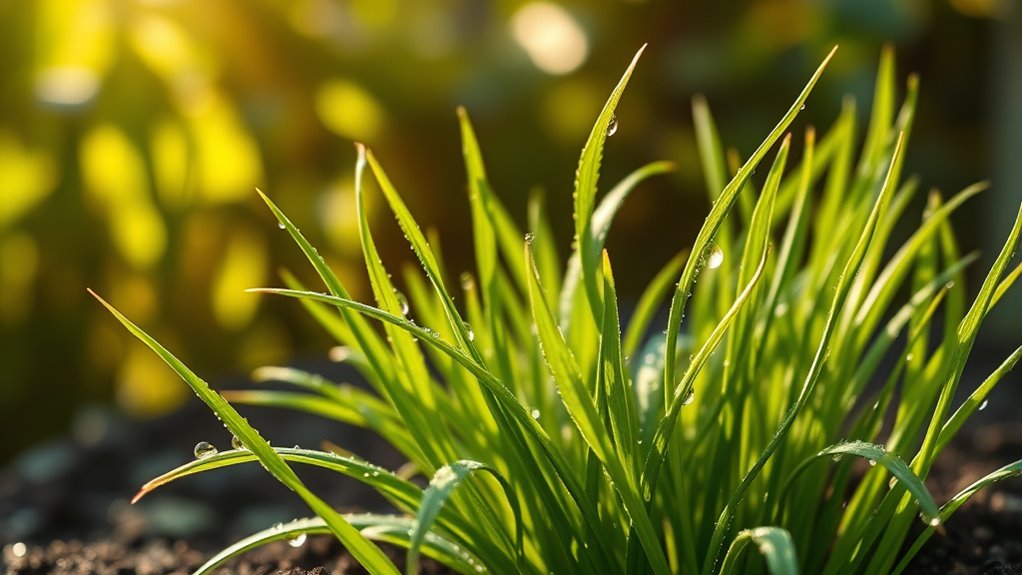

To grow healthy chia plants, make sure they get plenty of full sun daily, as sunlight is essential for growth and seed production. Keep the soil consistently moist with regular, moderate watering, but avoid overwatering to prevent root rot. Mulching helps retain soil moisture and reduces drying out. Proper watering and sunlight promote vigorous growth and higher seed yields. For more detailed tips, continue exploring to guarantee your chia plants thrive successfully.
Key Takeaways
- Chia plants thrive with full sun exposure for optimal growth and seed production.
- Consistent, moderate watering keeps soil evenly moist without waterlogging.
- Mulching helps retain soil moisture and prevents rapid drying during hot days.
- Proper watering promotes healthy, vigorous plants and maximizes seed yield.
- Adjust watering based on weather to avoid soggy or dry soil conditions.
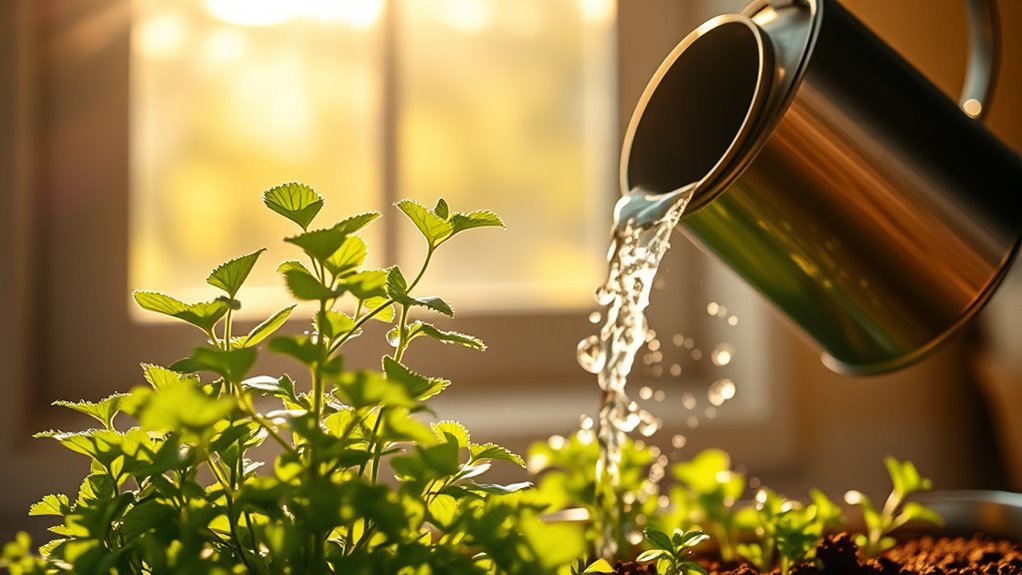
Chia plants thrive when they receive plenty of sunlight and consistent watering, making these factors essential for healthy growth. But to ensure your chia plants flourish, you also need to pay attention to the soil in which they grow. Soil acidity plays a crucial role—chia prefers slightly acidic to neutral soil, with a pH around 6 to 7. If the soil is too acidic or too alkaline, it can hinder nutrient absorption, stunting growth or reducing seed yield. Testing your soil before planting helps determine its pH level, and if adjustments are needed, you can add amendments like lime to raise pH or sulfur to lower it. Proper soil conditions promote vigorous growth and maximize your harvest.
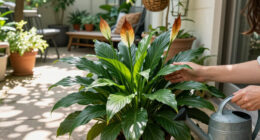
When watering your chia plants, keep in mind that they like consistent moisture but dislike waterlogged soil. Too much water can lead to root rot, while too little causes the plants to wilt and produce poor seed production. Regular, moderate watering guarantees the soil remains evenly moist without becoming soggy. Mulching around the plants can help retain soil moisture and prevent rapid drying, especially during hot, sunny days. Remember, consistent watering not only sustains healthy growth but also helps prevent pest problems. Stressed plants are more vulnerable to pests, so maintaining ideal moisture levels is essential for pest control.
Speaking of pests, vigilant pest control is necessary for healthy chia plants. Common pests like aphids, spider mites, and cutworms can damage your plants by feeding on leaves or stems, weakening the plant’s overall health. Regular inspection is your best defense—look closely at the undersides of leaves and around the base of your plants. If you spot pests early, you can remove them by hand or use organic insecticidal soap to keep populations in check. Healthy, well-maintained plants are less attractive to pests, so avoiding overwatering or excessive fertilization can also reduce pest issues. Additionally, practicing crop rotation and keeping the planting area clean minimizes pest habitats, further strengthening your pest control efforts.
As an affiliate, we earn on qualifying purchases.
Frequently Asked Questions
Can Chia Plants Survive Indoors Without Direct Sunlight?
Yes, you can grow chia plants indoors without direct sunlight. You should rely on bright indoor lighting, such as fluorescent or LED grow lights, to provide adequate light. Make sure to monitor soil moisture closely, keeping the soil consistently moist but not soggy. Proper lighting and soil care will help your chia plants thrive indoors, even without direct sunlight.
How Often Should I Water Chia Plants During Winter?
A stitch in time saves nine, so during winter, you should water your chia plants about once a week. Seasonal moisture levels drop, and overwatering can cause root rot. Check the top inch of soil; if it feels dry, it’s time to water. Make certain proper drainage and avoid letting the soil stay soggy. Adjust watering frequency based on indoor humidity and temperature for healthy chia growth.
What Signs Indicate Overwatering or Underwatering Chia Plants?
You’ll notice signs of overwatering in your chia plants if the leaves turn yellow, feel soggy, or develop mold. Signs of underwatering include wilted, dry leaves, and a brittle texture. If your plant’s soil stays constantly wet or it’s drooping despite moist soil, it’s overwatered. Conversely, if the soil is dry and the plant looks stressed or shriveled, it’s underwatered. Adjust watering accordingly to keep your chia healthy.
Do Chia Plants Require Different Watering Techniques in Different Soil Types?
You should adjust your watering techniques based on soil type because soil moisture retention varies. For sandy soil, water more frequently since it drains quickly, but in clay soil, reduce watering and guarantee proper drainage to prevent overwatering. Monitor your chia plant’s soil moisture regularly, and adapt your watering frequency accordingly. This approach helps keep the soil consistently moist without waterlogging, promoting healthy growth.
How Does Humidity Affect Chia Plant Growth and Watering Needs?
High humidity levels can surprise you by slowing down transpiration rates, which means your chia plant might need less frequent watering. Conversely, low humidity speeds up transpiration, risking dehydration if you don’t water carefully. Keep a close eye on humidity, as it directly influences how much water your chia plants need. Adjust your watering schedule accordingly, and you’ll keep your chia thriving, even when humidity levels change unexpectedly.
As an affiliate, we earn on qualifying purchases.
Conclusion
By balancing bright, beautiful sunlight with proper watering, you’ll foster flourishing chia plants. Remember, consistent care creates a thriving tableau of tiny, tender tendrils. Keep your chia cheerful with sufficient sunshine and steady supply of water, and you’ll see spectacular sprouting success. So, stay vigilant, nurture naturally, and enjoy the lush, lively leaves. With a little love and attention, your chia plants will thrive, transforming your space into a splendid, sustainable sanctuary.
As an affiliate, we earn on qualifying purchases.
As an affiliate, we earn on qualifying purchases.