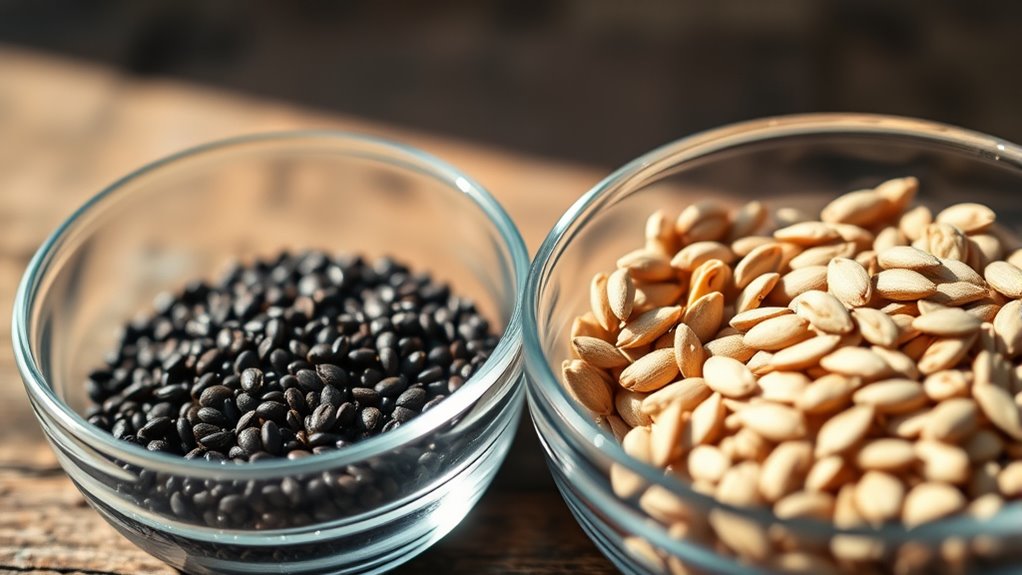
Chia seeds and hemp seeds each bring unique benefits to your diet. Chia seeds are high in fiber, antioxidants, and can absorb liquids to help you stay hydrated, making them great for digestion and fullness. Hemp seeds offer complete protein and balanced omega-3 and omega-6 fatty acids to support overall wellness and muscle health. Exploring their differences can help you choose the best option for your nutritional goals—keep going for a closer look.
Key Takeaways
- Chia seeds are high in fiber and antioxidants, supporting digestion and immune health, while hemp seeds offer complete protein and essential fatty acids.
- Chia seeds absorb liquids and create a gel, ideal for thickening recipes; hemp seeds have a crunchy texture and a nutty flavor.
- Hemp seeds provide all nine essential amino acids, making them a complete protein source; chia seeds have significant protein but are incomplete.
- Both seeds are nutrient-dense, but chia emphasizes fiber and antioxidants, whereas hemp focuses on balanced fats and vitamins.
- Choice depends on dietary goals: chia for hydration and fiber, hemp for protein and essential nutrients.
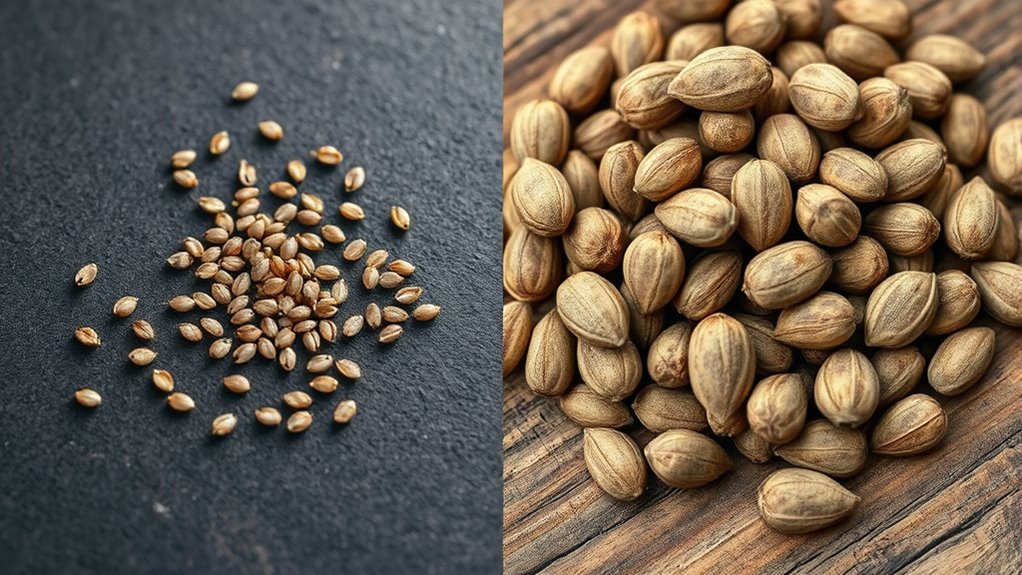
When choosing between chia seeds and hemp seeds, understanding their differences can help you make healthier choices. Both seeds pack a punch in terms of nutritional benefits and offer versatile culinary uses, but they serve slightly different dietary needs and preferences.
Choosing between chia and hemp seeds depends on your nutritional goals and taste preferences.
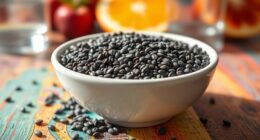
Chia seeds are renowned for their high fiber content, which can aid digestion and help you feel full longer. They contain a good amount of omega-3 fatty acids, primarily alpha-linolenic acid (ALA), making them a great plant-based option for supporting heart health. Additionally, chia seeds are rich in antioxidants, which can help fight free radicals. Their nutritional benefits extend to a significant protein content, although they are not a complete protein source. You can incorporate chia seeds into your diet by adding them to smoothies, yogurt, oatmeal, or even baking recipes. When soaked in liquid, they form a gel-like consistency, making them ideal for puddings and thickening agents in recipes. Hydration benefits are another advantage of chia seeds due to their liquid-absorbing properties.
Hemp seeds, on the other hand, offer a different set of nutritional benefits. They are an excellent source of complete protein, containing all nine essential amino acids, which makes them especially valuable for vegetarians and vegans. Hemp seeds are also rich in healthy fats, including omega-3 and omega-6 fatty acids, in an ideal ratio for human health. They provide a good amount of vitamins and minerals, such as magnesium, zinc, and iron, contributing to overall wellness. Culinary uses for hemp seeds are similarly versatile; you can sprinkle them over salads, stir into yogurt, blend into smoothies, or incorporate into baking. Their nutty flavor adds depth to many dishes, and they don’t require soaking like chia seeds.
While both seeds are nutrient-dense, their culinary uses can influence your choice depending on your preferred taste and texture. Chia seeds tend to absorb liquids and become gelatinous, making them perfect for thickening or creating textures in recipes. Hemp seeds have a crunchier texture and a mild, nutty flavor that enhances salads and snack mixes. In terms of nutritional benefits, chia seeds excel in fiber and antioxidants, while hemp seeds shine with their complete protein profile and balanced fatty acids. Considering your dietary goals—whether it’s boosting fiber intake or ensuring complete protein—you can select the seed that best fits your needs.
Understanding these differences empowers you to leverage their unique qualities in your diet, making your meals more nutritious and enjoyable. Whether you choose chia for its fiber and gel-like properties or hemp for its protein and healthy fats, both seeds are excellent additions to a balanced diet.
Frequently Asked Questions
Are Chia and Hemp Seeds Suitable for People With Nut Allergies?
If you have nut allergies, you might wonder about seed allergy safety. Chia and hemp seeds are generally safe for those with nut allergies, but nut allergy considerations vary. Chia seeds are less likely to cause reactions, but some people may have seed allergies. Hemp seeds are often well-tolerated, yet it’s best to consult your doctor first. Always check labels and start with small amounts to guarantee seed allergy safety.
How Do Chia and Hemp Seeds Affect Blood Sugar Levels?
Imagine your blood sugar levels are like a roller coaster. Chia and hemp seeds help smooth that ride by supporting blood sugar regulation. They contain fiber and healthy fats that slow digestion, promoting a steady insulin response. Studies show chia seeds, in particular, can lower post-meal blood sugar spikes. Including these seeds in your diet can enhance metabolic health and keep your blood sugar levels balanced.
Can These Seeds Be Incorporated Into a Low-Carb Diet?
Yes, you can incorporate chia and hemp seeds into a low-carb diet. They serve as excellent low carb alternatives, providing healthy fats and fiber that support dietary flexibility. You can sprinkle them on salads, blend into smoothies, or add to yogurt. Their nutrient density helps you stay satisfied without spiking blood sugar levels, making them versatile options for maintaining a low-carb lifestyle while enjoying variety and nutrition.
What Are the Environmental Impacts of Harvesting Chia Versus Hemp?
You’re really asking the tough questions about the environmental impacts of harvesting chia and hemp. Both can be grown sustainably, but hemp generally requires less water, making it more eco-friendly. Hemp’s resilient nature means less need for pesticides and fertilizers, supporting sustainable farming. Chia, on the other hand, may demand more water, especially in dry regions. So, if you’re looking to keep your footprint light, hemp might be the better choice.
Are There Any Known Drug Interactions With Chia or Hemp Seeds?
When considering medication interactions, you should know that chia and hemp seeds are generally safe herbal supplement effects, but they may still influence blood clotting or blood sugar levels. If you’re on blood thinners or diabetic medication, consult your healthcare provider before adding them to your diet. While rare, these seeds could affect medication absorption or efficacy, so it’s wise to monitor your response and seek professional advice if you notice changes.
Conclusion
Both chia and hemp seeds offer unique health benefits, making it tough to choose just one. If you’re worried about added calories, remember that a small amount goes a long way in boosting your nutrition. Incorporate either seed into your diet without feeling overwhelmed—try sprinkling them on yogurt or blending into smoothies. Ultimately, including both in your meals can give you a diverse range of nutrients, so don’t stress about picking just one; variety is key!