TL;DR

Get garden gear delivered free with Prime
- Fast, free delivery on millions of items
- Prime Video, Amazon Music and more included
- Member-only deals all year
Chicken manure can add nutrients and organic matter to garden soil, but its nutrient strength and safety depend on bedding, storage and treatment. The guidance recommends soil testing, following product directions, and treating manure of unknown processing as raw when planning harvest intervals.
Grow Organic’s gardening guide says chicken manure can supply nutrients and organic matter, but gardeners should check how it was treated, test their soil and follow application directions. The advice matters because overapplication can damage plants, while raw or uncertain manure may carry germs that cause illness if harvest timing is not managed.
Poultry manure contains nitrogen, phosphorus and potassium, along with other nutrients. It can also add organic matter that supports soil structure and water retention. Its strength varies with bedding, storage and treatment, however, and excessive salts or ammonia can burn plants. Grow Organic cites University of Nevada guidance on manure’s benefits and risks.
The guide distinguishes fresh, aged, composted and pelleted materials. Aging means storage over time, but drying or sitting does not prove harmful germs are gone. A managed composting process uses moisture, air, heat and suitable organic materials; an earthy smell alone is not proof that safety standards were met. Pellets’ shape likewise does not establish how they were processed, so gardeners should check current package directions and treatment details.
There is no universal application rate for every garden or product. The guide advises testing soil, considering crop nutrient needs, and following the product label or manure test. It warns that applying enough manure to meet a nitrogen target may add too much phosphorus. A calculation example shows how to scale a label rate: at a hypothetical rate of 5 pounds per 100 square feet, a 32-square-foot bed would receive 1.6 pounds. That is an arithmetic illustration, not a general recommendation.
Protecting Plants and Harvests
The practical issue is balancing soil improvement against plant damage and food-safety risks. Applying more manure is not necessarily better: excess nutrients can accumulate, and concentrated material near roots can injure plants. Keeping records of application amounts and dates can help gardeners account for earlier inputs rather than repeatedly adding nutrients their soil already has.
Harvest timing is especially important for edible crops. The source reports USDA guidance for raw manure in organic food production: allow at least 120 days from soil incorporation to harvest when edible parts contact soil or soil particles, and 90 days when they do not. Soil splash counts as contact. The guide says these periods run to harvest, not planting, and offer planning guidance for home gardens; it does not present them as identical rules for every processed product.
chicken manure fertilizer for gardens
As an affiliate, we earn on qualifying purchases.
As an affiliate, we earn on qualifying purchases.
Choosing and Applying Manure
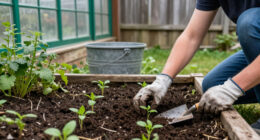
For bed preparation, the guide recommends spreading a measured amount evenly and mixing it into soil as directed, rather than leaving concentrated pockets around roots. For established plants, it advises using a suitable treated product according to its label, keeping it away from stems and edible parts, and watering it in without creating runoff. Application should be avoided on frozen, flooded or saturated ground.
Crop choice alone does not establish whether manure is needed. Corn and leafy crops may benefit when soil requires added nutrients, while too much nitrogen for tomatoes can favor leafy growth over fruit. The guide’s broader instruction is to use soil results and crop needs, not a general list of plants, to decide whether to add manure and how much.
During handling, the source advises wearing gloves, washing hands and cleaning tools. Gardeners should keep manure runoff away from crops and water sources. When processing details are unknown, it recommends treating the material as raw for harvest planning rather than assuming that a dry appearance or mild smell establishes safety.
As an affiliate, we earn on qualifying purchases.
Treatment and Rates Vary
The supplied guide does not provide a single nutrient analysis or application rate that applies to all chicken manure. Nutrient levels and treatment differ among products and batches, and the provided material does not specify the processing details or current label directions for any particular pellet or packaged product. Gardeners need to check the product they have and, where possible, use soil-test results or a manure analysis.
The source also does not establish that every aged or commercially sold product meets a particular food-safety standard. Whether processed material is subject to different timing guidance depends on its treatment and applicable instructions. If that information cannot be confirmed, the guide advises following raw-manure timing guidance.
As an affiliate, we earn on qualifying purchases.
Check Soil Before Application
Before applying manure, gardeners can test their soil, review the product’s treatment information and label, then calculate a measured amount suited to the bed and crop. They should record the application date and quantity so previous nutrient additions are included in later decisions.
For raw manure, harvest plans should account for the source’s reported 90- or 120-day intervals, depending on whether edible parts contact soil. The guide offers no schedule for a specific garden or product; the next step is to follow the verified label and relevant food-safety guidance for the material being used.
food safety soil test for vegetables
As an affiliate, we earn on qualifying purchases.
As an affiliate, we earn on qualifying purchases.
Key Questions
How much chicken manure should I add?
There is no single rate for all soils and products. Use soil-test results and follow the manure or fertilizer label; a manure test can help identify its nutrient content.
Is aged chicken manure safe to use on vegetables?
Not necessarily. Aging alone does not prove that harmful germs are gone. Check treatment details, and if they are unknown, treat the manure as raw when planning harvest timing.
How long should I wait after applying raw manure to harvest?
The guide reports USDA organic-production intervals of 120 days when edible parts contact soil or soil particles and 90 days when they do not. The periods run from soil incorporation to harvest; soil splash counts as contact.
Can too much chicken manure harm plants?
Yes. The source warns that excess salts and ammonia can burn plants, and surplus nutrients can add more phosphorus than the garden needs. Measure applications and avoid concentrated piles around roots.
What precautions should gardeners take when applying it?
Wear gloves, wash hands and clean tools. Keep manure off edible parts, away from stems and water sources, and prevent runoff toward crops or waterways.
Source: rss
Halloween Picks
halloween
As an affiliate, we earn on qualifying purchases.