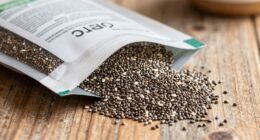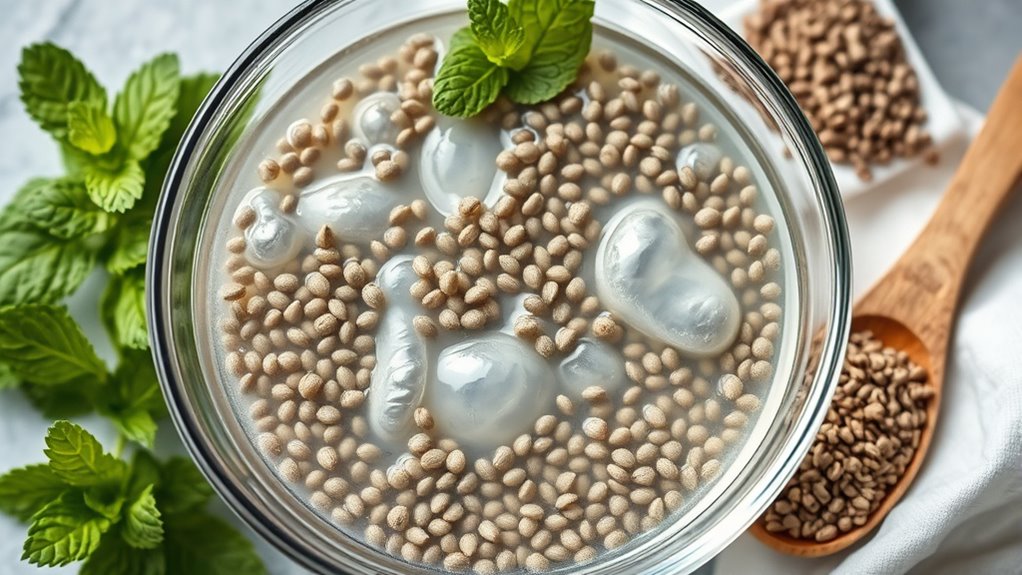
Yes, you can safely eat chia seeds raw, especially if you hydrate them properly. Soaking or hydrating seeds in water or milk for about 10–15 minutes helps improve digestibility and prevents choking, while also preserving their nutrients. Remember to start with small amounts and drink plenty of water to avoid digestive discomfort. For more tips on how to include raw chia seeds safely and effectively, keep exploring these simple preparation methods.
Key Takeaways
- Yes, raw chia seeds are safe to eat, especially when properly hydrated.
- Soaking chia seeds in water or milk enhances digestibility and nutrient absorption.
- Consuming moderate amounts (1–2 tablespoons daily) minimizes digestive discomfort.
- Drinking plenty of water helps prevent choking or digestive issues from swollen seeds.
- Chia seeds retain their nutritional benefits best when eaten raw and properly prepared.
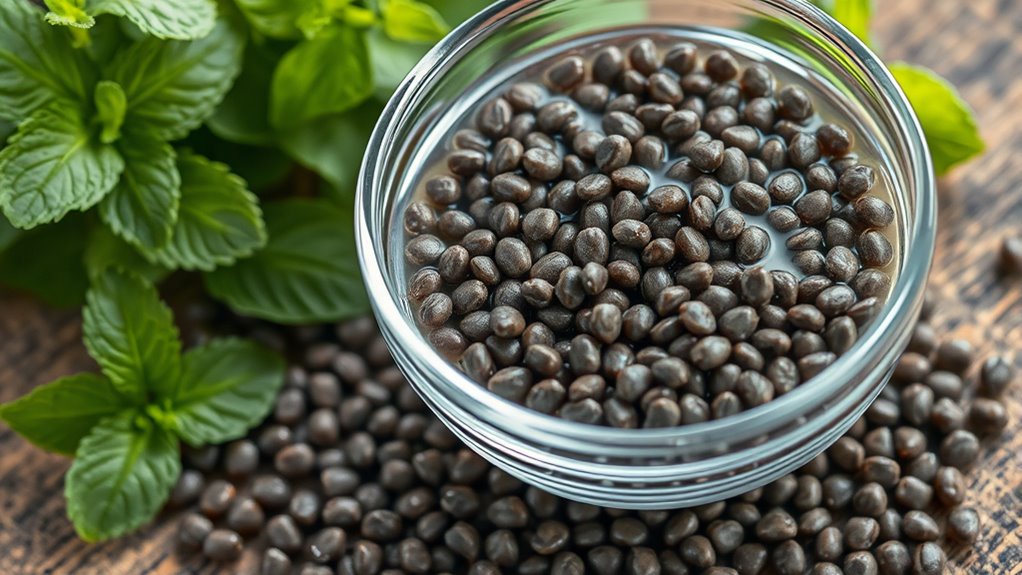
Are chia seeds safe to eat raw? Absolutely, yes. You can enjoy chia seeds raw, and many people do so daily to benefit from their impressive nutritional profile. These tiny seeds are packed with nutrients like fiber, omega-3 fatty acids, protein, vitamins, and minerals. Consuming them raw preserves these nutrients, making them an excellent addition to your diet. However, it’s essential to understand how to incorporate them properly and maximize their nutritional benefits through some simple preparation tips.
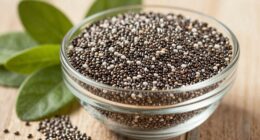
Chia seeds are safe to eat raw and are highly nutritious when consumed directly.
When eating chia seeds raw, one of the key nutritional benefits is their high fiber content, which helps support digestion and keeps you feeling full longer. Their omega-3 fatty acids are vital for brain health and reducing inflammation. Additionally, chia seeds contain antioxidants, calcium, magnesium, and phosphorus, all of which contribute to overall health. Because they are so nutrient-dense, including raw chia seeds in your meals or snacks can boost your energy levels and improve your nutritional intake without much effort.
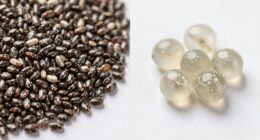
Preparation tips for eating chia seeds raw are straightforward. Before adding them to your diet, it’s best to soak the seeds in water or milk for about 10 to 15 minutes. This creates a gel-like consistency that makes them easier to digest and prevents any potential choking hazard. Soaking also enhances nutrient absorption and makes the seeds tasteless, so you can blend them into smoothies, yogurt, oatmeal, or puddings without altering the flavor too much. If you prefer a crunchier texture, sprinkle dry seeds directly onto salads or cereals, but keep in mind that soaking can improve digestibility and nutrient availability.
Some people worry about consuming raw chia seeds because of their ability to absorb water and swell. While this is true, it’s generally safe, as long as you stay hydrated and don’t consume large amounts at once. Drinking plenty of water when eating raw seeds prevents any digestive discomfort. Additionally, starting with a small amount—around one to two tablespoons per day—allows your body to adjust smoothly to the increased fiber intake.
Top picks for "chia seed safety"
Open Amazon search results for this keyword.
As an affiliate, we earn on qualifying purchases.
Frequently Asked Questions
Are There Any Allergies Associated With Eating Raw Chia Seeds?
Yes, you can have allergies to raw chia seeds, especially if you’re sensitive to seeds or have a nut allergy. Some people may experience allergic reactions like itching, swelling, or difficulty breathing. If you’ve had seed sensitivities or nut allergies before, it’s best to start with a small amount and watch for any symptoms. Always consult with a healthcare professional if you’re unsure about potential allergies to chia seeds.
How Much Raw Chia Seeds Is Safe to Consume Daily?
Ah, the age-old question of chia seed indulgence—because who doesn’t want to turn their diet into a tiny, crunching revolution? You should stick to about 1 to 2 tablespoons of raw chia seeds daily, roughly 20 grams, to stay within safe serving sizes and daily limits. Overdoing it might lead to digestive issues or nutrient imbalance, so enjoy them wisely, and your stomach will thank you for the restraint.
Can Raw Chia Seeds Cause Digestive Issues?
Raw chia seeds can cause digestive discomfort and unpredictable bowel reactions if you consume too much or don’t soak them first. They absorb liquid quickly, forming a gel that might lead to bloating, gas, or constipation. To avoid these issues, start with small amounts, soak or grind the seeds before eating, and stay well-hydrated. Listening to your body helps prevent adverse digestive effects from raw chia seeds.
Do Raw Chia Seeds Have Different Nutritional Benefits Than Soaked?
Raw chia seeds and soaked chia seeds have some nutritional differences. Soaking helps break down the seed’s outer shell, making nutrients like omega-3s, fiber, and minerals easier for your body to absorb. While raw seeds still provide benefits, soaking enhances bioavailability and reduces digestive discomfort. If you want maximum nutritional benefits and easier digestion, soaking your chia seeds is a smart choice.
Should Raw Chia Seeds Be Stored Differently Than Prepared Ones?
Just like a knight guards his treasure, you should store raw chia seeds in an airtight container in a cool, dark place to preserve freshness. Prepared chia seeds, soaked or cooked, require refrigeration in a sealed jar to prevent spoilage. Proper storage considerations make certain your seeds stay fresh longer, maintaining their nutritional benefits. Always check for any signs of mold or odor before use, regardless of their state.
Conclusion
Yes, you can eat chia seeds raw, and they’re safe when prepared properly. Just like a knight wouldn’t venture into battle without armor, you shouldn’t overlook soaking or grinding them to avoid choking or digestive issues. Think of chia seeds as tiny treasure chests—unlock their full potential by preparing them right. So, go ahead, sprinkle them on your yogurt or toss them into smoothies, and enjoy their health benefits without risking a Trojan horse of discomfort.