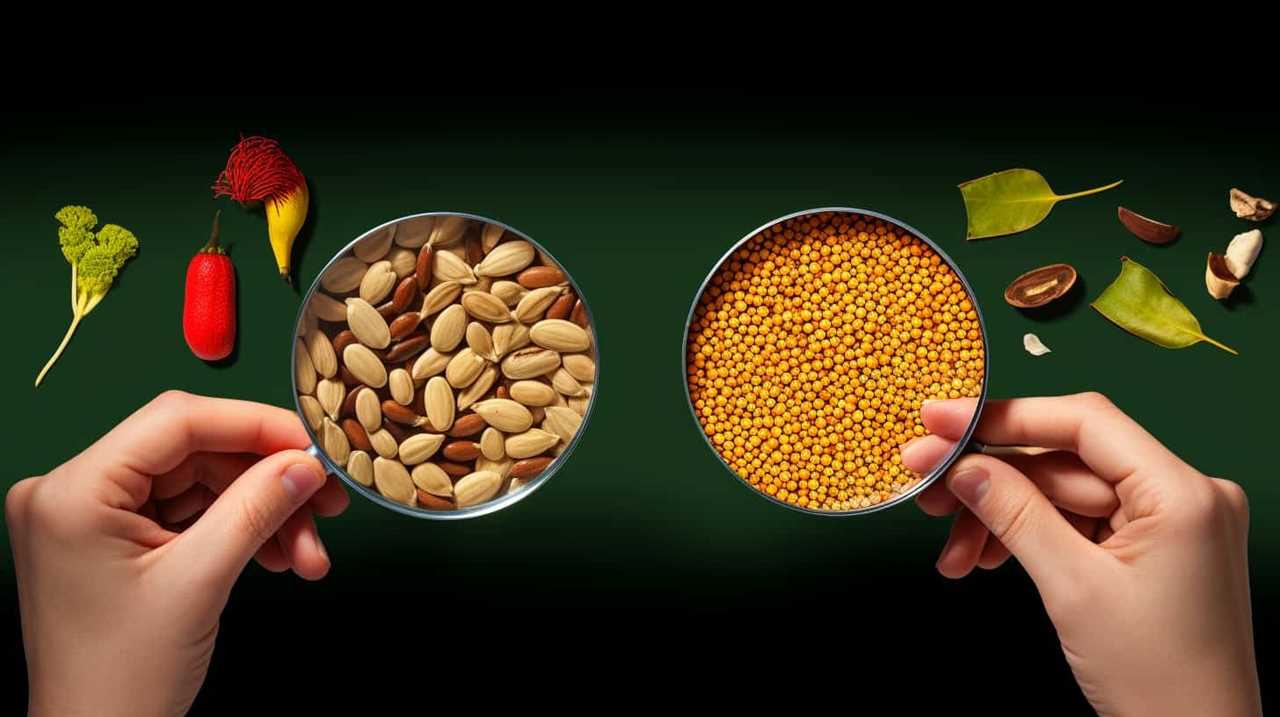
As a future global commodity, chia seeds are set to grow steadily thanks to rising health awareness and sustainability concerns. More countries are entering the market, expanding supply chains and fostering regional farmers’ participation. Eco-friendly farming practices help guarantee quality and long-term viability. Consumer preferences for ethical and organic products boost demand further. If you want to understand how these trends shape chia’s worldwide role, there’s plenty more to explore.
Key Takeaways
- Global demand for chia seeds is expected to continue rising due to increasing health awareness.
- Supply chain diversification and regional participation will strengthen market resilience and meet growing demand.
- Sustainable cultivation practices will become standard, enhancing product quality and environmental impact.
- Certification and transparent sourcing will boost consumer trust and support premium market segments.
- Small-scale farmers and developing regions will play a crucial role in ensuring long-term global supply stability.
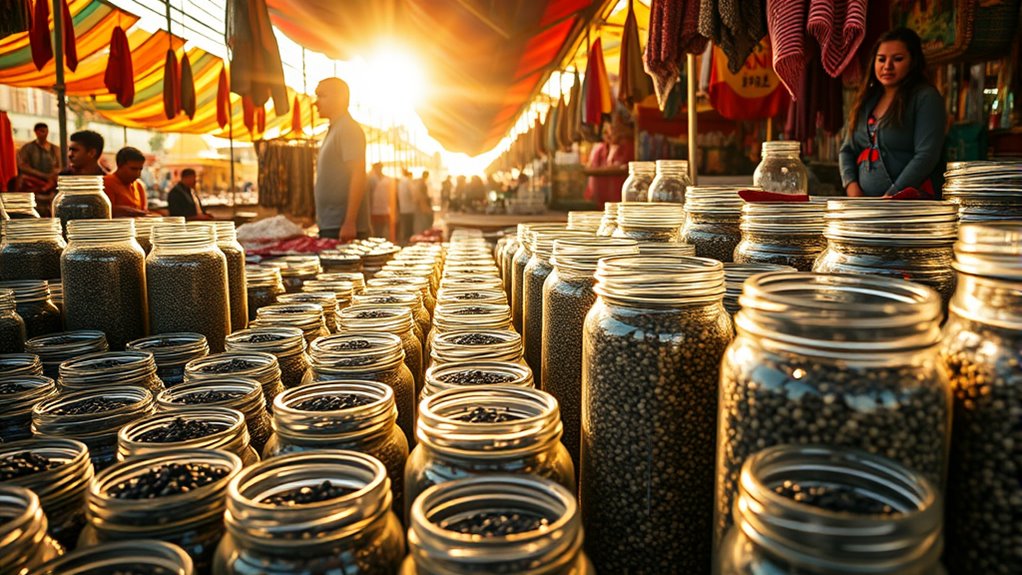
Chia seeds have quickly risen from a traditional food of ancient civilizations to a sought-after global commodity. Their popularity continues to grow, driven by increasing consumer awareness of health benefits and plant-based diets. As demand surges, market expansion becomes a central focus for producers and traders looking to capitalize on this trend. You’ll notice that more countries are entering the chia market, not just as consumers but as producers, facilitating a broader global supply chain. This expansion is supported by innovations in farming techniques and improved access to markets, allowing small-scale farmers to participate actively. These efforts help meet rising demand while also promoting economic development in developing regions.
One of the critical factors shaping the future of chia as a commodity is the emphasis on sustainability practices. Producers are increasingly adopting environmentally friendly methods to cultivate chia seeds, knowing that consumers are more conscious than ever about the ecological footprint of their food choices. Sustainable practices include crop rotation to preserve soil health, water-efficient irrigation systems, and reduced use of chemical inputs. These strategies not only protect natural resources but also enhance the quality and consistency of the seeds. As awareness around environmental issues grows, labeling products with sustainable credentials can give you a competitive edge in the marketplace. Aligning with sustainability practices reassures consumers that their purchase supports ethical and eco-friendly farming, encouraging brand loyalty and trust.
Furthermore, market expansion and sustainability are interconnected. As you explore new markets, especially in regions with increasing health consciousness, you’ll find that consumers are enthusiastic about products that align with their values. This creates opportunities for brands to differentiate themselves by emphasizing sustainable sourcing and transparent supply chains. Certification schemes, such as organic or Fair Trade, bolster credibility and appeal to a broader audience. Sustainability also involves supporting farmers through fair wages and community development, which can strengthen supply chains and ensure long-term viability. By integrating sustainable practices into your growth strategy, you help foster a resilient market that can adapt to changing consumer preferences and environmental challenges.
Top picks for "future prospect chia"
Open Amazon search results for this keyword.
As an affiliate, we earn on qualifying purchases.
Frequently Asked Questions
What Are the Environmental Impacts of Large-Scale Chia Cultivation?
Large-scale chia cultivation can impact the environment by causing soil degradation if not managed properly, reducing soil fertility over time. It also requires significant water usage, which may strain local water resources, especially in drought-prone areas. You should consider sustainable farming practices like crop rotation and efficient irrigation to minimize these impacts. Proper management helps protect the environment while meeting the growing demand for chia seeds.
How Can Developing Countries Benefit Economically From Chia Exports?
You can benefit economically by diversifying your markets through chia exports, which reduces reliance on traditional crops. This strategy helps stabilize your income, especially during price fluctuations. By investing in chia cultivation and establishing export channels, you attract new buyers and create jobs locally. Embracing market diversification not only boosts your economy but also strengthens your community’s resilience, making chia a valuable addition to your agricultural portfolio.
Are There Potential Health Risks Associated With Excessive Chia Consumption?
Don’t bite off more than you can chew with chia seeds. An overdose can lead to chia overdose symptoms like digestive issues and nutritional imbalances. Eating too many chia seeds may cause bloating, diarrhea, or interfere with medication absorption. Moderation is key—while they’re packed with nutrients, too much can do more harm than good. Keep your intake balanced to enjoy their benefits safely.
What Are the Main Challenges in Establishing Global Chia Trade Standards?
You face challenges in establishing global chia trade standards, mainly due to inconsistent trade regulation and quality certification. Different countries have varying rules, which complicates international trade. Ensuring consistent quality certification across producers is essential for consumer trust and market growth. You need to develop unified standards that address these issues, promote fair trade practices, and facilitate smoother international transactions for chia seeds.
How Might Climate Change Affect Future Chia Production Regions?
Climate change can substantially impact future chia production regions by increasing climate variability, which threatens crop resilience. You might see unpredictable weather patterns, droughts, or floods that disrupt chia cultivation. These changes challenge farmers’ ability to maintain stable yields, forcing them to adapt through resilient farming practices or seek new, more stable growing areas. Overall, climate variability emphasizes the need for strategies that bolster crop resilience to secure chia’s future supply.
Conclusion
As you look ahead, chia seeds have the potential to become a global commodity, transforming markets much like the discovery of the New World once did. By embracing sustainable farming and innovative trade practices, you can help shape a future where these tiny seeds boost health worldwide. So, don’t be a laggard—jump on this bandwagon now, and seize the moment before it’s as legendary as the Silk Road. The future’s ripe for chia!