
TL;DR

Get garden gear delivered free with Prime
- Fast, free delivery on millions of items
- Prime Video, Amazon Music and more included
- Member-only deals all year
The Gardening Know How report says routine pruning paint and tar sealants do not help trees recover and may trap moisture or interfere with natural wound responses. It describes limited exceptions for oak and elm cuts in areas where oak wilt or Dutch elm disease is present, because sealants may help deter disease-spreading beetles.
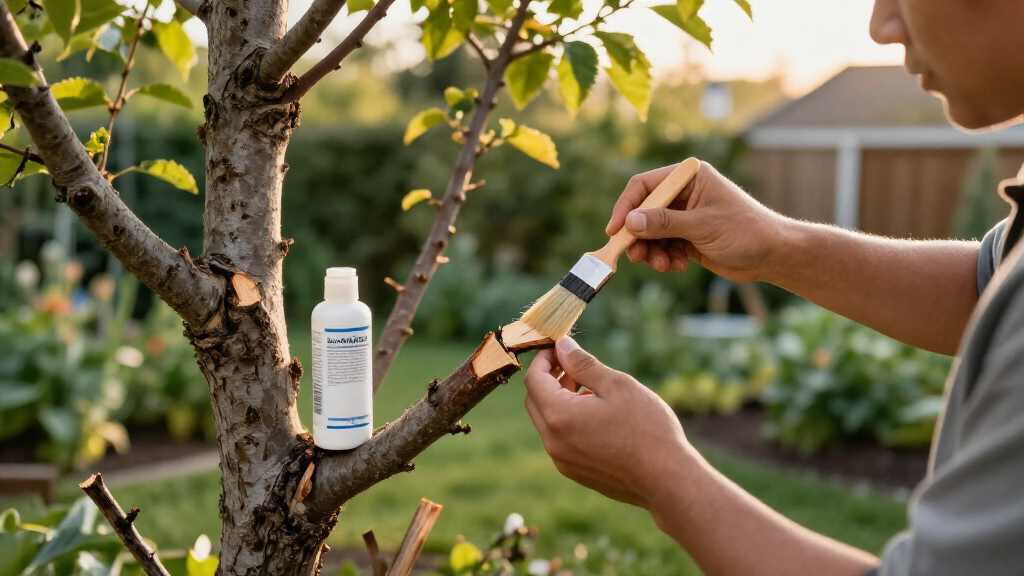
Routine tree wound sealants are generally not recommended after pruning or storm damage, according to a Gardening Know How report that summarizes current arborist guidance. The report says dressings can trap moisture and interfere with a tree’s natural response to injury, although oak and elm cuts may be treated in limited cases where beetles can spread serious diseases.
The report says controlled trials of wound dressings found that painting cuts did not prevent decay or protect trees as hoped. It describes findings in which sealed wounds rotted faster and had more internal structural breakdown than wounds left exposed. These results support the report’s central advice: make an appropriate cut and generally leave the wound uncovered, rather than applying asphalt paint, tar, or another dressing.
One proposed reason for avoiding sealants is the moisture they can hold against the cut. The report says dressings may crack as bark expands and contracts; water can enter through those fissures and remain beneath the coating. It also says thick dressings may cover living cells at the wound margins, hindering the tree’s production of callus tissue, which forms as part of the tree’s response to injury.
The report identifies a narrow exception tied to disease prevention, not faster healing. In areas affected by oak wilt or Dutch elm disease, fresh wounds on susceptible oaks or elms can release sap that attracts beetles capable of spreading disease. In those circumstances, a sealant may be used as a barrier under local expert guidance. The source does not provide a product, application method, or region-specific schedule.
Why Routine Wound Coatings Can Backfire
For homeowners, the distinction changes what to do after a branch breaks or is pruned. Applying a coating may feel like protection, but the report says routine use can create conditions that favor decay rather than prevent it. Avoiding an unnecessary dressing also removes a step that may mask the cut without addressing the underlying injury.
The disease exception matters because the risk is not the same for every tree or location. Where oak wilt or Dutch elm disease occurs, an untreated fresh cut may attract insect vectors, according to the report. That makes species, local disease pressure, and timing relevant; a general rule against sealants should not override local arborist or forestry advice in a known disease-risk area.
The practical takeaway is not to coat every wound or to assume that every wound should remain untreated in all circumstances. It is to avoid routine sealing and seek location-specific advice when a susceptible oak or elm is damaged where these diseases are present. Severe storm damage may also call for assessment by a qualified arborist, rather than relying on a dressing to solve the problem.
Products Worth Considering

Instant Pot Vortex Plus 6-Quart Air Fryer

KitchenAid 28 oz Cold Brew Coffee Maker, KCM4212

Ninja DualZone Air Fryer 10 Qt Smart 6-in-1 Grey (DZ950)
As an affiliate, we earn on qualifying purchases.
How Tree-Wound Advice Changed
Pruning paints and tar products were marketed during the early 20th century as ways to block pests, disease, and moisture loss. The report says gardeners adopted the practice partly by comparing tree injuries with human cuts, assuming both needed a protective covering. It describes that comparison as misleading because trees respond to injury differently.
By the late 20th century, tree researchers and arborists had tested wound dressings, and the report says those trials did not show the expected protective benefit. It states that the International Society of Arboriculture and leading forestry institutions advise against routine wound paints and sealants. The report’s account is broad and does not name individual studies or provide their methods, so readers seeking case-specific guidance should consult a local extension service or certified arborist.
When Local Disease Risk Changes Advice
The supplied report does not give a publication date, cite specific trials, or identify particular products tested. It also does not spell out exact conditions for applying sealant to oak or elm cuts, including how high-risk periods are defined in different regions. Its exception is described in general terms: fresh cuts on susceptible trees may warrant a barrier where oak wilt or Dutch elm disease is prevalent.
It is also not possible from the source to assess an individual storm-damaged tree. The size and location of a break, the tree species, and local disease conditions can affect the appropriate response. Readers should not infer that a coating can repair structural damage or replace safe pruning practices.
Check Local Guidance Before Treating
After routine pruning or storm breakage, the report’s general recommendation is to avoid applying wound paint or tar. For an oak or elm in a region with a known disease threat, check current guidance from a local extension service, forestry agency, or certified arborist before deciding whether a sealant is appropriate. Local disease alerts and species-specific advice are the key next steps; the source gives no universal calendar or treatment instructions.
For large, hanging, or structurally dangerous branches, keep clear and contact a qualified tree-care professional. A coating does not make an unstable limb safe. The report offers no further announced guidance or follow-up milestone, so any region-specific recommendation remains dependent on local authorities and tree-care professionals.
Key Questions
Should I seal a tree wound after ordinary pruning?
Generally, no. The Gardening Know How report says routine wound paints and sealants do not prevent decay and may trap moisture or interfere with the tree’s natural response.
Can sealant make a tree wound heal faster?
The report says sealants are not used to make wounds heal faster. Its limited exceptions concern deterring beetles that can spread disease to susceptible oaks or elms.
When might a tree wound sealant be considered?
The report describes possible use on fresh oak or elm cuts in areas where oak wilt or Dutch elm disease is present. Ask a local extension service, forestry agency, or certified arborist for current, location-specific advice.
What should I do about a large storm-damaged branch?
Do not rely on sealant to address a large or unstable break. Keep people away from dangerous hanging limbs and contact a qualified arborist to assess the tree.
Source: gardeningknowhow.com