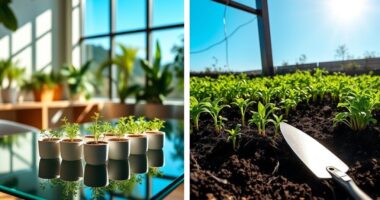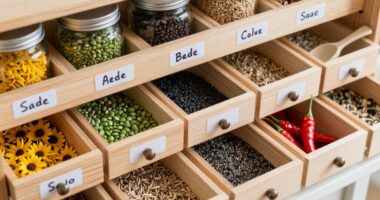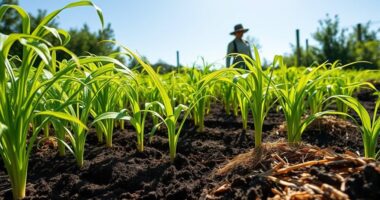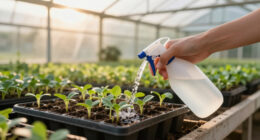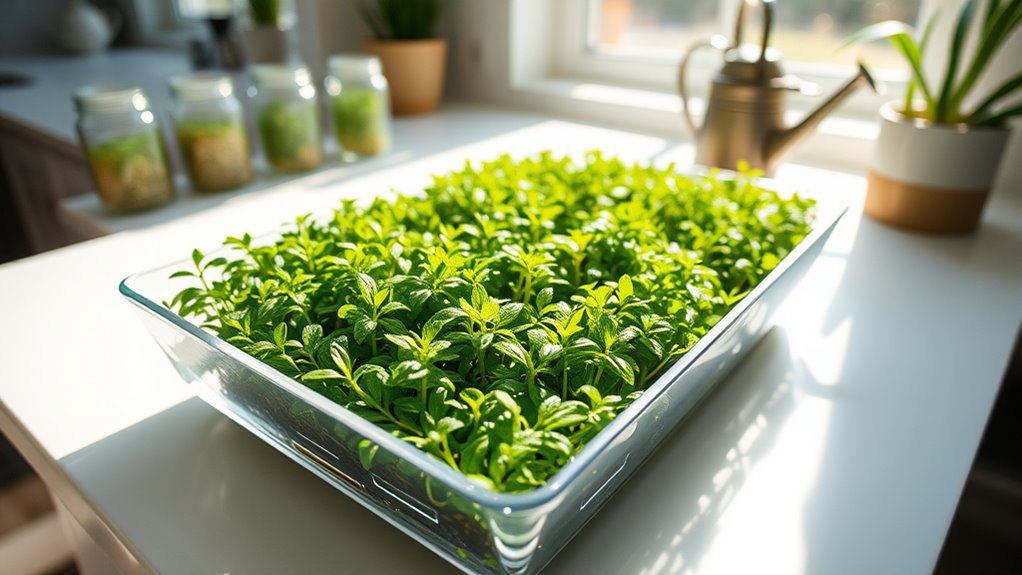

To grow chia microgreens quickly in your kitchen, start by soaking rinsed seeds for a few hours, then spread them evenly on moist, well-draining soil or compost. Gently press or lightly cover the seeds, keeping the soil consistently moist with misting or gentle watering. Place them in a bright spot with indirect sunlight or under grow lights. Within 7 to 14 days, you’ll have vibrant, tender greens ready for harvest—continue to explore for more tips on maximizing your crop.

Get garden gear delivered free — and shop member deals
- Fast, free delivery on millions of items
- Access to Prime Big Deal Days deals on October 6–7
- Prime Video, Amazon Music and more included
Key Takeaways
- Use moist, well-draining soil and soak chia seeds before planting for best germination.
- Spread seeds evenly, lightly cover or leave exposed, and keep soil consistently damp.
- Place in bright, indirect light or under grow lights to support healthy growth.
- Mist or water lightly twice daily during sprouting, then reduce as leaves develop.
- Harvest microgreens within 7-14 days when leaves are vibrant and tender for a quick, nutrient-rich crop.
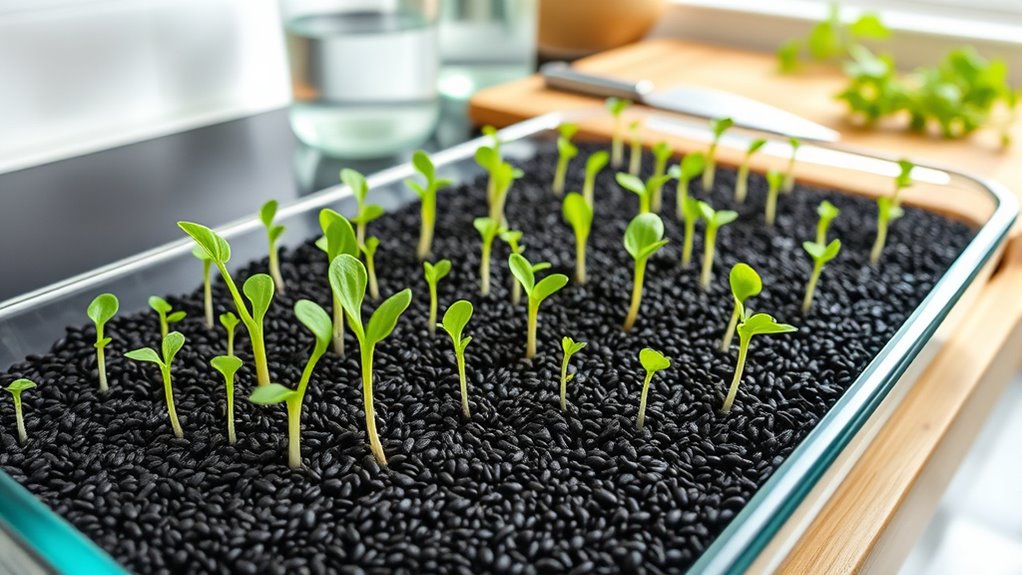
Growing chia for microgreens is an easy and nutritious way to add fresh greens to your diet. When you start, focus on soil preparation to give your chia seeds the best environment to sprout and grow quickly. Use a fine-textured, well-draining potting mix or a blend of compost and soil to provide essential nutrients. Make certain the soil is moist but not waterlogged, as chia seeds prefer a slightly damp environment for germination. Before planting, rinse and soak your chia seeds for a few hours to encourage faster sprouting. Spread the seeds evenly across the prepared soil, pressing them gently into the surface. Covering the seeds lightly with a thin layer of soil or just pressing them into the surface can help protect them and promote even germination.
Once your seeds are planted, establishing a consistent watering schedule is vital. Chia microgreens thrive with regular moisture, but overwatering can lead to mold or root rot. Mist the soil gently with a spray bottle or water lightly with a watering can, keeping the soil consistently moist but not soaked. During the first few days, you might need to water more frequently, perhaps twice a day, to keep the seeds damp as they sprout. As they grow and develop their first true leaves, you can reduce watering frequency but still maintain consistent moisture. Always check the soil’s top layer; if it feels dry, it’s time to water again. Avoid letting the soil dry out completely, as this can stunt growth and delay your harvest.
Your chia microgreens will grow rapidly, typically ready to harvest within 7 to 14 days. To encourage healthy growth, keep the growing area in a bright spot with indirect sunlight or under grow lights. Proper soil preparation and a steady watering schedule ensure your microgreens develop vibrant, tender leaves that are perfect for salads, sandwiches, or garnishes. Remember, the key to successful chia microgreens is consistent care—maintain the right moisture level and avoid disturbances that could damage the delicate seedlings. As you watch them sprout and flourish, you’ll appreciate how quick and rewarding this process is. With minimal effort, you can enjoy a fresh, nutrient-packed harvest straight from your kitchen, making chia microgreens a convenient and healthful addition to your meals.
As an affiliate, we earn on qualifying purchases.
Frequently Asked Questions
Can Chia Microgreens Be Grown Outdoors Year-Round?
You can’t grow chia microgreens outdoors year-round if you live in a region with cold winters. Chia prefers warm, consistent temperatures, so seasonal planting is your best bet. For continuous harvests, indoor gardening allows you to control light and temperature, ensuring your microgreens thrive regardless of the season. This way, you enjoy fresh chia microgreens all year, even when outdoor conditions aren’t suitable.
What Are the Best Containers for Chia Microgreens?
You might think any container will do, but for chia microgreens, the right choice is key. Container types like shallow trays or recycled containers with drainage holes work best, preventing waterlogging. Soil considerations matter, too—use light, well-draining soil to promote healthy sprouting. Remember, your microgreens thrive when you give them proper space and drainage, so don’t skimp on choosing the perfect container. After all, a good start makes all the difference.
How Often Should I Water My Chia Microgreens?
You should water your chia microgreens daily, maintaining consistent moisture management. Keep the soil or growing medium evenly moist but not waterlogged to prevent mold and guarantee healthy growth. Check the moisture level regularly by feeling the top layer; if it feels dry, it’s time to water. Proper watering frequency helps your chia microgreens develop quickly and stay vibrant, giving you a lush, nutritious harvest in no time.
Do Chia Microgreens Require Special Soil?
Chia microgreens don’t need special soil, but they do require well-draining, lightweight medium with good nutrient needs. You should choose a soil mix that retains moisture without becoming waterlogged, like a seed-starting mix or a blend of potting soil and compost. This guarantees your chia gets the right nutrients and proper aeration, promoting healthy growth. Keep the soil moist and watch your microgreens thrive!
Can I Grow Chia Microgreens Without Sunlight?
You can’t grow chia microgreens without sunlight because light is essential for seed germination and healthy growth. Without adequate light, your microgreens may become leggy and weak. While you can start the seeds in a darker space, they’ll need indirect sunlight or grow lights after germination to thrive. Ensuring proper light requirements helps your chia microgreens develop strong, flavorful leaves quickly and successfully.
As an affiliate, we earn on qualifying purchases.
Conclusion
Now that you’ve discovered how simple it is to grow chia microgreens, you’re like a modern-day gardener, nurturing tiny life with patience and care. Just as ancient civilizations valued chia’s vigor, your small greens can become a symbol of health and hope in your kitchen. With each harvest, you’re not just growing food—you’re cultivating joy and resilience. Embrace this easy journey, and watch as your microgreens flourish, reminding you of nature’s timeless promise.
well-draining potting soil for microgreens
As an affiliate, we earn on qualifying purchases.
As an affiliate, we earn on qualifying purchases.
As an affiliate, we earn on qualifying purchases.
Fall yard work Picks
leaf blowers
As an affiliate, we earn on qualifying purchases.