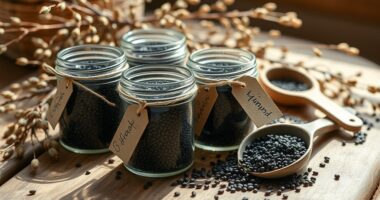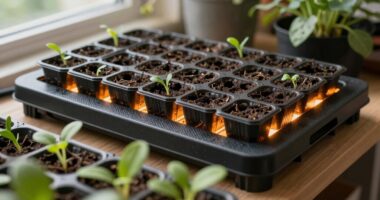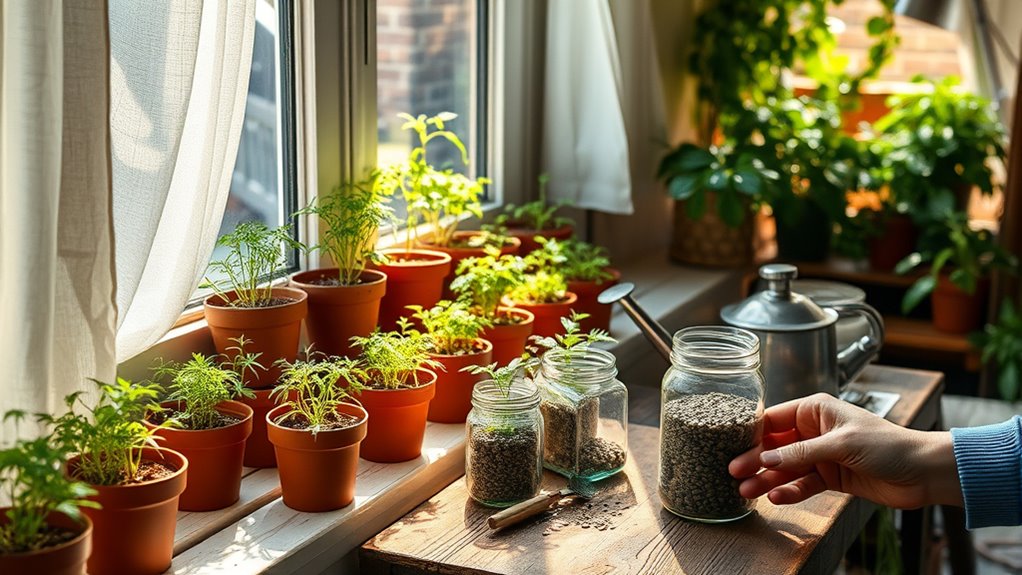
To grow chia plants at home, start with well-draining soil rich in organic matter, and use containers or raised beds if your soil isn’t ideal. Keep the soil consistently moist by watering gently when the top feels dry, and mulch to retain moisture. Guarantee proper drainage and avoid overwatering to prevent root issues. Monitoring your plants and adjusting care helps them stay healthy and productive—continue exploring tips to master your chia gardening journey.
Key Takeaways
- Use well-draining, organic-rich soil with a pH of 6.0 to 7.0 for optimal chia growth.
- Plant chia in raised beds or containers with quality potting mix to ensure proper drainage.
- Water consistently, keeping soil moist but not soggy, and mulch to retain moisture and suppress weeds.
- Avoid overhead watering; target the base of plants to prevent fungal diseases.
- Regularly monitor soil moisture and plant health to promote vigorous, healthy chia plants.
Growing chia plants at home is a rewarding way to add nutritious greens to your garden. To guarantee your chia thrives, start with proper soil preparation. Chia plants prefer well-draining soil that’s rich in organic matter. Before planting, loosen the soil to improve aeration and incorporate compost or aged manure to boost fertility. This helps the plants develop strong roots and ensures they have the nutrients needed for healthy growth. When preparing the soil, aim for a slightly acidic to neutral pH, around 6.0 to 7.0. Avoid heavy, clayey soils that retain too much water, as chia plants dislike sitting in soggy conditions. If your garden soil isn’t ideal, consider planting in raised beds or containers filled with a high-quality potting mix designed for vegetable cultivation. This approach offers better drainage and control over soil quality, giving your chia the best start.
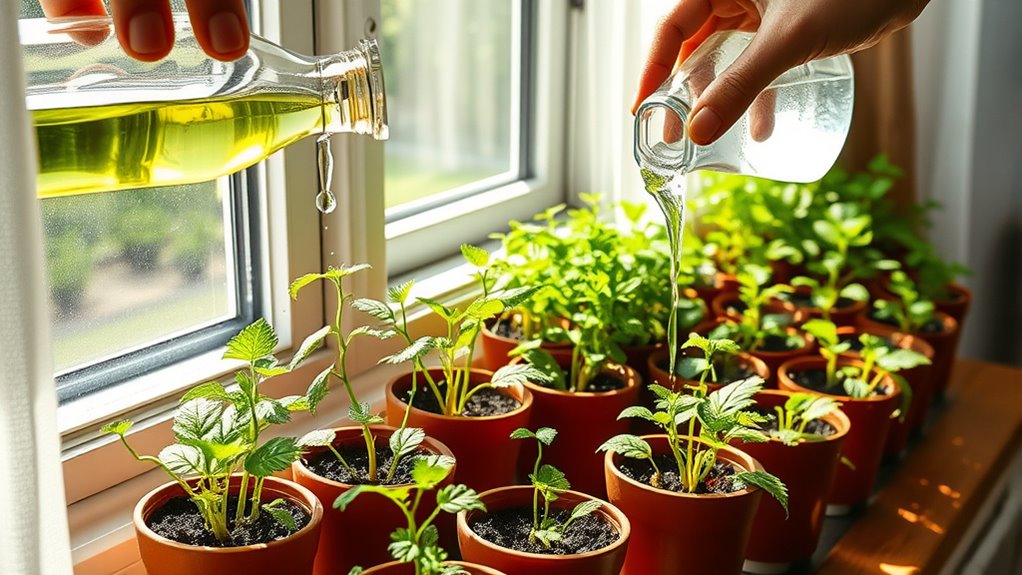
Once your chia plants are in the ground, proper watering techniques become essential. Chia plants need consistent moisture, especially during germination and early growth stages, but they don’t tolerate waterlogged soil. Water gently and evenly to keep the soil consistently moist but not soaked. A good rule of thumb is to water when the top inch of soil feels dry. Using a soaker hose or drip irrigation system can help maintain steady moisture levels without overwatering. Mulching around the plants with straw or shredded leaves can also help retain soil moisture, regulate temperature, and suppress weeds. During hot, dry weather, you might need to increase watering frequency, but always check soil moisture first to avoid overwatering. Avoid overhead watering, which can promote fungal diseases; instead, target the base of the plants to keep foliage dry and healthy. Additionally, understanding the types of headphone jacks can help you connect audio devices properly if you wish to listen to music while gardening.
As your chia plants grow, remember that soil preparation and watering techniques are ongoing responsibilities. Regularly check the soil’s moisture level and adjust your watering schedule accordingly. If you notice the soil drying out quickly, increase watering, but if it remains soggy or develops a foul smell, improve drainage or reduce watering frequency. Keep an eye on the plants’ appearance—healthy chia plants will have vibrant green leaves and sturdy stems. Proper soil prep ensures roots can develop deeply, while consistent watering keeps plants vigorous and productive. By paying close attention to these key aspects, you’ll nurture strong, healthy chia plants that will reward you with nutritious seeds in due time. Growing chia at home can be simple and satisfying when you master these foundational techniques.

Gardzen 5-Set Seed Starter Tray Kits, Durable Plant Germination Trays with Humidity Vented Domes and Bases, Ideal for Seed Starting, Indoor Gardening, and Greenhouse (Total 200 Cells)
Upgraded with Adjustable Ventilation - Gardzen seed starter tray has been newly upgraded with two air vents added...
As an affiliate, we earn on qualifying purchases.
Frequently Asked Questions
Can Chia Plants Be Grown Indoors Year-Round?
Yes, you can grow chia plants indoors year-round if you provide adequate indoor lighting and temperature control. Place your chia in a spot with plenty of bright, indirect light or supplement with grow lights. Keep the temperature between 65-85°F to promote healthy growth. Consistent watering and well-draining soil are also essential. With proper care, your chia plants will thrive indoors throughout the year.
What Are Common Pests That Affect Chia Plants?
Think of your chia plant like a trusted friend; pests like aphids, spider mites, and whiteflies are the uninvited guests that can disrupt its health. Pest identification is key to catching issues early. You can use natural remedies like neem oil or insecticidal soap to keep pests at bay. Regular inspection helps you catch infestations before they spread, ensuring your chia plant stays vibrant and productive.
How Often Should I Water My Chia Plants?
You should water your chia plants about once a week, ensuring the soil moisture stays consistently moist but not waterlogged. During hot or dry periods, increase the watering schedule to maintain soil moisture. Check the soil regularly by touching the top inch; if it feels dry, it’s time to water. Proper watering helps your chia plants thrive, promoting healthy growth and preventing issues caused by over- or under-watering.
Is There a Specific Fertilizer Recommended for Chia?
You should use a balanced, all-purpose fertilizer to meet chia plants’ nutrient requirements. Look for fertilizer recommendations that provide equal parts nitrogen, phosphorus, and potassium, such as a 10-10-10 or 20-20-20 formula. Apply it every 4-6 weeks, especially during the active growth phase. This guarantees your chia plants get the necessary nutrients for healthy growth and maximum seed production.
How Long Does It Take for Chia Seeds to Sprout?
Chia seeds can quickly kickstart your garden with seed germination occurring in about 7 to 14 days. During this growth timeline, you’ll witness tiny sprouts pushing through the soil, signaling successful sprouting. Keep your chia in warm, moist conditions to encourage speedy sprouting. Patience pays off, as the plant’s rapid rise from seed to sprout makes cultivating chia both exciting and rewarding.

Patigrow 120-Cell Self-Watering Seed Starter Tray with Grow Light, Seed Starter Kit with 4.07” Humidity Dome, Indoor Seedling Starter Tray, Seed Starting Trays for Plant Germination, Seeds Growing
Pro Grow Lights with Advanced Chips: Equipped with 56 high-efficiency beads per tray, these LED strips simulate natural...
As an affiliate, we earn on qualifying purchases.
Conclusion
Now that you know the basics, you’re ready to cultivate your chia crop with confidence. With consistent care, clever watering, and a little patience, your chia plants will flourish and fill your garden with vibrant vitality. Embrace the excitement of nurturing these nutrient-rich plants, and watch as your garden grows greener and grander. So, seize the season, sow the seeds, and see your chia champions sprout spectacularly! Happy gardening!

GROWFRIEND Seed Starter Kit with Grow Lights & Heat Mat – 40-Cell Seed Starter Tray, Humidity Dome, Soil Moisture Meter & Sticky Gnat Traps – Indoor Greenhouse & Plant Propagation Station
🌱 All-in-One Indoor Seed Starter Kit 🌱 From basil to begonias, Growfriend makes it easy to grow vibrant...
As an affiliate, we earn on qualifying purchases.

SOLIGT Self Watering Seed Starter Trays with Humidity Domes, Extra Thick Plastic Seed Starter kit for Seed Starting, Plant Germination & Seedling Growing, 3 Pack 72 Cells
Complete Seed Starter Kit: Self watering seed starter tray kit includes 3 packs, each with 1 clear bottom...
As an affiliate, we earn on qualifying purchases.