TL;DR

Get garden gear delivered free — and shop member deals
- Fast, free delivery on millions of items
- Access to Prime Big Deal Days deals on October 6–7
- Prime Video, Amazon Music and more included
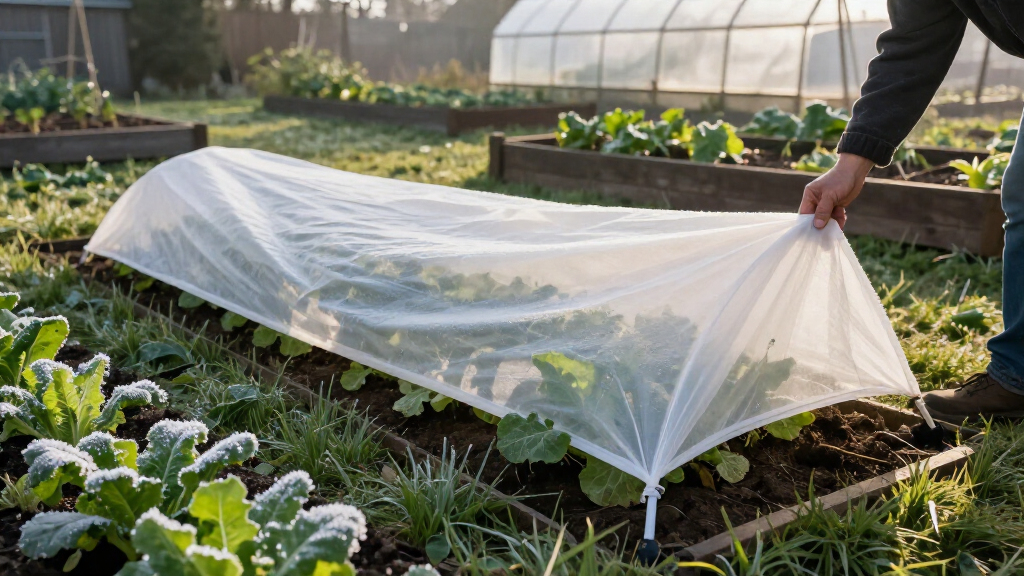
Floating row covers can reduce frost damage by holding some of the heat that soil absorbs during the day and limiting direct exposure of plants to cold air. Their protection varies by cover weight and how securely the edges are anchored; a cover alone may not be enough in a severe, windy freeze.
Floating row covers can help protect garden crops from frost by trapping some of the heat released by soil overnight and creating a barrier between plants and cold air, according to a Grow Organic gardening report. The advice matters to gardeners trying to limit cold damage, but the report also cautions that covers offer less protection during severe freezes with strong winds and need to be matched to conditions.
Soil absorbs warmth from sunlight during the day and releases it gradually at night. A row cover draped over crops can hold some of that warmth close to the ground and reduce direct contact between frost and plant surfaces. The result is a small, sheltered microclimate, not a guarantee that plants will remain above freezing.
Grow Organic advises gardeners to extend covers all the way to the ground and secure the edges with soil, bricks or other weights. Gaps can let warmer air escape and cold air move underneath. Mulch such as straw or compost beneath a cover may also help the soil retain heat, according to the report.
The article distinguishes lighter covers, which it says are suited to light frosts, from heavier products intended to provide more insulation. It lists Agribon AG-15 and AG-19 as lightweight options, AG-30 as medium-weight, and AG-50 and AG-70 as heavier choices. These are examples from the report; the protection a cover provides depends on the product and local conditions.
How Covers Limit Overnight Heat Loss
Frost can damage exposed plant tissue, affecting crops that gardeners hope to harvest or keep growing through cool weather. A properly placed cover offers a relatively direct way to reduce exposure while making use of heat already stored in the soil. For winter gardens, Grow Organic names kale, carrots and spinach among crops that may be grown under row covers to extend the season.
The practical limits matter as much as the benefit. A cover does not create a strong heat source: its effect relies partly on the soil’s stored warmth. In a windy, advective freeze, moving cold air can replace warmer air around plants, making protection harder. Gardeners may need additional measures, and the report does not give a universal temperature threshold at which a particular cover will protect every crop.
Fit and timing also affect results. Securing edges helps retain warmth, while removing or opening covers when temperatures rise during the day can reduce the risk of overheating. Gardeners therefore need to follow local forecasts and check conditions under the cover rather than treating it as a set-and-forget solution.
floating row covers for frost protection
As an affiliate, we earn on qualifying purchases.
As an affiliate, we earn on qualifying purchases.
Radiation Frost Versus Moving Cold Air
Grow Organic separates two types of cold events. A radiation frost typically forms under clear skies and calm winds: heat stored in the ground escapes overnight, cooling surfaces enough for frost to form. In those conditions, the report recommends row covers, low tunnels and mulch as ways to reduce heat loss or shield crops.
An advective freeze occurs when a mass of cold air moves in, often with strong winds and a rapid temperature drop. The report says this is harder to manage because the incoming air can displace warmth around plants. It suggests combining heavier or doubled covers with other heat-retention measures, but does not provide comparative test results showing how much temperature protection each method delivers.
The distinction helps explain why the same cover may perform differently from one night to another. Clear, calm conditions and a windy cold-air outbreak are not equivalent risks, and the expected minimum temperature, crop sensitivity and cover installation all affect the outcome.
“Ensure full ground coverage”
— Grow Organic report
As an affiliate, we earn on qualifying purchases.
Protection Depends on Local Conditions
The source does not give measured temperature differences beneath each cover type, specify a guaranteed frost-protection range, or cite independent trials. Its product-weight examples should not be read as a promise that crops will survive a particular low temperature. Actual protection remains dependent on the fabric, installation, exposure, crop and weather.
The report also does not identify a publication date or explain whether the advice was reviewed by an independent horticultural or agricultural authority. It describes additional approaches, including plastic mulch, water containers and non-LED Christmas lights, but provides no quantified results for those methods. Gardeners should check product instructions and local extension guidance before relying on any one technique during a hard freeze.
As an affiliate, we earn on qualifying purchases.
Check Forecasts and Cover Conditions
Before a cold night, gardeners can identify whether the forecast suggests a calm radiation frost or a windy freeze, then select a cover appropriate to the crop and expected conditions. The Grow Organic report recommends covering plants to the ground, anchoring the edges and adding mulch where suitable. During warmer periods, it says to uncover crops to limit overheating.
For unusually severe cold, the article recommends considering extra insulation rather than assuming a single row cover will be sufficient. The next practical check is how plants fare under local conditions: monitor forecasts, inspect covers and crops, and use guidance specific to the cover product and plant variety. The source offers no further scheduled update or specific follow-up development.
garden soil mulch for heat retention
As an affiliate, we earn on qualifying purchases.
As an affiliate, we earn on qualifying purchases.
Key Questions
How does a floating row cover protect plants from frost?
It creates a barrier around crops and can trap some heat released by the soil overnight, forming a slightly warmer microclimate. It does not guarantee frost-free conditions.
How should a row cover be installed for frost protection?
According to Grow Organic, drape it down to the ground and secure its edges with soil, bricks or weights to limit gaps where warm air can escape.
Are heavier row covers always better?
Heavier covers are presented in the report as options for colder conditions, while lighter fabrics are intended for light frost. The source gives no universal temperature rating, so gardeners should check product guidance and account for crop and weather.
Will a row cover protect plants in a severe freeze?
Not necessarily. The report says strong winds and incoming cold air make an advective freeze harder to manage, and that a row cover alone may not be enough in extreme conditions.
Should row covers stay on during the day?
Grow Organic advises removing covers when temperatures rise to reduce the risk of overheating. Check local conditions and the needs of the plants before uncovering them.
Source: rss
Fall yard work Picks
leaf blowers
As an affiliate, we earn on qualifying purchases.