TL;DR

Get garden gear delivered free — and shop member deals
- Fast, free delivery on millions of items
- Access to Prime Big Deal Days deals on October 6–7
- Prime Video, Amazon Music and more included
Grow Organic’s guide outlines how to plant garlic cloves in fall, from choosing a locally suitable planting time and preparing a sunny, well-drained bed to setting cloves upright with about 2 inches of soil above their tips. Timing and mulch recommendations vary by region, so gardeners should check local guidance and adjust for their soil and climate.
Grow Organic’s fall garlic guide says gardeners can plant individual cloves to grow bulbs for a later harvest, but the right timing depends on local conditions. The report lays out steps for choosing healthy planting stock, preparing a sunny bed with good drainage, spacing and covering cloves, and protecting the planting with mulch where appropriate.
Planting dates vary by region. The guide gives Minnesota and Oregon as examples, not nationwide deadlines: Minnesota gardeners are advised to plant in fall, often one to two weeks after the first killing frost, while Oregon’s broad window is September through November. The aim is to allow roots to develop before the ground freezes without prompting excessive early top growth. Gardeners should check local frost dates and soil conditions. In warm-winter areas, some varieties may need chilling; the guide recommends following variety-specific guidance rather than guessing at the temperature or duration.
Choose healthy cloves and a suitable bed. The report advises buying seed garlic from a trusted supplier and keeping bulbs whole until shortly before planting. “Seed garlic” generally refers here to cloves used for planting, not botanical seed. Select a full-sun location with freely draining soil; raised beds may help where drainage is poor, provided water can drain away. Avoid planting after garlic, onions, leeks, or shallots because these crops share pests and diseases. Use soil tests to guide amendments, and follow fertilizer product labels.
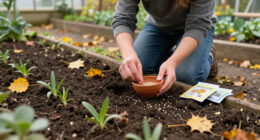
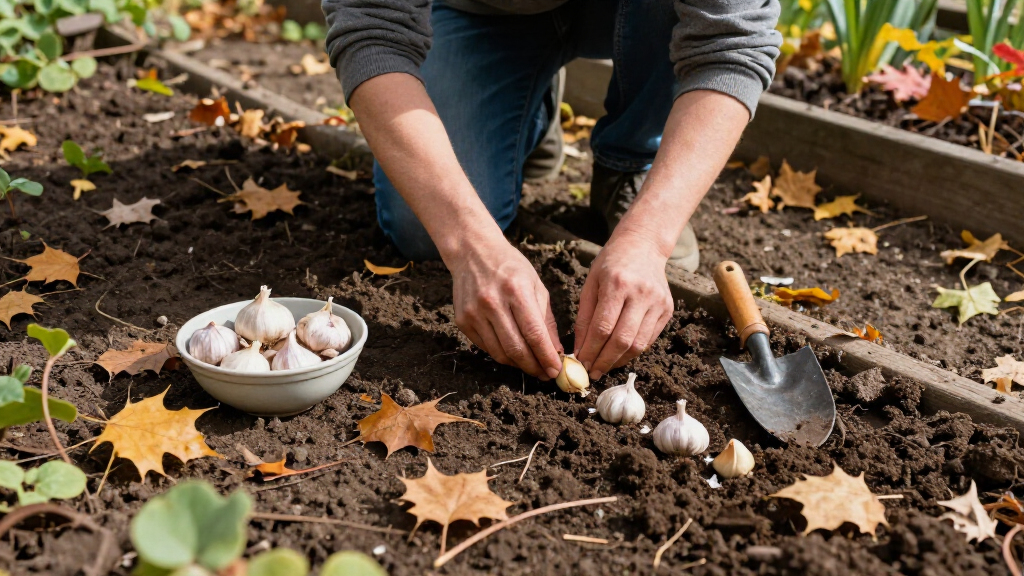
Set cloves upright and measure soil cover. A practical starting point is 4–6 inches between standard cloves, with enough room between rows to weed. Place each clove with its pointed end up and flat root plate down. The guide recommends about 2 inches of soil above the clove tip; that is different from the depth of the planting hole. For a clove one inch tall, for example, a hole about three inches deep leaves roughly two inches of soil above it. Adjust for variety, soil, and winter conditions; elephant garlic needs more space.
A Better Start for Next Summer’s Crop
Fall planting gives garlic time to establish roots before winter, while careful spacing and a well-drained site give bulbs room to develop and make routine weeding easier. Getting the soil-cover measurement right also helps avoid confusing hole depth with the amount of soil above a clove.
Local conditions shape the outcome. The dates and measurements in the guide are practical starting points, not guarantees for every garden. Frost timing, winter moisture, soil texture, and variety can all affect what works. Checking regional extension advice can help gardeners adapt the steps and avoid relying on a single calendar date.
As an affiliate, we earn on qualifying purchases.
Regional Advice Shapes Fall Timing
The source presents planting windows as regional examples. Its Minnesota example is tied to the first killing frost, while its Oregon example spans September through November. Neither should be treated as a universal schedule. The report points gardeners to Minnesota Extension and Oregon State guidance and says local frost dates and soil conditions matter when deciding when to plant.
Variety and bed history matter, too. The guide says locally suited softneck garlic may work well in mild regions and many hardneck varieties perform well in colder winters. It also advises avoiding beds recently used for related allium crops. Where a soilborne disease is known, a much longer rotation break may be needed, and local expert advice is recommended.
As an affiliate, we earn on qualifying purchases.
Local Planting Conditions Still Matter
There is no single planting date or depth that fits every garden. The source does not specify a universal schedule for all climates, soil types, or varieties. Its measurements are starting points that gardeners may need to adjust for winter conditions, soil texture, and clove size.
Some growing details are not fully set out in the supplied material. It notes that harvest readiness should be judged by inspecting plants rather than relying only on a date, and that lower leaves browning can be a sign bulbs may be ready. The source text ends before completing its harvest guidance, so it does not establish a full set of harvest or curing instructions.
As an affiliate, we earn on qualifying purchases.
Monitor Mulch, Shoots and Bulbs
After planting, check the bed after heavy rain or strong wind and replace mulch if it has shifted. Clean straw or shredded leaves can help suppress weeds and reduce temperature swings, but timing depends on conditions. The guide cites University of New Hampshire Extension advice for cold New England gardens to add winter mulch after the ground freezes; that timing may not suit wetter or milder regions.
In spring and through the growing season, make sure shoots can push through mulch, keep weeds small, and check soil moisture without soaking an already wet bed. Avoid deep hoeing near shallow roots. Hardneck garlic often produces curling scapes in late spring or early summer; the guide says to cut them while tender. As plants mature, inspect bulbs and use local growing advice to determine harvest timing.
As an affiliate, we earn on qualifying purchases.
Key Questions
When should I plant garlic in fall?
It depends on your region. Grow Organic gives one to two weeks after the first killing frost as a Minnesota example and September through November for Oregon. Check local frost dates, soil conditions, and extension guidance rather than treating those examples as nationwide deadlines.
Which end of a garlic clove goes up?
Place the pointed tip up and the flat root plate down. Keep the papery skin intact where possible and discard cloves that are soft, moldy, or badly damaged.
How far apart and how deep should cloves be?
A starting spacing is 4–6 inches between standard cloves. Leave about 2 inches of soil above each clove’s tip; the hole itself must be deeper than that by the height of the clove. Adjust for variety, soil, and local winter conditions.
Should I mulch garlic after planting?
Mulch can help suppress weeds and moderate temperature changes. Clean straw or shredded leaves are options in the guide. Timing varies by location; in cold New England gardens, cited UNH Extension guidance recommends adding winter mulch after the ground freezes.
What should I do if garlic shoots appear before winter?
Early leaves do not automatically mean the crop has failed. In spring, check that shoots can push through the mulch and gently loosen it if it is blocking growth.
Source: rss
Fall yard work Picks
leaf blowers
As an affiliate, we earn on qualifying purchases.