TL;DR

Get garden gear delivered free with Prime
- Fast, free delivery on millions of items
- Prime Video, Amazon Music and more included
- Member-only deals all year
An Amateur Gardening report by Becky Bowden outlines five ways gardeners can try to reduce slug and snail damage after wet weather: water in the morning, support garden wildlife, use rough barriers, inspect planters and consider nematodes. The advice is practical rather than a guarantee; results vary, and the report recommends following product instructions when applying nematodes.
Amateur Gardening has outlined five ways gardeners can try to limit slug and snail damage to vegetable patches as wet weather returns, including changing watering times, checking planters and applying nematodes. The advice, reported by Becky Bowden, offers options for protecting crops but does not promise that any method will prevent damage.
The report recommends watering in the morning rather than at night. Its explanation is that daytime light and airflow give the soil a chance to dry, while slugs and snails are more active in damp, dark conditions. Morning watering may also reduce the risk of fungal disease, the article says, though it does not provide research or measurements for either claimed benefit.
A second suggestion is to support garden wildlife that may eat slugs and snails. The report proposes habitats such as log piles, ponds and rockeries, along with leaf piles placed away from vegetables. It says hedgehogs may occasionally eat slugs and snails, while birds may also peck at them. These measures may attract predators, but the source does not claim they will remove pests or protect a crop on their own.
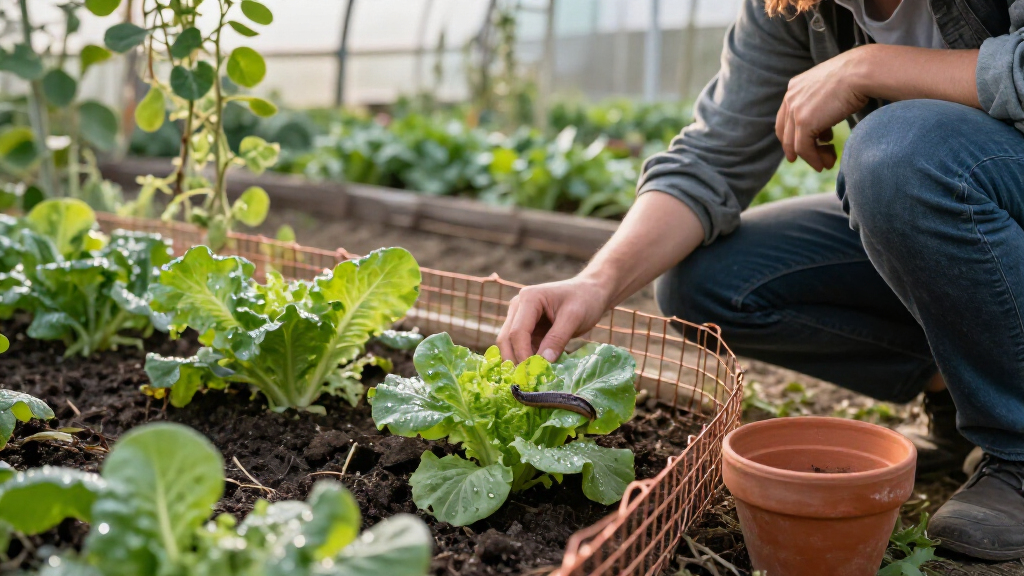
For physical barriers, lawn care specialist Chrissie Handley recommends dry, coarsely crushed eggshells around plant bases. The report also suggests untreated woodchips and coffee grounds, with the caveat that grounds need replacing, especially after heavy rain. It advises checking underneath pots, trays and thick foliage, where pests can shelter, and says gardeners can remove slugs and snails by hand during evening inspections. Its fifth measure is nematodes, microscopic worms mixed with water and applied during the growing season according to the product instructions.
Protecting Crops in Wet Weather
Slug and snail feeding can damage vegetables and other young plants, leaving gardeners with less produce to harvest. The report matters to home growers because it brings together low-cost changes and monitoring that can be tried before or during wetter periods, rather than relying on a single remedy. Morning watering, checking likely hiding places and watching vulnerable plants are actions gardeners can adjust to their own plots.
The suggestions differ in effort and certainty. Wildlife habitats take time to establish, while hand inspections require regular attention; surface barriers may need maintenance after rain. Nematodes are a purchased product that must be applied as directed. None of the approaches is presented as guaranteed control, and the article says gardeners may need to test what works in their conditions.
Products Worth Considering

Weber Genesis E-415 4-Burner Propane Gas Grill, Black

KitchenAid 13-Cup Food Processor, KFP1318, Contour Silver

Vitamix Propel Series 510 Professional-Grade Blender, 3 Programs, Black
As an affiliate, we earn on qualifying purchases.
Five Measures in the Report
The advice was published by Amateur Gardening in a report framed around a possible return to wet weather after a dry spell. Its central premise is that damp conditions can bring slugs and snails back into gardens, where they may feed on vegetables. The source does not identify a particular location, provide weather data or specify the date of publication, so the seasonal framing should not be read as a forecast for every area.
The five approaches are morning watering, wildlife-friendly habitats, abrasive surfaces, regular planter checks and nematodes. Container plants expert Martine Davis advises inspecting beneath pots and around dense foliage, warning that pests can be hidden from view. The article presents these as practical garden measures, not as findings from a controlled comparison of effectiveness.
For nematodes, the report names Phasmarhabditis californica and Phasmarhabditis hermaphrodita as microscopic worms used to reduce slug damage. It advises mixing the product with water and following its packet directions. Gardeners should check that the product is suitable for their intended use and apply it according to its label.
““Crushed eggshells work well in deterring slugs and snails from eating your plants.””
— Chrissie Handley, lawn care specialist, quoted by Amateur Gardening
How Well Each Method Works
The source does not quantify how much damage any of the five methods prevents, compare them in trials or identify which combination works best. It describes eggshells and coffee grounds as possible deterrents, but their effectiveness may vary; rainfall can also reduce the usefulness of coffee grounds. Gardeners should not assume any single measure will stop an infestation.
The report also supplies no local weather forecast, pest counts or details about the size and type of vegetable plots affected. It says nematodes can help reduce damage, but gives no product brand, application rate or expected time to results. The packet directions remain the relevant guide for use.
Monitor Plants and Adjust Measures
The report’s practical next step for gardeners is to watch plants and likely hiding places as wet weather sets in. Check under containers, trays and dense foliage, and inspect vulnerable crops regularly. Morning watering and habitat changes can be introduced alongside those checks, while any nematode product should be used only as directed on its packaging.
There is no follow-up trial or official update announced in the source. For now, the outcome will depend on local conditions and whether the selected measures reduce visible damage. The article itself describes gardening as a process of trial and error, rather than promising a single fix.
Key Questions
What are the five ways suggested to limit slug damage?
The report suggests watering in the morning, encouraging wildlife, using rough surface materials, inspecting planters and applying nematodes according to their product instructions.
Do eggshells reliably keep slugs away?
The report quotes lawn care specialist Chrissie Handley recommending dry, coarsely crushed eggshells around plant bases. It does not cite trial data, so reliability is not established by the source.
Why check under pots and planters?
Container plants expert Martine Davis says slugs and snails can shelter in dark, damp places beneath pots, trays and dense foliage, even when containers are raised off the ground.
How should gardeners use nematodes?
The article says nematodes are mixed with water and applied during the growing season. Gardeners should follow the instructions on the product packet, since the report does not give a universal dose or application schedule.
Source: amateurgardening.com