To improve your vegan baked goods with chia flour, start by substituting about 25% of your total flour and adjust the wet ingredients since chia flour absorbs more moisture. Use it as a natural binder to replace eggs, which helps create moist, sturdy, and gluten-free treats. It also boosts the nutritional profile with fiber and omega-3s. Keep experimenting with ratios to perfect your recipes—there’s more useful tips to discover if you keep exploring.
Key Takeaways
- Replace about 25% of flour with chia flour for improved nutrition and binding in vegan baked goods.
- Adjust liquid ingredients to account for chia flour’s high absorbency, adding extra water or plant-based milk as needed.
- Use chia flour as a natural binder in gluten-free recipes, reducing the need for additional gums like xanthan or guar.
- Incorporate chia flour directly into dry ingredients without pre-soaking to simplify the baking process.
- Experiment with recipes to find the right balance of moisture and texture, utilizing chia flour’s health benefits and functional properties.
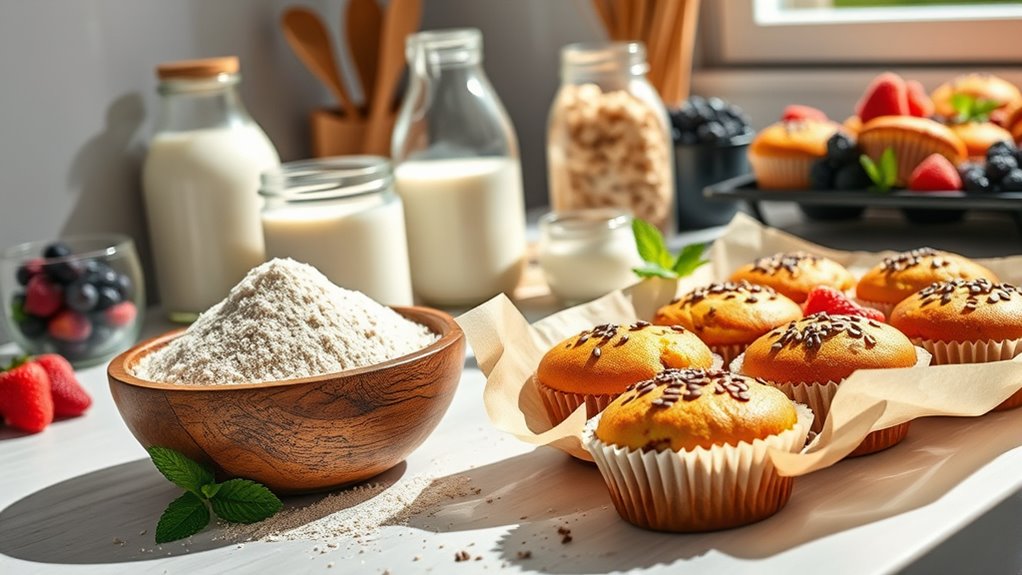
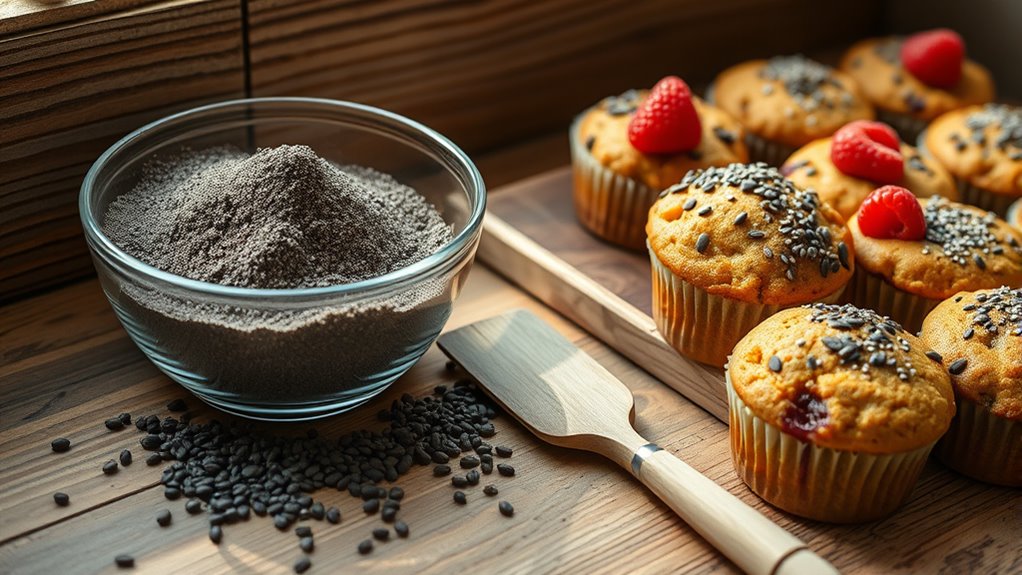
If you’re looking to enhance your vegan baked goods, chia flour is a versatile and nutritious ingredient to contemplate. It offers a great way to boost fiber, omega-3 fatty acids, and protein content in your recipes while also serving as a natural binder. When it comes to chia seed substitution, chia flour can often replace whole chia seeds in recipes, providing a smoother texture and easier incorporation. This makes it ideal for recipes where you want a uniform consistency, such as muffins, pancakes, or cakes. Plus, since chia flour is finely ground, it disperses evenly throughout your batter, ensuring consistent results.
Chia flour also shines in gluten-free baking. If you’re avoiding gluten, you’ll appreciate its ability to mimic the binding properties of wheat flour without the need for additional binders like xanthan gum or guar gum. In gluten-free recipes, chia flour acts as a natural binder that holds everything together, preventing crumbliness and improving the structure of your baked goods. You can usually replace a portion of your gluten-free flour blend with chia flour, but keep in mind that it absorbs more liquid than regular flour, so you’ll want to adjust your wet ingredients accordingly. This absorption property helps create moist, tender baked items that hold their shape well.
Chia flour acts as a natural binder, enhancing structure and moisture in gluten-free baked goods.
Using chia flour in your baking also simplifies the process, especially because it requires no pre-soaking like whole chia seeds. You can add it directly to your dry ingredients, saving time and effort. When working with chia flour, start by substituting about 25% of your total flour amount to see how it affects your recipe’s texture and moisture level. You might need to tweak the liquids slightly—adding a splash more water or plant-based milk—to compensate for chia flour’s absorbent qualities. This flexibility allows you to experiment confidently, customizing recipes to suit your preferences and dietary needs.
In addition to its functional benefits, chia flour enhances the nutritional profile of your baked goods. It adds a subtle nutty flavor that complements many vegan recipes, from dense brownies to light muffins. It’s also a good choice for those seeking to increase their intake of plant-based omega-3s and fiber without sacrificing taste or texture. Integrating AI-powered data analytics can help you better understand how different ingredient substitutions impact your baked results, making your baking more precise and successful. As you incorporate chia flour into your vegan baking repertoire, you’ll find it a reliable, health-boosting ingredient that supports both taste and dietary goals. Whether replacing chia seeds or using it in gluten-free baking, chia flour proves to be a valuable addition that elevates your homemade treats.
Frequently Asked Questions
Can Chia Flour Replace Eggs in All Recipes?
Chia flour can often replace eggs as an egg substitute because of its excellent binding properties. However, it doesn’t work in all recipes, especially those needing a leavening effect or specific textures. You may need to adjust quantities or combine it with other ingredients for best results. Always consider the recipe’s purpose—chia flour is great for binding but might not provide the same rise or moisture as eggs.
How Long Does Chia Flour Shelf Life Last?
Think of chia flour as a loyal guardian of your pantry; it stays strong for up to 6-8 months if stored properly in an airtight container in a cool, dark place. Keep an eye out for spoilage signs like an off smell, mold, or a strange taste. If any of these appear, it’s time to bid farewell. Proper storage extends its shelf life and keeps your baking adventures safe and delicious.
Is Chia Flour Suitable for Gluten-Free Baking?
Yes, chia flour is suitable for gluten-free baking. It’s a popular gluten-free alternative that adds moisture and structure to your baked goods. The chia flour benefits include high fiber, omega-3s, and a natural binding ability, making it perfect for replacing traditional flours in gluten-free recipes. You’ll find it enhances texture and nutrition, helping you create delicious, allergy-friendly baked treats with ease.
What Is the Best Storage Method for Chia Flour?
Think of chia flour storage as guarding a delicate treasure. To keep it fresh, you should store it in a proper container, like an airtight jar or a sealed plastic bag. Keep it in a cool, dark place away from heat and humidity. Proper container choices prevent moisture and air from spoiling the flour, ensuring it stays fresh and potent for your baking adventures.
Are There Any Allergies Associated With Chia Flour?
Chia flour allergies are rare, but some people may experience sensitivity, leading to symptoms like skin irritation or digestive issues. If you notice any adverse reactions after consuming chia flour, it’s best to stop using it and consult a healthcare professional. Be aware of chia flour sensitivity signs, especially if you have other seed or nut allergies, to avoid any uncomfortable or allergic responses.
Conclusion
So, next time you bake with chia flour, remember it’s the secret weapon that turns your vegan treats into surprisingly fluffy masterpieces. Who knew that tiny seeds could transform your baked goods into something so irresistibly moist and wholesome? Ironically, while you’re busy marveling at your healthy creation, your friends will be wondering how you managed to make such decadent, plant-based delights. Turns out, chia flour’s not just a health boost — it’s a baking magician in disguise.