TL;DR

Get garden gear delivered free — and shop member deals
- Fast, free delivery on millions of items
- Access to Prime Big Deal Days deals on October 6–7
- Prime Video, Amazon Music and more included
Yellowjacket workers spend more time searching for food in late summer and fall, when colonies approach the end of their annual cycle. Keep sweet foods and drinks covered, clean up spills and fallen fruit, and walk away calmly if a wasp approaches. Nests near homes or in high-risk places may require professional help.
As yellowjacket colonies approach the end of their annual cycle, workers spend more time searching for food, increasing the chance of encounters around outdoor meals, sugary drinks and ripe fruit, according to pest-control experts quoted by Country Living. The report advises covering food, cleaning up spills and avoiding sudden movements around the insects to reduce the risk of being stung.
Bill Stodder, an associate certified entomologist with Neuse Termite and Pest Control, told Country Living that workers forage more as colonies reach the end of their yearly cycle. He said yellowjackets are attracted to sweet-smelling items, including soda, ripe fruit and garbage. The report characterizes the period as one when people may encounter the insects more often near those food sources; it does not provide seasonal population data or a quantified risk of stings.
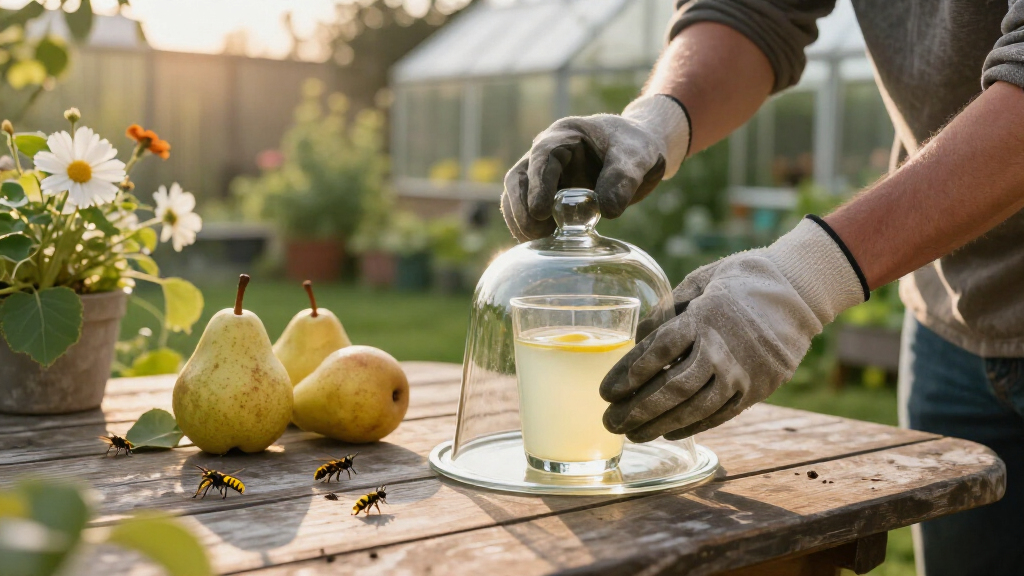
Gordon Doran, CEO of Natran Green Pest Control, recommends keeping outdoor food and drinks covered and cleaning up spills. He cautions that yellowjackets can crawl into an open soda can, so pouring drinks into a clear cup may make it easier to see an insect before drinking. The report also advises checking fallen fruit, closing garbage-can lids and rinsing sugary residue from containers before recycling them.
If a yellowjacket comes close, Doran advises against swatting or running. He said sudden movements can trigger a defensive response and attract other insects, while walking away calmly usually ends the encounter without incident. The report also notes that sugary personal-care products may attract yellowjackets, and that hummingbird feeders can draw them; keeping feeders clean or using a saucer-style design may help, though moving a feeder can confuse hummingbirds.
Reducing Stings Around Outdoor Food
The advice is relevant to people eating outdoors, tending gardens or spending time near fallen fruit and waste during warm autumn days. Because yellowjackets may enter open drink containers, checking a drink before taking a sip is a practical precaution. Covering food and drinks and cleaning up promptly can also reduce the attractants drawing insects close to people.
The report does not recommend treating every yellowjacket as a pest that must be eliminated. Stodder says the insects help control pests such as flies and aphids and serve as prey for other wildlife. They also visit flowers, although the report notes they are not as effective as bees at pollination. The practical balance is to limit close encounters while taking care around possible nests.
As an affiliate, we earn on qualifying purchases.
How Fall Foraging Changes Encounters
Yellowjackets are social wasps that live in colonies. According to Stodder, workers spend more time looking for food as the colony nears the end of its annual cycle. That helps explain why the insects may be noticeable around sweet drinks, ripe fruit and trash late in the season. It does not mean that every yellowjacket is more aggressive in every encounter, and the report supplies no data comparing sting rates across seasons.
Their nests can be underground, including in old animal burrows, or in sheltered spaces around buildings such as eaves, attics, wall voids and areas beneath decks. Stodder says repeated flights into and out of one location may indicate a nest. The report recommends inspecting sheltered spots in spring, when queens may begin small nests, and sealing openings that could provide access to structures.
“Workers spend more of their time looking for food. They are naturally attracted to sweet-smelling things such as soda cans, ripe fruit, and trash cans.”
— Bill Stodder, associate certified entomologist at Neuse Termite and Pest Control, as quoted by Country Living
As an affiliate, we earn on qualifying purchases.
What the Seasonal Advice Cannot Establish
The report offers expert guidance but does not cite research measuring whether yellowjackets sting more often in fall, how much encounter rates change, or how risk varies by region and species. Its explanation focuses on workers searching for food as colonies near the end of their annual cycle; it should not be read as a quantified forecast or proof that every insect is unusually aggressive.
The source material also does not provide a complete treatment protocol for nests. Nest size, location and access can affect the risk of attempting removal, and the report advises calling a professional when a nest is near a home or in a place where people could disturb it. It does not identify a specific product or guarantee that any prevention measure will keep yellowjackets away.
As an affiliate, we earn on qualifying purchases.
Inspect Sheltered Spots and Get Help
Homeowners can check eaves, sheds, fences, play structures and other sheltered areas in spring for small nests, and seal cracks or openings that could provide access to wall spaces. During fall, people who see yellowjackets repeatedly entering and leaving the same spot should treat it as a possible nest location and avoid disturbing it. Professional pest-control advice is appropriate when a nest is near a doorway, deck, yard or other area people use, or when its location makes it difficult to avoid.
For routine outdoor activity, the immediate steps are to cover food and drinks, dispose of sugary waste securely, check cans before drinking, and move away calmly if a yellowjacket approaches. The report gives no further official update or scheduled milestone; the guidance is seasonal and applies while workers are actively foraging.
As an affiliate, we earn on qualifying purchases.
Key Questions
Why do yellowjackets seem more common around food in fall?
According to entomologist Bill Stodder, workers spend more time foraging as colonies near the end of their annual cycle. Sweet drinks, ripe fruit and garbage can attract them. The report does not give measurements showing how much encounter rates rise.
What should I do if a yellowjacket flies near me?
Gordon Doran advises not to swat or run. Move away calmly, since sudden movements can trigger a defensive response. Avoid disturbing any nest the insect may be returning to.
How can I reduce yellowjackets around an outdoor meal?
Keep food and drinks covered, clean up spills, close garbage lids and rinse sugary residue from recycling containers. Check open drinks before sipping; the report suggests clear cups can make insects easier to spot.
Where might a yellowjacket nest be located?
Nests may be underground, including in old animal burrows, or in sheltered spaces such as eaves, attics, wall voids and beneath decks. Repeated flights into and out of one spot may signal a nest.
Should I remove a nest myself?
The report does not give a do-it-yourself nest-removal method. Because nests can be difficult to locate and may be in areas people use, seek professional pest-control advice rather than disturbing a suspected nest.
Source: rss
Fall yard work Picks
leaf blowers
As an affiliate, we earn on qualifying purchases.