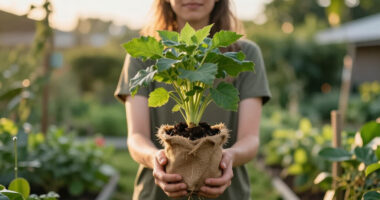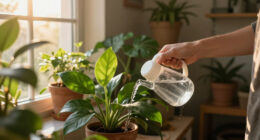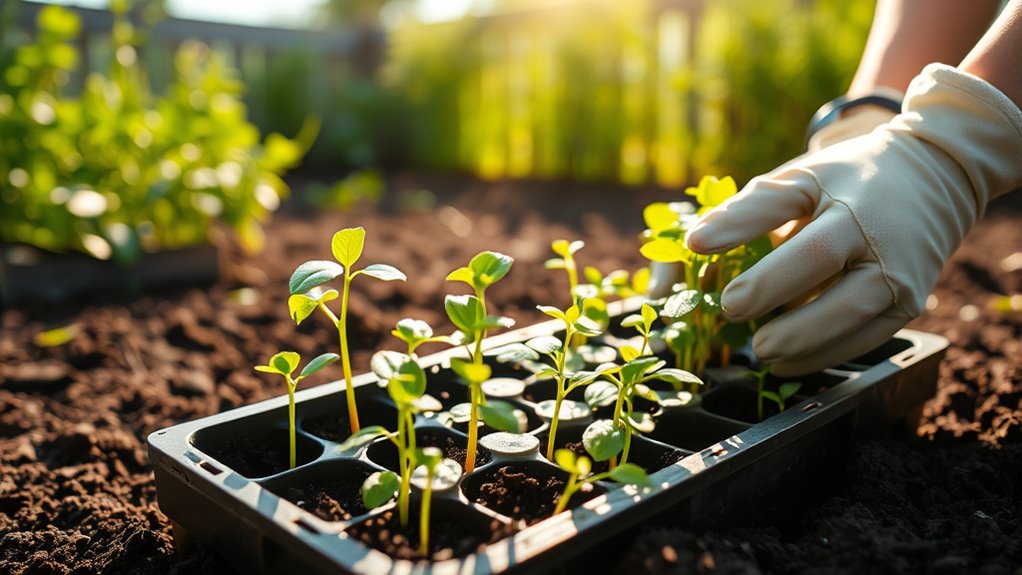

Before moving seedlings outdoors, wait until they’re strong, usually 6-8 weeks after sprouting, and after the risk of heavy frost has passed. Gradually harden them off by exposing them to outdoor conditions a few hours each day. When planting, choose a sunny, well-drained spot, loosen the soil, and plant carefully to avoid root damage. Proper watering and mulching will help them settle in. Keep learning the best methods for healthy transplanting ahead.

Get garden gear delivered free — and shop member deals
- Fast, free delivery on millions of items
- Access to Prime Big Deal Days deals on October 6–7
- Prime Video, Amazon Music and more included
Key Takeaways
- Transplant seedlings outdoors after the risk of frost has passed and they have developed 4-6 true leaves.
- Gradually harden off seedlings by exposing them to outdoor conditions over 7-10 days.
- Prepare the planting site with well-drained, nutrient-rich soil and proper sunlight.
- Handle seedlings gently, place them in pre-made holes, and firm soil around roots to eliminate air pockets.
- Water thoroughly immediately after transplanting and maintain consistent moisture to ensure healthy establishment.
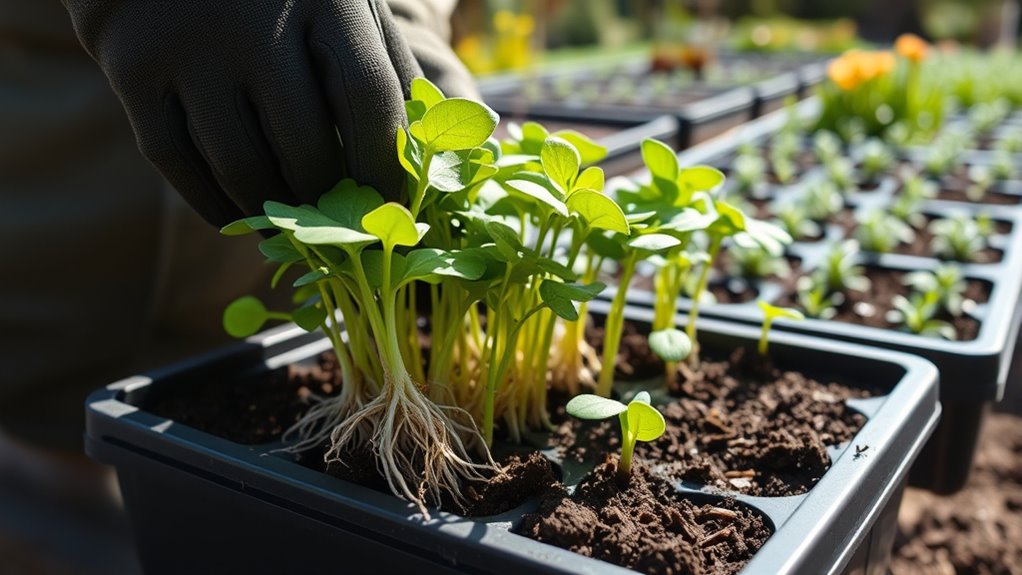
Transplanting seedlings is a essential step in guaranteeing healthy plant growth and a successful garden. When you’re ready to move your young plants outdoors, proper soil preparation is indispensable. Start by choosing a suitable location with the right amount of sunlight and good drainage. Before transplanting, loosen the soil in your garden bed, removing weeds and adding organic matter like compost or aged manure. This enriches the soil, providing the nutrients your seedlings need to establish strong roots. Break up compacted soil to improve aeration, which helps roots breathe and grow more vigorously. Once the soil is well-prepared, create small holes or trenches that match the size of your seedlings’ root balls. Handle your seedlings carefully, trying not to disturb the roots too much, and gently place them into the prepared holes. Firm the soil around the base of each plant to eliminate air pockets and guarantee good contact between roots and soil. Incorporating proper planting techniques ensures optimal root development and plant health.
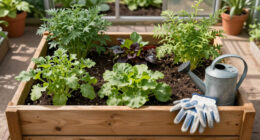
Watering techniques are just as important as soil preparation when transplanting seedlings. Right after planting, give your seedlings a thorough watering to settle the soil around the roots. Use a gentle stream or a watering can with a fine rose to avoid displacing the young plants or disturbing the soil. Consistent moisture is key during the first few days after transplanting; keep the soil evenly moist but not waterlogged. Overwatering can lead to root rot, while underwatering stresses the plants and hampers their establishment. To maintain proper moisture levels, consider mulching around your seedlings with straw, shredded leaves, or grass clippings. Mulch helps retain soil moisture, suppresses weeds, and keeps the roots cool. As you water, pay attention to the weather conditions—more frequent watering may be necessary during hot, windy days, while less frequent watering might suffice during cooler periods. Always check the soil moisture before watering; stick your finger about an inch into the soil, and if it feels dry, it’s time to water again.
As an affiliate, we earn on qualifying purchases.
Frequently Asked Questions
How Do I Prevent Transplant Shock in Seedlings?
To prevent transplant shock in seedlings, you should prepare the soil well by ensuring it’s loose, nutrient-rich, and drains properly. Timing is key—wait until seedlings are strong and the weather is suitable before transplanting. Gently handle the roots, water thoroughly afterward, and consider hardening off your plants by gradually exposing them to outdoor conditions. This careful approach helps your seedlings adapt smoothly and thrive in their new environment.
What Tools Are Best for Transplanting Delicate Seedlings?
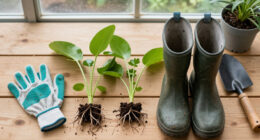
To transplant delicate seedlings successfully, you need the right tools and soil prep. Use small, gentle transplant tools like a trowel, dibber, or a spoon to avoid damaging roots. Before transplanting, prepare the soil by loosening it and adding compost for nutrients. Carefully lift seedlings with their root ball intact, holding by the leaves or stem, and place them into the prepared soil. This minimizes stress and promotes healthy growth.
How Often Should I Water Seedlings After Transplanting?
You should water your seedlings carefully after transplanting, focusing on maintaining consistent soil moisture. Check the soil daily and water when it feels dry about an inch below the surface. Typically, watering frequency should be once a day or every other day, depending on weather conditions and soil type. Keep the soil moist but not soggy, ensuring your seedlings establish strong roots without stress from overwatering.
Can I Transplant Seedlings During Rainy or Humid Weather?
You can transplant seedlings during rainy or humid weather, but it’s best to be cautious. Rainy weather can help settle the soil around the roots, reducing transplant shock. However, humid conditions can increase the risk of fungal diseases, so make certain there is good air circulation around your plants. If the weather is excessively wet or humid, consider waiting for a drier day to give your seedlings a healthier start outdoors.
What Signs Indicate a Seedling Is Ready to Be Moved Outdoors?
Think of your seedlings as eager travelers ready for their journey. When they show seedling maturity with sturdy stems, healthy leaves, and a strong root system, they’re signaling outdoor readiness. If they’ve developed several true leaves and can withstand gentle handling without wilting, it’s time to transplant. These signs indicate your seedlings are robust enough to brave the outdoors, ensuring a successful shift and continued growth.
As an affiliate, we earn on qualifying purchases.
Conclusion
Now that you know when and how to transplant your seedlings, you’re ready to give your plants the best start outdoors. Proper timing and careful handling can make all the difference in their growth. Are you prepared to take the leap and transplant your seedlings confidently? With these tips in mind, you’ll help your plants thrive and enjoy a healthy, productive garden. So go ahead—your green thumb is more capable than you think!
plant watering can with fine rose
As an affiliate, we earn on qualifying purchases.
As an affiliate, we earn on qualifying purchases.
garden mulch straw shredded leaves
As an affiliate, we earn on qualifying purchases.
As an affiliate, we earn on qualifying purchases.
Fall yard work Picks
leaf blowers
As an affiliate, we earn on qualifying purchases.