
To select the right soil for chia cultivation, make certain it has a pH between 6.0 and 7.5 for ideal nutrient uptake, and improve drainage with organic matter like compost or well-rotted manure. Avoid overly acidic or alkaline soils to prevent growth issues. Proper soil preparation, including mixing amendments thoroughly, promotes healthy roots and better yields. Careful soil management supports resilient plants—keep exploring to discover more tips for successful chia farming.
Key Takeaways
- Ensure soil pH is between 6.0 and 7.5 for optimal chia growth.
- Incorporate organic matter like compost to improve soil structure and nutrient availability.
- Choose well-draining soil to prevent waterlogging and root diseases.
- Test soil regularly and amend with lime or sulfur to maintain proper pH levels.
- Promote soil health by supporting beneficial microbes and maintaining organic content.
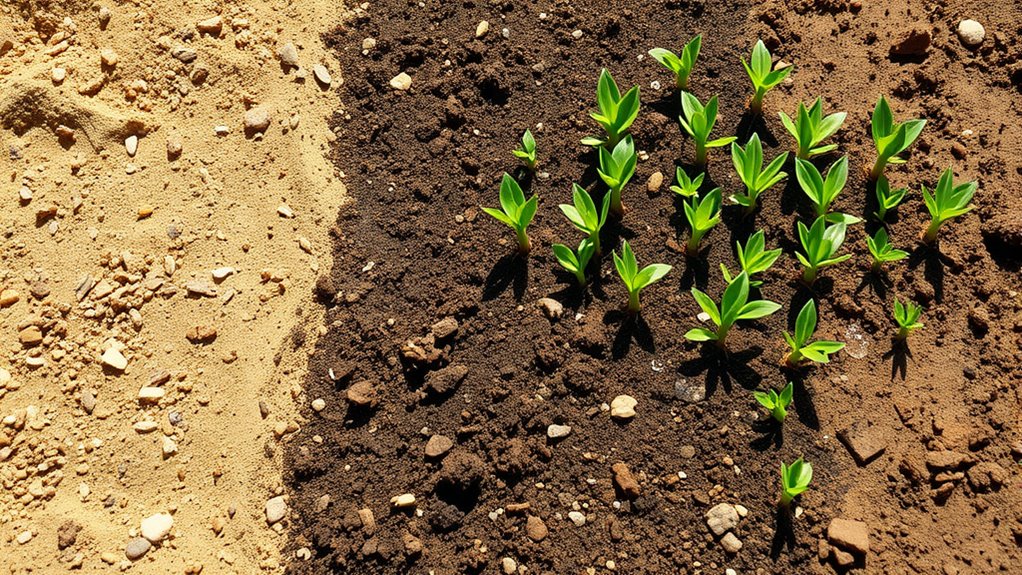
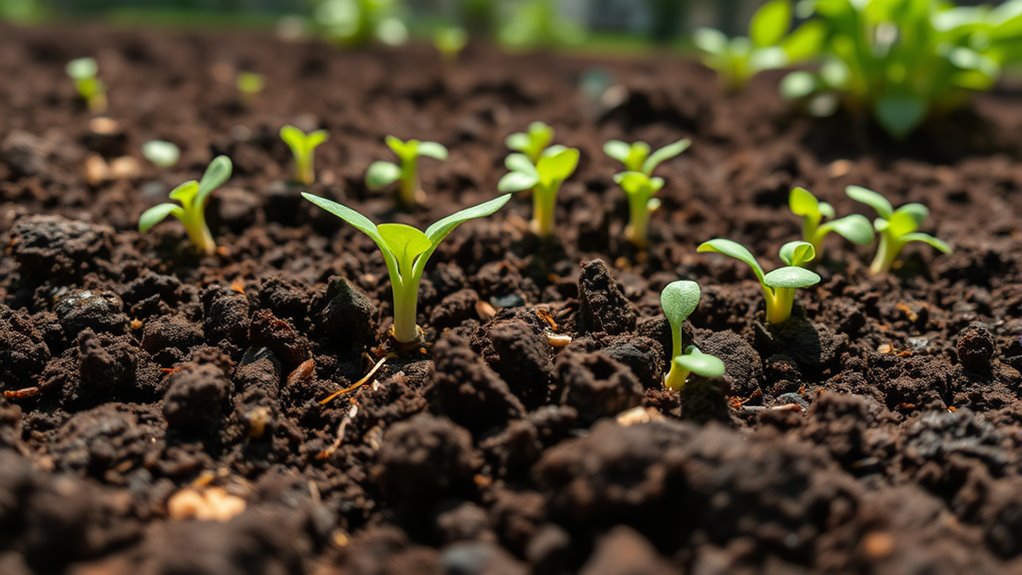
Selecting the right soil is essential for successful chia cultivation because it directly influences seed germination, plant growth, and yield quality. To give your chia seeds the best start, you need to pay close attention to soil pH optimization. Chia plants thrive in slightly acidic to neutral soils, typically with a pH between 6.0 and 7.5. If the soil is too acidic or alkaline, nutrient uptake becomes inefficient, which can stunt growth or reduce seed production. To guarantee proper pH levels, test your soil before planting. If adjustments are necessary, lime can raise pH levels, while sulfur or peat moss can lower them. Keeping the pH within the ideal range creates a balanced environment where nutrients are readily available, promoting healthy root development and vigorous plant growth.
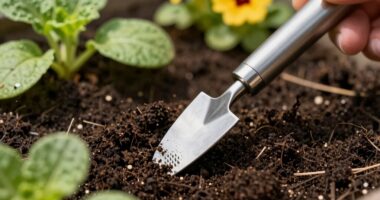
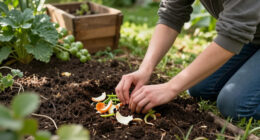
In addition to pH, organic matter enhancement plays a crucial role in fostering a productive chia crop. Organic matter improves soil structure, increases water retention, and supplies essential nutrients. You should aim to incorporate compost, well-rotted manure, or other organic amendments into your soil before planting. This not only enriches the soil but also stimulates beneficial microbial activity, which helps break down organic materials and release nutrients slowly over time. A soil rich in organic matter creates a more resilient root zone, enabling chia plants to access water and nutrients more efficiently, especially during dry periods. Soil health is a key factor in ensuring consistent crop performance and resilience. When preparing your soil, consider mixing in organic matter thoroughly to guarantee even distribution. This practice improves aeration and drainage, which are vital since chia prefers well-drained soil that doesn’t stay waterlogged. Excess moisture can lead to root rot and other diseases, so good drainage combined with organic matter enhancement is key. Additionally, organic matter supports the development of beneficial soil organisms that naturally suppress pests and diseases, reducing the need for chemical interventions.
As an affiliate, we earn on qualifying purchases.
Frequently Asked Questions
Which Soil Ph Level Promotes Optimal Chia Growth?
You should aim for a soil pH level between 6.0 and 7.0 for ideal chia growth. This slightly acidic to neutral range promotes perfect soil acidity and nutrient balance, ensuring your chia plants absorb essential nutrients effectively. Maintaining this pH helps prevent nutrient deficiencies and encourages healthy seed development. Regularly test your soil, and adjust pH if necessary, to create the best environment for thriving chia plants.
How Does Soil Drainage Impact Chia Seed Germination?
Soil drainage is like a well-oiled machine, vital for healthy chia seed germination. If drainage capacity is poor, excess water causes soil moisture to linger, drowning seeds and inhibiting growth. Adequate drainage guarantees excess water flows away, maintaining ideal soil moisture levels for sprouting. Good drainage prevents waterlogging, promotes oxygen availability, and creates an ideal environment that encourages strong, healthy chia seed germination and vigorous plant development.
Can Chia Be Cultivated in Organic Soils Exclusively?
Yes, you can cultivate chia in organic soils exclusively. Just guarantee the soil has high fertility and good water retention, which are essential for healthy growth. Organic soils naturally provide nutrients without synthetic additives, promoting sustainable cultivation. Consistently monitor water levels to prevent overwatering or drought stress. Using organic compost and amendments enhances soil quality, supporting robust chia seed development and maximizing your harvest potential.
What Soil Amendments Improve Chia Yield?
You can improve your chia yield by adding organic compost or aged manure to boost soil nutrient balance. Incorporate biochar to enhance microbial activity, which helps chia plants absorb nutrients more effectively. Using mineral amendments like rock phosphate or potassium sulfate can also support healthy growth. Regularly testing your soil guarantees maximum nutrient levels, promoting vigorous chia plants and better yields.
Is Composted Manure Beneficial for Chia Cultivation?
Yes, composted manure benefits chia cultivation by providing nutrient enrichment, which boosts plant growth. It also enhances pest resistance, helping your chia plants stay healthy and productive. When applied properly, composted manure improves soil structure and moisture retention, creating an ideal environment for chia seeds to thrive. Just make certain you use well-composted manure to avoid excess nutrients and potential pests, ensuring a successful and sustainable chia crop.
organic compost for vegetable garden
As an affiliate, we earn on qualifying purchases.
As an affiliate, we earn on qualifying purchases.
Conclusion
To ensure a bountiful chia harvest, pick soil that’s well-draining, rich in organic matter, and slightly acidic to neutral. Think of it as your secret weapon—like a trusty quill in a modern-day scriptorium—guiding your plants to thrive. Remember, the right soil sets the stage for healthy growth and abundant seeds. So, don’t delay; prepare your soil wisely and watch your chia flourish like a seasoned troubadour’s melody.
As an affiliate, we earn on qualifying purchases.
As an affiliate, we earn on qualifying purchases.