To prevent mold and spoilage, store your harvested chia seeds in airtight containers like glass jars or high-quality plastic with tight lids. Keep them in a cool, dark spot or refrigerator, especially in humid climates. Make sure the containers are completely dry before filling and check regularly for signs of spoilage. Proper storage helps retain their freshness, flavor, and nutrients long-term. For more tips on maintaining your chia seeds’ quality, keep exploring this essential guide.
Key Takeaways
- Store chia seeds in airtight, dry containers like glass jars or food-grade plastic to prevent moisture entry.
- Keep seeds in a cool, dark, and dry environment, such as a pantry or refrigerated space, to slow spoilage.
- Ensure containers are completely dry before filling to avoid introducing moisture that can cause mold.
- Regularly check seeds for signs of spoilage like mold, discoloration, or musty odors.
- Use stored chia seeds within two years for optimal freshness and nutritional quality.
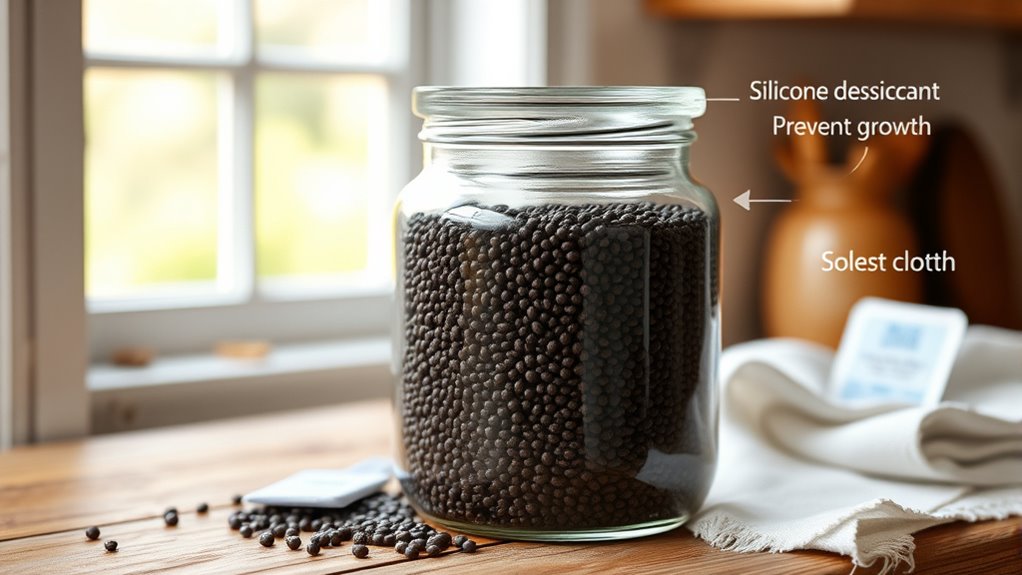
Storing chia seeds properly is essential to keep them fresh, flavorful, and nutritious for as long as possible. When it comes to maintaining their quality, moisture control is vital. Chia seeds are highly absorbent, so exposure to humidity can lead to mold growth and spoilage. To prevent this, you need a storage method that minimizes moisture exposure. The best approach is to keep your seeds in airtight containers, which create a sealed environment that guards against humidity and air contaminants. Using airtight containers not only helps control moisture but also preserves the seeds’ natural oils and nutrients, which can degrade when exposed to oxygen over time.
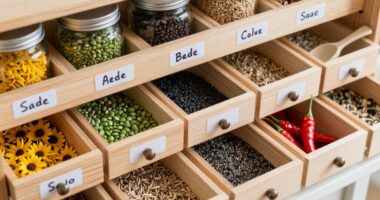
Choosing the right storage container is key. Opt for glass jars with tight-fitting lids or high-quality plastic containers designed for food storage. These options are durable, easy to seal, and won’t absorb odors, keeping your chia seeds tasting fresh. Avoid open bowls or loosely covered bags, as these allow moisture and air to enter, increasing the risk of mold. When transferring your seeds, make sure the container is completely dry to prevent introducing any moisture that could cause spoilage. Additionally, keep the container away from sources of heat or direct sunlight, as warmth accelerates deterioration and can compromise seed quality over time.
The environment where you store your chia seeds also matters. A cool, dark pantry or cupboard is ideal. Excess heat can cause the oils within the seeds to become rancid, and light can degrade their nutrients. If you’re in a humid climate, consider storing your seeds in the refrigerator to provide extra moisture control. Just ensure the container remains airtight to prevent condensation from forming inside, which can promote mold growth. If you choose to refrigerate, allow the seeds to come to room temperature before using them to avoid condensation on the seeds themselves. Proper storage also supports maintaining the nutritional value of your chia seeds over time.
Regularly check your stored chia seeds for any signs of spoilage, such as a musty smell, discoloration, or the presence of mold. Proper storage helps extend their shelf life, but it’s always best to consume them within a reasonable timeframe—typically up to two years when stored correctly. Being diligent about moisture control and using airtight containers will protect your chia seeds from mold and spoilage, ensuring they stay nutritious and flavorful for your recipes and health goals. Proper storage isn’t complicated, but it’s the best way to maximize the longevity and quality of your harvested chia seeds.
airtight glass jar for chia seeds
As an affiliate, we earn on qualifying purchases.
As an affiliate, we earn on qualifying purchases.
Frequently Asked Questions
Can Chia Seeds Be Frozen for Long-Term Storage?
Yes, you can freeze chia seeds for long-term storage. Freezing durability helps keep them fresh, especially if you buy in bulk. Just store them in an airtight container to prevent moisture. Keep in mind, seed texture changes slightly after freezing, but it doesn’t affect their nutritional value. When you’re ready to use them, take what you need and let them thaw at room temperature for a bit.
How Do I Tell if Chia Seeds Have Gone Bad?
If your chia seeds look like they’ve aged a hundred years or smell like a musty basement, they’ve probably gone bad. Check for expiration indicators like a bitter or rancid odor, clumping, or discoloration. Fresh chia seeds should be dry, smooth, and neutral in smell. If anything seems off—such as an off-putting smell or strange appearance—it’s time to toss them out before they spoil your snack or recipe.
What Are the Best Containers for Storing Chia Seeds?
You should store your chia seeds in airtight containers to keep moisture out and prevent mold. Opaque jars are ideal because they block light, which can degrade the seeds over time. Make sure the container is clean and sealed tightly after each use. This way, you’ll preserve their freshness, prevent spoilage, and keep your chia seeds nutritious and ready whenever you need them.
Should I Wash Chia Seeds Before Storing?
You shouldn’t wash chia seeds before storing because washing concerns can introduce moisture, which may lead to mold and spoilage. Instead, make sure your storage containers are clean and dry to maintain storage cleanliness. If your chia seeds are dusty or dirty from harvesting, gently rinse them and thoroughly dry before storing. Proper drying prevents mold growth and keeps your chia seeds fresh and ready for use.
How Does Humidity Affect Chia Seed Storage?
Humidity can make or break your chia seed storage plans. Too much moisture, and you’re inviting mold and spoilage like a wolf at the door. Keep humidity levels low and control moisture carefully; use airtight containers and store in a cool, dry place. Proper moisture control prevents the seeds from absorbing excess humidity, which helps them stay fresh longer and keeps mold at bay—don’t let humidity be your undoing.
food-grade plastic storage container for seeds
As an affiliate, we earn on qualifying purchases.
As an affiliate, we earn on qualifying purchases.
Conclusion
By storing your chia seeds properly, you can enjoy their benefits without worry. Keep them in an airtight container in a cool, dark place to prevent mold and spoilage. Some might think refrigeration is unnecessary, but it’s an excellent way to extend freshness, especially in humid environments. With these simple steps, you guarantee your chia seeds stay fresh, potent, and safe to incorporate into your daily diet for months to come.
refrigerator storage container for chia seeds
As an affiliate, we earn on qualifying purchases.
As an affiliate, we earn on qualifying purchases.
dry airtight container for seeds
As an affiliate, we earn on qualifying purchases.
As an affiliate, we earn on qualifying purchases.