
Choosing a greenhouse space heater is a decision about the building’s heat demand and the utilities available, not just the heater’s sticker price. Propane and electric models are common choices, but they solve different problems: propane can provide strong heat where electrical capacity is limited, while electric heaters are easier to operate and do not burn fuel inside the greenhouse.

Get garden gear delivered free with Prime
- Fast, free delivery on millions of items
- Prime Video, Amazon Music and more included
- Member-only deals all year

Buyplus 1500W Greenhouse Heater with Digital Thermostat – Red
- ✔ Power: 1500W
- ✔ Stated coverage: Up to 215 sq ft
- ✔ Temperature range: 40°F–108°F

Greenhouse Heater with Thermostat, 1500W Outdoor Heater for Patio, Auto Temp Control & Overheat Protection, Non-Slip Cushion, Ele…
- ✔ Power output: 1500W
- ✔ Voltage: 120V AC
- ✔ Amperage: 13A
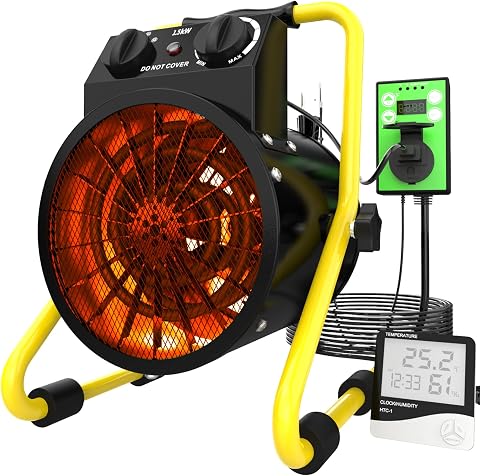
Buyplus Greenhouse Heater with Digital Thermostat, 1500W Electric Space Heater for Patio, Garage, Greenhouse (Black)
- ✔ Power: 1500W
- ✔ Stated coverage: Up to 215 sq ft
- ✔ Temperature range: 40°F–108°F
Propane is often the practical fit for a large or poorly insulated structure that needs substantial heat, especially where power is unreliable or expensive to extend. Electric heat can make more sense for a small greenhouse, a well-insulated growing space, or a setup where quiet, simple operation and avoiding combustion are priorities. The right choice depends on climate, insulation, ventilation, local energy rates, and the plants’ minimum safe temperature.
At a Glance
| Criteria | Propane greenhouse space heaters | Electric greenhouse space heaters | Winner |
|---|---|---|---|
| Heat output and cold-weather capacity | Often suited to high heat demand; capacity varies by model and fuel supply. | Output is limited by electrical service and heater capacity; often practical for small or moderately demanding spaces. | A |
| Operating cost | Depends on local propane prices, heater efficiency, and run time; fuel delivery or cylinder refills add logistics. | Depends on electricity rates and heat loss; continuous use can be costly in cold climates. | Depends |
| Installation and utilities | Needs a compatible propane supply, safe placement, and proper installation; may work where electrical service is limited. | Needs adequate circuit capacity and weather-appropriate equipment; no fuel storage or delivery. | Depends |
| Air quality and ventilation | Combustion produces exhaust and moisture; ventilation and correct venting are important. | No combustion exhaust at the point of use; still requires sensible placement and electrical protection in damp conditions. | B |
| Temperature control | Thermostat capability varies; some models require a separately purchased compatible thermostat. | Many models offer straightforward thermostat controls, though features differ. | B |
| Maintenance and upkeep | Requires attention to burners, fuel connections, exhaust paths, and safe storage. | Usually fewer combustion-related tasks; electrical equipment still needs inspection and cleaning. | B |
| Best greenhouse fit | Larger, colder, or less-connected greenhouses with a suitable fuel and ventilation plan. | Small or well-insulated greenhouses with dependable power and manageable heat demand. | Depends |
Buyplus 1500W Greenhouse Heater with Digital Thermostat – Red
For a greenhouse where we want a more deliberate way to monitor temperature, this red Buyplus has the most specific thermostat setup in the group. Its waterproof probe is intended to measure conditions away from the heater itself, and the stated adjustment range of 40°F–108°F gives it a broad span for different growing environments. That detail makes it our best overall pick, although the listing does not say how far the probe can be placed from the unit or how accurately it reads.Like the black Buyplus, it offers fan-only or full 1500W heat rather than separate low and high heating levels. The third heater is more adjustable in output, but its supplied description does not give the same probe detail. For a small or moderately sized space where thermostat monitoring matters more than graduated heat settings, the red model is easier to justify. Its stated coverage is up to 215 square feet, but we should expect less reach in a drafty or poorly insulated greenhouse.A portable handle, 7.5-foot cord, non-slip base, and 0–45° angle adjustment help us position it where needed. The tradeoff is that it still depends on a nearby outlet and offers limited output for larger spaces; the listed warranty is one year. We should also plan cable placement carefully around water and walkways, since portability does not make the heater suitable for wet exposure.
Pros:
- Waterproof thermostat probe and stated 40°F–108°F adjustment range
- Fan-only and full-heat modes for circulation or heating
- 7.5-foot cord, carry handle, non-slip base, and adjustable angle
- Overheat protection and self-resetting heat breaker are specified
Cons:
- Only offers fan-only and full 1500W heat, with no low-heat setting
- 1500W may be insufficient for a large or poorly insulated greenhouse
- Requires AC power and has no stated timer or remote
Best for: Growers who want a probe-based thermostat and flexible placement in a small or moderately sized greenhouse with AC power.
Not ideal for: Owners of large, drafty greenhouses or anyone who needs remote control, scheduling, or multiple heat levels.
Bottom line: Choose the red Buyplus when probe-based temperature control matters more than having multiple heat levels.
“Choose the red Buyplus when probe-based temperature control matters more than having multiple heat levels.”
Greenhouse Heater with Thermostat, 1500W Outdoor Heater for Patio, Auto Temp Control & Overheat Protection, Non-Slip Cushion, Ele…
This heater is the most flexible option when greenhouse conditions vary and we want more than an on-or-off choice. It lists fan-only, low-heat, and high-heat modes, unlike either Buyplus model, both of which specify fan-only and full heat. That extra step can help us choose a less forceful setting when conditions do not call for maximum output, though the supplied specifications do not state the wattage of the low-heat mode.The product description says it heats in as little as two seconds using PTC technology and mentions a built-in thermostat as well as an optional digital thermostat with a clear display. The details do not fully explain whether that optional control is included or how it relates to the built-in thermostat, so we should verify the package contents before relying on a displayed temperature. By comparison, the red Buyplus clearly calls out its waterproof probe and range, making that model the more straightforward choice for probe-based monitoring.A handle, non-slip cushion, and adjustable angle make it easier to reposition than a fixed heater. The stated electrical requirements are 120V AC and 13A, so we need an appropriate outlet and should account for other equipment on the same circuit. It has overheat protection, but no remote or smartphone control. As with the Buyplus options, the 1500W output may not meet the needs of a larger greenhouse or one with substantial heat loss.
Pros:
- Three modes add low heat between fan-only and full power
- Portable handle, non-slip cushion, and adjustable angle
- Thermostat control and overheat protection are described
- Suitable form factor for moving between a greenhouse, grow tent, or garage
Cons:
- The low-heat wattage is not specified
- Optional digital thermostat details and inclusion are unclear
- Requires a 120V AC outlet and offers no remote or smartphone control
Best for: Growers who want fan circulation plus low and high heat settings for a small greenhouse or grow tent.
Not ideal for: Buyers who need clearly documented probe placement, remote operation, or a heater sized for a large greenhouse.
Bottom line: Pick this model when adjustable output is the priority, while confirming the thermostat configuration and low-heat draw before purchase.
“Pick this model when adjustable output is the priority, while confirming the thermostat configuration and low-heat draw before purchase.”
Buyplus Greenhouse Heater with Digital Thermostat, 1500W Electric Space Heater for Patio, Garage, Greenhouse (Black)
The black Buyplus makes sense for shoppers who want a conventional two-mode heater with digital temperature control and do not need the red model’s specified waterproof probe. It covers the same core ground as its red counterpart: 1500W heat, fan-only operation, and a stated range of up to 215 square feet. Its dimensions are listed as 14 by 10 by 10 inches, which gives us a clearer sense of its floor footprint than the other descriptions do.One useful distinction is that this model lists convection and radiant heating. That description suggests it combines warming air with radiant output, but the provided information does not quantify how much either method contributes or establish that it will heat a greenhouse more evenly. The third heater, by contrast, offers three power modes, so it is the better fit if we want to step down from full heat. The red Buyplus remains more compelling for probe-based temperature monitoring.Its digital thermostat, overheat protection, carry handle, non-slip base, and 7.5-foot cord keep the setup practical for a small growing space. Still, there is no built-in timer or remote, and the specification list does not provide a separate probe or warranty detail. We should treat the coverage figure as a guide rather than a guarantee: greenhouse insulation and air leakage determine whether a 1500W unit can hold a useful temperature.
Pros:
- Digital thermostat with stated 40°F–108°F control range
- Fan-only and full 1500W heating modes
- Listed convection and radiant heating methods
- Dimensions, cord length, handle, and non-slip base support practical placement
Cons:
- No timer or remote control
- No waterproof thermostat probe is specified
- Two operating modes provide less heat adjustment than the three-mode heater
Best for: Buyers who want a compact-footprint, two-mode electric heater with digital thermostat control for a small greenhouse.
Not ideal for: Growers who specifically need a waterproof probe, low-heat mode, timer, or remote scheduling.
Bottom line: The black Buyplus is a practical basic choice, but the red version offers clearer probe details and the third model has more output settings.
“The black Buyplus is a practical basic choice, but the red version offers clearer probe details and the third model has more output settings.”
As an Amazon Associate we earn from qualifying purchases.
Key Differences
The largest practical divide is heat delivery under demanding conditions. Propane is often a better fit when a greenhouse loses heat quickly or needs substantial capacity during freezing weather, particularly if the electrical supply cannot support a large heater. That advantage comes with fuel handling and combustion management. A propane heater must be used according to its instructions, with appropriate venting or ventilation and safe clearance from plants and materials.
Electric heaters simplify the operating routine: there is no tank to refill, and there are no combustion products from the heater itself. That can be a meaningful advantage in a small greenhouse where a properly sized unit can hold the target temperature. But convenience does not make electric heat inexpensive by default. A heater running for long periods can consume a lot of electricity, and the circuit must be rated for the load. Before choosing either type, estimate heat loss, check utility capacity and rates, and compare the full seasonal cost rather than the purchase price alone.
Detailed Comparison
Heat output and cold-weather capacity (Propane greenhouse space heaters wins — major)
Propane usually wins for high heat demand, a moderate-to-major gap in cold or leaky structures. It can be a practical way to supply substantial heat without installing a high-capacity electrical circuit. Electric units can work well in a small, insulated greenhouse, but their output is constrained by the available circuit and the heater’s rating. If temperatures regularly fall far below the desired growing range, calculate the building’s heat loss before assuming either heater can keep up.
Operating cost (major difference)
There is no universal cost winner; the difference can be major over a long heating season. Electric resistance heat turns electricity into heat at the point of use, but a greenhouse may need many hours of operation. Propane costs depend on local fuel prices, delivery fees, and heater efficiency. Compare the cost per useful unit of heat using local rates and realistic operating hours. A lower-cost heater purchase does not settle the ongoing expense.
Installation and utilities (moderate difference)
This depends on what the site already supports, with a moderate difference in setup. Propane avoids the need for a high-capacity electrical circuit but requires compatible fuel supply, safe placement, and careful adherence to installation requirements. Electric heaters avoid fuel storage, but a standard outlet may not be adequate for a powerful unit; check circuit load and suitability for damp environments. The less expensive installation is usually the one that matches existing infrastructure safely.
Air quality and ventilation (Electric greenhouse space heaters wins — major)
Electric wins by a major margin for avoiding combustion exhaust at the heater. Propane combustion creates exhaust and moisture, so ventilation or proper venting matters, and inadequate combustion can create serious hazards. Electric heaters do not burn fuel inside the greenhouse, which removes that source of exhaust. They still need safe electrical installation and placement away from water and combustible materials. If keeping combustion products out of the growing space is a priority, electric is the clearer choice.
Temperature control (Electric greenhouse space heaters wins — minor)
Electric has a modest convenience edge, although controls vary by model. Many electric heaters offer simple thermostat operation, making them easy to set for frost protection or a target temperature. Propane models may also support thermostats, but the feature and compatibility should be confirmed before purchase. In either case, a separate greenhouse thermometer near plant level helps show whether the heater is maintaining an even temperature rather than overheating one corner.
Maintenance and upkeep (Electric greenhouse space heaters wins — moderate)
Electric usually asks for less routine combustion-related upkeep, a moderate advantage. Propane equipment needs attention to fuel connections, burners, and exhaust paths, following the manufacturer’s maintenance schedule. Electric equipment has no burner or fuel line, though cords, plugs, controls, and the heater itself still need inspection and cleaning. Neither option should be left in a damp greenhouse without confirming it is suitable for the environment and installed as directed.
Best greenhouse fit (major difference)
The winner depends on greenhouse size, insulation, climate, and utilities. Propane is often the better practical fit for a larger, colder structure with significant heat loss and limited electrical capacity. Electric is often the simpler fit for a small, insulated greenhouse with dependable power and moderate heating needs. Measure the space and estimate its heat demand before choosing: an undersized heater of either kind can leave plants exposed during the coldest nights.
Propane greenhouse space heaters: Pros and Cons
Pros:
- Can suit high heat demand and cold conditions.
- Does not rely on a high-capacity electrical circuit for its heat output.
- Useful where propane supply is already available.
Cons:
- Requires fuel storage or refills and ongoing fuel-cost comparisons.
- Combustion creates exhaust and moisture, so ventilation or venting must be handled correctly.
- Needs attention to burners, connections, and safe operation.
Electric greenhouse space heaters: Pros and Cons
Pros:
- Produces no combustion exhaust at the point of use.
- Often straightforward to control and operate.
- Avoids fuel storage, delivery, and burner maintenance.
Cons:
- Needs adequate electrical capacity and suitable wiring for the unit.
- Long operating hours can make bills high, depending on local rates.
- May not provide enough heat for a large or poorly insulated greenhouse.
Who Should Choose What
Choose Propane greenhouse space heaters if:
- Your greenhouse has high heat demand and the electrical service cannot support a large heater.
- Propane is readily available and its local cost compares favorably with electricity.
- You can provide the required venting or ventilation and follow the heater’s installation and operating instructions.
Choose Electric greenhouse space heaters if:
- Your greenhouse is small or well insulated and a properly rated electric heater can meet its heat demand.
- You want to avoid fuel storage and combustion exhaust inside the growing space.
- You have a dependable power supply, a suitable circuit, and electricity rates that make extended use reasonable.
Skip both if: Neither heater is a good fit if the greenhouse loses heat faster than either unit can replace it, the required utility supply is unavailable, or safe installation and operation cannot be provided. Improve insulation and air sealing or consider another properly sized heating system.
Value for Money
Paying more for propane equipment is worth it when its greater practical capacity avoids an electrical upgrade or helps maintain temperature in a cold, high-loss greenhouse. It may offer better value where propane is affordable and readily available, but recurring fuel expenses and maintenance belong in the calculation. For a small greenhouse with adequate electrical service, a basic electric heater can be better value because it avoids fuel logistics and combustion-related upkeep.
Compare the installed cost plus expected seasonal energy use, not just the purchase price. Include circuit upgrades or fuel-supply work, local electricity and propane rates, expected run time, and the cost of improving insulation. A heater that meets the demand with less wasted heat can be the better value even if its upfront price is higher.
Final Verdict
For most small, well-insulated hobby greenhouses with reliable electrical service, choose an electric heater: it is simpler to operate and avoids combustion exhaust in the growing space. Choose propane when the greenhouse needs substantial heat, electrical capacity is limited, and you have a safe, suitable fuel and ventilation plan. The deciding factor is whether the unit can meet the greenhouse’s heat demand at a sensible seasonal cost. Do not pay extra for propane capacity you will not use, and do not choose electric solely for convenience if it cannot keep plants warm on the coldest nights.
Frequently Asked Questions
Is propane or electric cheaper to run in a greenhouse?
It depends on local electricity and propane prices, heater efficiency, heat loss, and operating hours. Estimate seasonal demand and compare the cost of delivering the required heat with local rates; purchase price alone is a poor guide.
Can I use a propane space heater in an enclosed greenhouse?
Only use a model suitable for the setting and follow its installation and operating instructions. Propane combustion produces exhaust and moisture, so the required venting or ventilation must be provided. Never ignore manufacturer requirements or safety guidance.
Will an electric greenhouse heater work during a hard freeze?
It can if its capacity is enough for the greenhouse’s heat loss and the electrical circuit can safely support it. A small heater may maintain temperature in an insulated space but fall short in a large, drafty greenhouse. Size the heater for the structure and local winter conditions.
Which heater is better for seedlings?
Either can work if it maintains the required temperature evenly and safely. Electric heat can be convenient for a small propagation area, while propane may suit a larger structure with greater heat demand. Use a thermometer near the plants and avoid hot spots or direct exposure to heater output.