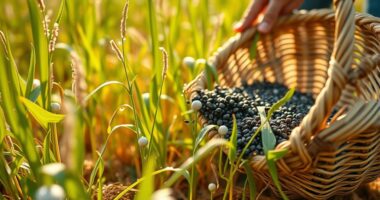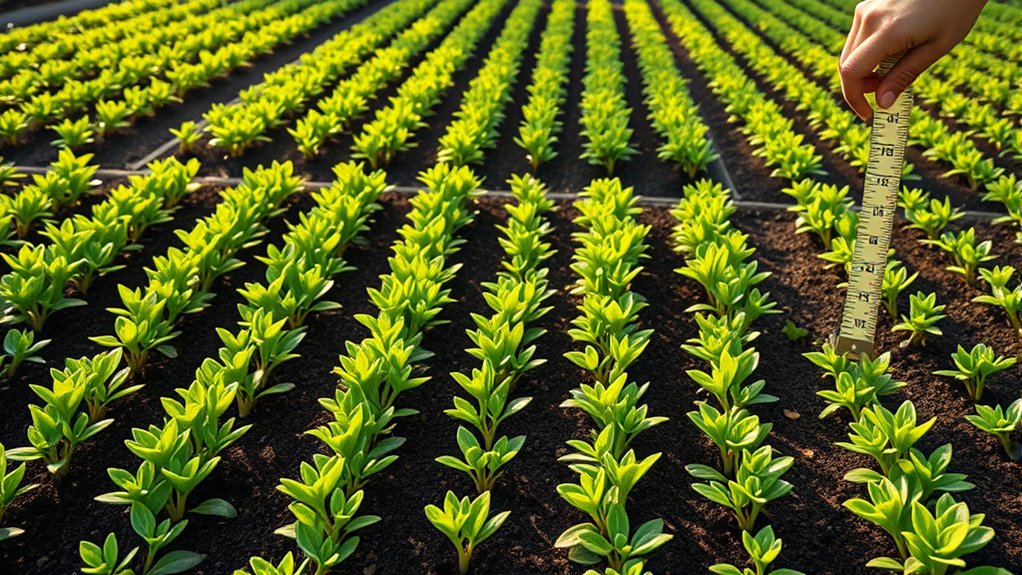

When planning your chia garden, start by evaluating your outdoor space and choosing the best sunny spot with at least six hours of direct sunlight daily. Space your chia plants about 12-18 inches apart to guarantee proper air circulation and easy maintenance. Use raised beds or containers for better soil control. Position taller plants at the back or center for access while designing pathways for easy watering and harvesting. Keep these tips in mind to create a healthy, efficient layout that supports robust growth; more details follow.
Key Takeaways
- Allocate 12-18 inches of space between chia plants for airflow and healthy growth.
- Position chia in full sun areas with at least six hours of daily sunlight.
- Use raised beds or containers to improve soil quality, drainage, and accessibility.
- Arrange taller chia plants at the back or center to facilitate maintenance and visual appeal.
- Incorporate companion plants like basil or marigolds to deter pests and promote garden health.
Are you ready to transform your outdoor space into a vibrant chia garden? Planning your layout is the first step toward cultivating healthy, productive chia plants that thrive. To start, consider how much space you have and how you want your garden to look. Chia plants grow tall and bushy, so give them enough room to spread out—about 12 to 18 inches apart. This spacing ensures good air circulation, reduces the risk of disease, and makes maintenance easier.
Next, think about companion planting. Incorporating complementary plants alongside your chia can boost growth and protect your garden naturally. For example, planting basil or marigolds nearby can help deter pests, creating a natural pest management system. These companions release scents or compounds that repel insects, decreasing the likelihood of infestations. Additionally, planting legumes like beans can enrich the soil with nitrogen, which chia plants love. When planning your layout, consider grouping plants with similar watering needs and sunlight requirements to simplify care.
The placement of your chia plants also matters for pest management. Position them in areas that receive full sun—at least six hours a day—to promote healthy growth and reduce pest problems. Avoid planting in shaded or damp spots, as these conditions can encourage mold and attract pests. Creating a raised bed or container garden can give you more control over soil quality and drainage, which are essential for preventing root rot and pest issues.
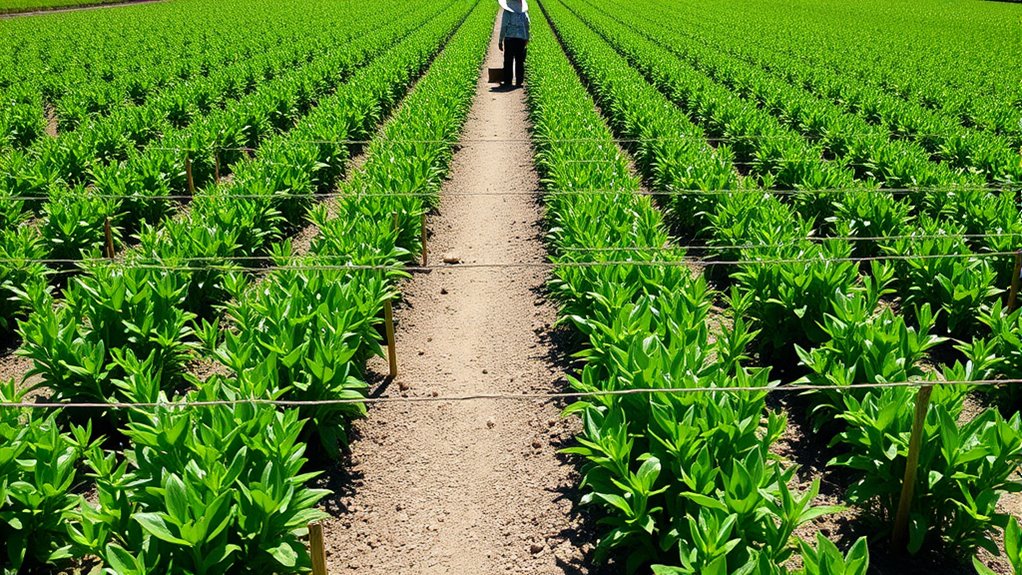
Think about accessibility when designing your layout. Arrange your garden so you can easily reach all plants for watering, harvesting, and inspecting for pests. Using pathways or stepping stones helps prevent soil compaction and allows for easier movement through your garden. Consider planting taller chia varieties towards the back or center of your plot, with shorter companion plants around the edges, making maintenance more manageable and visually appealing.
Finally, plan for crop rotation and succession planting to keep your garden healthy and productive. Rotate chia with other crops each season to prevent soil depletion and disrupt pest cycles. This proactive approach minimizes pest problems and maintains soil fertility. By carefully planning your space and planting layout with companion planting and pest management in mind, you set yourself up for a thriving chia garden. With attention to detail and strategic placement, you’ll enjoy a bountiful harvest and a beautiful, sustainable outdoor space.
Frequently Asked Questions
How Much Sunlight Does a Chia Garden Need Daily?
You should guarantee your chia garden gets about 4 to 6 hours of direct sunlight daily. Chia plants thrive with sufficient sunlight requirements to grow healthy and produce seeds. Aim for consistent daily sun exposure, preferably in the morning or early afternoon, to maximize growth. If you can provide full sun, your chia plants will flourish, giving you a bountiful harvest. Remember, adequate sunlight is essential for strong, vibrant chia plants.
What Is the Best Soil Type for Chia Plants?
Think of your chia plants as tiny sponges craving the perfect dance floor. You want soil with excellent drainage to prevent soggy roots and a pH balance between 6.0 and 8.0, like a gentle handshake welcoming growth. Loamy soil, rich in organic matter, works best because it provides the right mix of nutrients and drainage. Keep the soil balanced, and your chia garden will thrive like a well-tuned orchestra.
How Often Should I Water My Chia Garden?
You should water your chia garden about 2-3 times a week, depending on your climate and soil moisture levels. Keep the soil consistently moist but not waterlogged. For best results, use irrigation tips like a gentle spray or drip irrigation to evenly distribute water. Monitor your plants closely—if the soil feels dry a few inches down, it’s time to water again. Adjust watering frequency as needed to keep chia plants healthy.
Can Chia Plants Grow in Containers or Pots?
Did you know chia plants can grow in containers with proper care? Yes, container cultivation and pot gardening are perfect for chia, especially if you’re limited on space. You should use a well-draining pot with good soil, and make sure it gets plenty of sunlight. Water regularly, keeping the soil moist but not waterlogged. With the right setup, you’ll enjoy lush chia plants thriving in your pots!
What Pests Commonly Affect Chia Plants?
You should watch out for pests like aphids, spider mites, and whiteflies that commonly affect chia plants. To prevent infestations, practice pest prevention by keeping your garden clean and healthy. Use natural remedies like neem oil or insecticidal soap to control pests without chemicals. Regularly inspect your chia plants and act quickly if you notice any pest activity, ensuring your plants stay healthy and productive.
Conclusion
Don’t let limited space stop you from growing chia. With smart planning and vertical arrangements, you can maximize even small areas. It’s easy to get started—just choose the right spot, space your plants well, and watch them thrive. If you think you lack a green thumb, remember chia is low-maintenance and forgiving. So, go ahead—start your chia garden today and enjoy fresh, nutritious sprouts right at home!