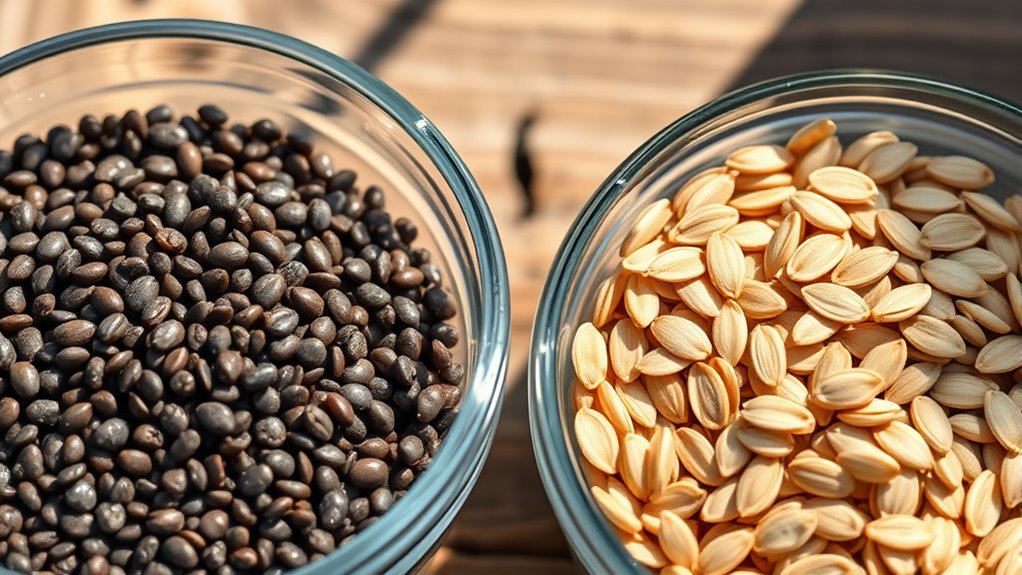
When comparing chia seeds and flax seeds, both offer excellent health benefits, but your choice depends on your goals. Chia seeds are higher in fiber and develop a gel-like texture that supports digestion and fullness, while flax seeds are rich in lignans and add a nutty flavor, making them great for baked goods and hormone balance. To discover which one aligns best with your needs and preferences, consider the details that follow.
Key Takeaways
- Both seeds are rich in plant-based omega-3s, but chia seeds have a higher concentration.
- Flax seeds contain lignans with antioxidant and hormonal health benefits, unlike chia.
- Chia seeds offer more dietary fiber, supporting digestion and satiety more than flax.
- Ground flax seeds provide better nutrient absorption, especially for lignans and omega-3s.
- The choice depends on individual health goals: fiber, lignans, or omega-3 intake.
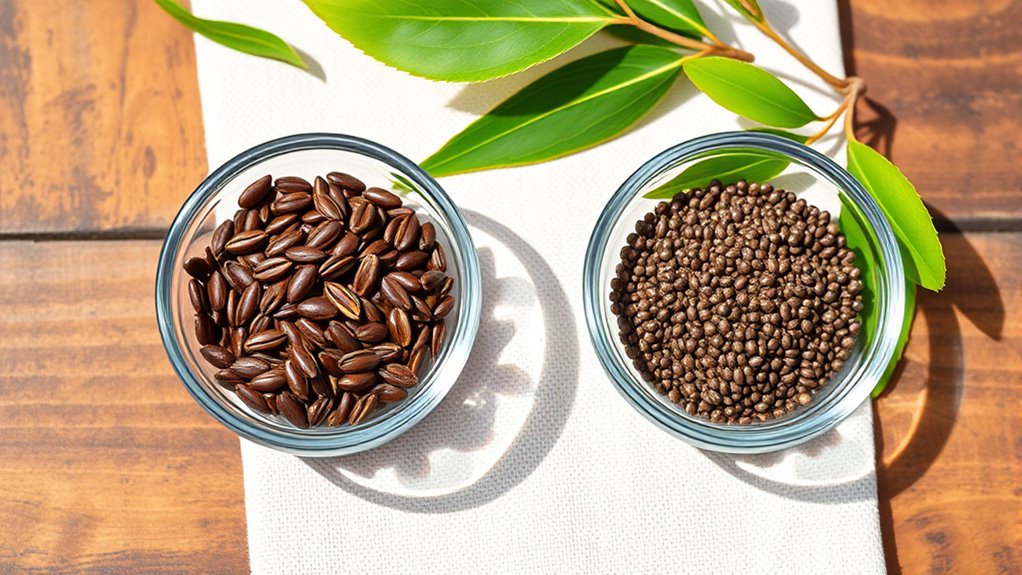
When choosing between chia seeds and flax seeds, understanding their differences can help you make the best health choice. Both are popular superfoods packed with nutrients, but they offer distinct benefits based on their nutritional differences and culinary uses. Knowing how each fits into your diet can guarantee you get the most health benefits from these tiny seeds.
Nutritionally, chia seeds and flax seeds provide a rich source of omega-3 fatty acids, fiber, and antioxidants, but their profiles vary. Chia seeds are slightly higher in fiber, with about 10 grams per ounce, which can support digestion and help you feel full longer. Flax seeds contain around 8 grams of fiber per ounce, but they are particularly notable for their high lignan content, which has antioxidant properties and may support hormone balance. Both seeds are excellent plant-based sources of omega-3s, specifically alpha-linolenic acid (ALA), but chia seeds generally have a higher concentration, making them a better choice if you’re aiming to boost your omega-3 intake.
In terms of culinary uses, these seeds also differ in how you incorporate them into your meals. Chia seeds are incredibly versatile; they soften and develop a gel-like consistency when soaked, making them ideal for puddings, smoothies, and as an egg substitute in baking. You can sprinkle them over yogurt or cereal, or mix them into drinks without altering the flavor much. Flax seeds, on the other hand, are best ground before use because their hard shells can pass through your digestive system undigested if eaten whole, limiting nutrient absorption. Ground flax is a popular addition to smoothies, baked goods, oatmeal, or as an egg replacer. While both seeds can be added to a variety of dishes, flax seeds tend to work better in recipes that benefit from a nutty flavor, whereas chia seeds have a more neutral taste.
Additionally, using a proper storage method can extend the freshness and nutritional value of both seeds, ensuring you get the maximum health benefits over time. Ultimately, your choice depends on your dietary goals and preferences. If you’re looking for a fiber boost with minimal flavor impact, chia seeds might be your go-to. If you want to incorporate more lignans and a nutty flavor into baked goods, flax seeds are a great option. Both seeds are nutrient-dense and can complement a balanced diet, but understanding their nutritional differences and culinary uses helps you decide which one aligns best with your health needs and taste preferences.
Frequently Asked Questions
Can Chia and Flax Seeds Be Eaten Raw or Should They Be Cooked?
You can eat both chia and flax seeds raw or cooked, but raw consumption is common for maximum nutrient intake. Chia seeds are often added directly to smoothies or yogurt, while flax seeds should be ground for better digestion. Cooking considerations include not overheating them, as high heat can reduce their nutritional value. Just remember to soak or grind flax seeds to release their full benefits, and enjoy them in your favorite recipes.
Are There Any Allergy Risks Associated With Chia or Flax Seeds?
Like a cautious traveler at a crossroads, you should watch for allergy symptoms or seed sensitivities when trying chia or flax seeds. Some people might experience reactions such as itching, swelling, or digestive discomfort. While rare, these seeds can trigger allergies. Always start with small amounts and consult a healthcare professional if you notice any adverse effects, ensuring your journey with these seeds remains safe and nourishing.
How Do Chia and Flax Seeds Affect Blood Sugar Levels?
You might notice that chia and flax seeds help with blood sugar regulation because their high fiber content slows carbohydrate impact, keeping blood sugar levels stable. Including these seeds in your diet can improve your overall carbohydrate impact by delaying digestion and absorption. As a result, they support steady energy levels and reduce sugar spikes. So, adding them can be a smart choice for managing blood sugar and promoting better health.
Which Seed Is Better for Weight Loss or Dieting?
Imagine a secret weapon for your weight loss journey. Both seeds offer excellent satiety benefits, helping you feel full longer, but chia seeds have fewer calories per serving, making them a slightly smarter choice. Their high fiber content supports appetite control, while flax seeds provide omega-3s. For effective dieting, incorporating chia seeds might give you a subtle edge in managing calorie intake and boosting satiety, aiding your goals effortlessly.
Do Chia or Flax Seeds Interfere With Medications or Health Conditions?
You might wonder if chia or flax seeds cause drug interactions or worsen medical concerns. While generally safe, they can interfere with blood thinners or medications affecting blood sugar due to their high omega-3 and fiber content. Always check with your healthcare provider before adding these seeds, especially if you have medical concerns or take medications, to avoid potential drug interactions and guarantee they fit your health plan.
Conclusion
Ultimately, choosing between chia and flax seeds depends on your health goals. Chia seeds offer a boost of fiber and omega-3s, while flax seeds provide more lignans and a different type of omega-3. Think of chia as your quick, versatile energy boost, and flax as your slow-burning, hormone-balancing option. Both pack powerful benefits—so why not incorporate both into your diet for a well-rounded nutritional punch? The choice is yours, but your health wins either way.