TL;DR
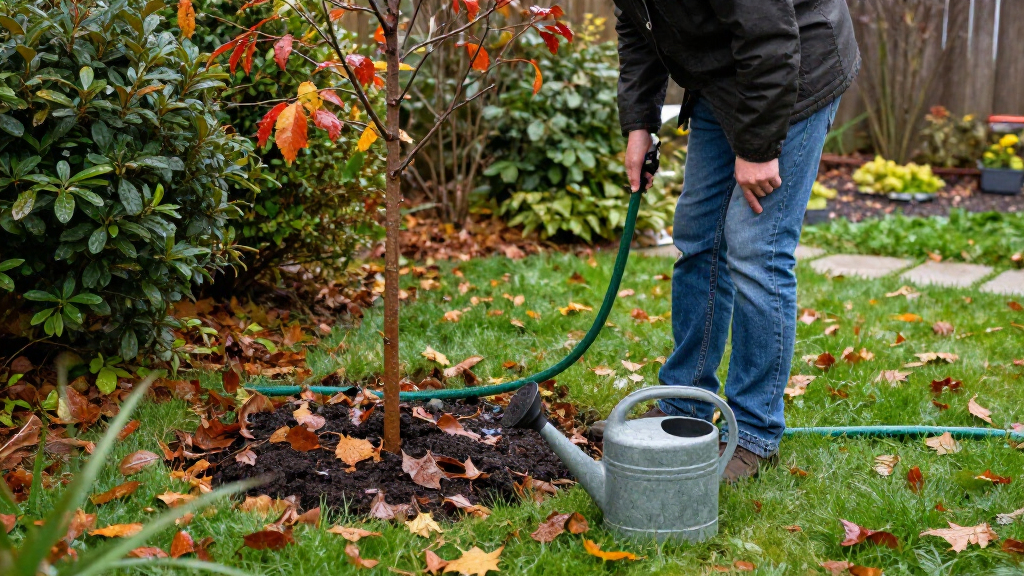
Gardening Know How reports that fall rain may not reach the root balls of shrubs and trees planted within the past 6–12 months. The article advises checking moisture near the roots and continuing to water when needed until the ground freezes; how much rain is enough depends on local conditions and soil.
Fall rain may not adequately water newly planted shrubs and trees, according to a Gardening Know How report, which advises checking moisture in the root ball and watering when it is dry. The guidance concerns plants installed within the past 6–12 months, whose roots may not yet have spread into surrounding soil.

Get garden gear delivered free with Prime
- Fast, free delivery on millions of items
- Prime Video, Amazon Music and more included
- Member-only deals all year
The report says a drizzle can wet mulch and the soil surface without soaking the roots. Some water may evaporate or run off, while the original root ball can dry more quickly than the surrounding ground. This can happen because nursery growing media and native soil have different textures, slowing water movement across the boundary between them. Dense evergreen foliage may also deflect rainfall away from the roots.
Gardeners are advised to check below the surface rather than judge moisture by wet paving, mulch or the appearance of the yard. The article says newly planted trees and shrubs may need consistent hydration until the ground freezes solid. It does not give a universal rainfall amount or watering schedule, so local rainfall, soil and plant conditions matter.
Established plants may cope better with a dry spell because their roots extend farther through native soil, the report says. Newly planted roots, by contrast, remain more confined. The article notes that roots can continue growing in fall while soil temperatures remain above 40°F (4°C), making moisture relevant even after leaves change color or drop.
Why New Root Systems Need Water
Water stress in fall can affect a plant well after the dry period has passed. The report says damage may not show in spring: a tree or shrub can initially leaf out using stored reserves, then struggle as warmer weather raises its water demand. That delay can make it harder to identify fall dryness as a cause of later decline.
Dry soil can also leave roots more exposed to cold and temperature swings. Gardening Know How says dry soil freezes more rapidly, while adequate soil moisture can help moderate temperature changes around roots. Evergreen plants face an additional winter concern: foliage continues to lose water on bright or windy days, and frozen, dry roots may not replace it. The report links that stress to winter burn and describes frost-heaving as another risk in dry soil.
These effects make a moisture check useful for protecting recent plantings and avoiding unnecessary watering of already damp ground. The report’s central point is that rain at the surface does not establish that the root ball is wet.
Products Worth Considering

Le Creuset Enameled Cast Iron Rectangular Roaster, 5.25 qt, Riviera

Cuisinart Chef's Classic 11-Piece Stainless Steel Cookware Set

Vitamix 5-Speed Immersion Blender, 625-Watt, Stainless Steel/Black
As an affiliate, we earn on qualifying purchases.
How Fall Rain Can Miss Roots
The report distinguishes new plantings from established trees and shrubs. Cooler temperatures reduce water loss through leaves, and established plants often have broad root systems that reach moisture beyond the planting hole. Those conditions can make autumn watering less pressing for established specimens, but they do not automatically apply to a plant installed this year.
New roots expand into surrounding soil over time. Until then, the root ball may respond differently to rainfall than nearby loam or clay. A wet-looking surface can conceal dry soil a short distance below, and the article notes that rain gauges can help put impressions of a drizzly day in perspective. It offers an example of a gauge measuring only about a quarter-inch (6 mm) despite the yard appearing damp; this is an illustration, not a threshold for deciding when every plant needs water.
The guidance is seasonal rather than a fixed calendar rule: roots may remain active in cool soil, but watering needs change with rainfall, soil type and the arrival of freezing conditions. Mulch can help retain existing moisture, according to the report, but it cannot substitute for checking whether water has reached the roots.
“The yard may look watered, but the root ball often remains bone dry.”
— Gardening Know How report
Rainfall Needs Vary by Site
The report does not specify how much rainfall is sufficient for a particular plant, nor does it provide a single watering interval. The amount reaching roots depends on conditions such as soil texture, the plant’s size and canopy, and the distribution of rainfall. The article’s precipitation example is not a universal benchmark.
It also does not establish that every later decline or winter injury is caused by dry fall soil. Its discussion describes possible risks and delayed symptoms; the cause of any individual plant’s poor growth would require evaluating other conditions too. Local frost timing and the point at which soil freezes also vary.
Check Moisture Before Winter
For shrubs and trees planted in the last year, the report recommends checking moisture in the root zone after autumn rain and watering if the root ball remains dry. Continue to monitor conditions while the soil is unfrozen, adjusting to actual rainfall rather than relying on a damp surface or a fixed weekly total. Once the ground freezes solid, the article’s watering period ends.
Gardeners can also watch newly planted evergreens for winter stress and use mulch to help retain moisture already in the soil. The report does not set a precise amount of water to apply; gardeners should account for their site’s soil and weather when deciding whether more is needed.
Key Questions
Is fall rain enough for a newly planted tree?
Not necessarily. Light rain may wet the surface without soaking the root ball, so check moisture near the roots before deciding whether more water is needed.
Which plants does the report focus on?
It focuses on trees and shrubs planted within the past 6–12 months, whose roots may still be concentrated in the original root ball.
How long should new shrubs and trees be watered in fall?
The report says to keep checking and water when needed until the soil freezes solid. It does not prescribe a universal schedule or rainfall threshold.
Why might a plant look healthy in spring after a dry fall?
The report says a plant may initially leaf out using stored reserves, with root damage becoming visible later when warmer weather increases water demand. That is a possible pattern, not a diagnosis for every struggling plant.
Source: rss