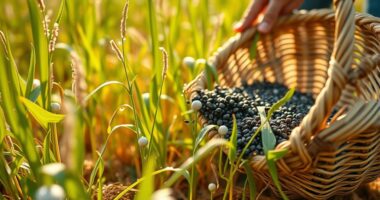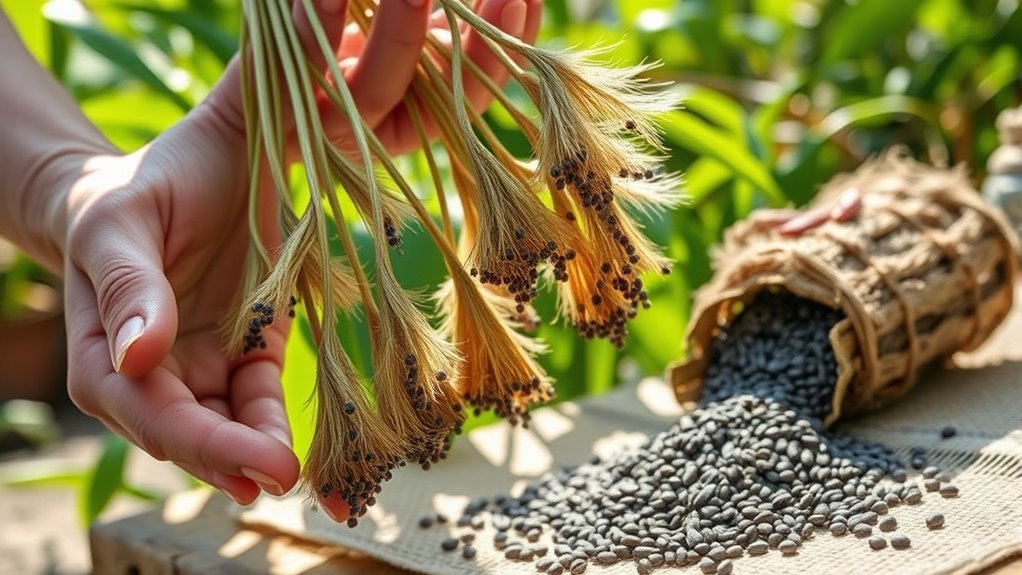
To harvest chia seeds, wait until the seed heads turn dull grayish-brown, feel dry and brittle, and the seeds inside rattle when shaken. Look for yellowing leaves and seed heads that are fully dry, with a hard seed core. When the seed heads have these signs, cut them carefully and hang upside down to dry completely. Keep monitoring the plants to guarantee ideal timing and learn more about proper techniques for high-quality harvests.
Key Takeaways
- Harvest chia seeds when seed heads turn dull gray, dry, and brittle, typically 100-120 days after planting.
- Look for yellowing leaves, drooping seed heads, and seeds that rattle easily when shaken.
- Cut seed heads carefully with scissors or pruning shears on a dry day to prevent moisture damage.
- Hang seed heads upside down in a well-ventilated, dry space to fully dry before threshing.
- Gently thresh the dried seed heads to release the seeds, ensuring complete drying to avoid mold.
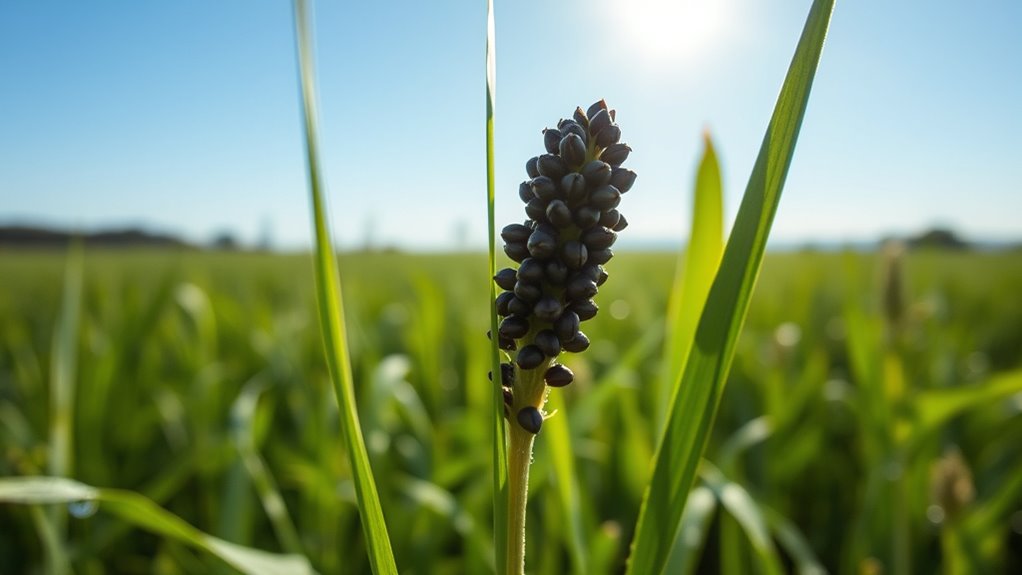
Harvesting chia seeds at the right time is essential to guarantee maximum flavor and nutrition. To do this effectively, you need to pay close attention to the maturity indicators that signal when your plants are ready for harvest. The key is understanding the right harvesting timing, which hinges on observing specific visual cues and plant development stages. When your chia plants have reached full maturity, you’ll notice the seed heads become dry and brittle, and the leaves may start to yellow or fade. These are clear indicators that the seeds have developed fully and are ready to be collected.
Watch for dry, brittle seed heads and yellowing leaves to determine when your chia seeds are fully mature.
Timing is everything when it comes to harvesting chia seeds. If you wait too long, the seeds might drop prematurely or become overripe, which can affect their quality and storage life. Conversely, harvesting too early can result in immature seeds that haven’t reached their full nutritional potential or flavor profile. A good rule of thumb is to monitor the seed heads closely as they approach maturity, usually around 100 to 120 days after planting, depending on your climate and variety. When the seed heads turn a dull, grayish color and feel dry to the touch, it’s a sign they’re ready for harvest. The seeds inside should be hard and not easily crushed between your fingers, confirming their maturity.
You should also observe the plant’s overall appearance. As the seed heads mature, they tend to droop or bend downward, indicating the plant is nearing the end of its growth cycle. To ensure you’re on the right track, gently shake a seed head and listen for the sound of loose seeds. If you hear a rattling noise, it’s a good sign that the seeds are fully developed and ready to be harvested. Keep in mind that environmental factors like humidity and temperature can influence the harvesting timing, so check your plants frequently during their final weeks of development.
Once you’re confident that the seed heads have reached the appropriate maturity indicators, it’s time to harvest. Wait for a dry day to minimize moisture, which can cause mold or spoilage during storage. Cut the seed heads carefully with scissors or pruning shears, and hang them upside down in a dry, well-ventilated area to finish drying. After a few days, you can gently thresh the seed heads to release the tiny seeds. Proper timing and keen observation of maturity indicators ensure you collect high-quality chia seeds that are rich in flavor and nutrients. Additionally, utilizing organic techniques such as crop rotation can help maintain soil fertility for future harvests.
Frequently Asked Questions
Can I Harvest Chia Seeds Early Without Affecting Yield?
You can harvest chia seeds early, but it may affect seed ripening and reduce the overall yield. To avoid this, monitor the plants closely during the harvest timing window; wait until the seed heads turn a dull brown and the seeds are hard. Harvesting too soon means the seeds won’t be fully mature, which could lead to lower germination rates and less seed quantity overall.
How Do Weather Conditions Impact Chia Seed Harvest Timing?
You might think weather doesn’t influence harvest timing, but climate considerations are vital. Warm, dry conditions speed up seed ripening, making seasonal timing essential. If it’s too wet or humid, seeds may rot or sprout prematurely, delaying harvest. Sudden frosts can also damage plants, so keep an eye on weather forecasts. Adjust your harvest schedule accordingly, ensuring seeds are mature and dry for maximum yield and quality.
Is It Necessary to Dry Chia Seeds Before Storage?
Yes, it’s necessary to dry chia seeds before storage to guarantee seed preservation. You should reduce seed moisture to about 8-12%, which prevents mold and spoilage. After harvesting, spread the seeds in a thin layer in a well-ventilated area, turning occasionally until they’re thoroughly dry. Proper drying helps maintain seed quality and extends their shelf life, making them easier to store and use later.
What Tools Are Best for Harvesting Chia Seeds?
You should use harvesting equipment like scissors or garden shears to carefully cut the chia seed stalks. For seed collection methods, gently shake or tap the plants to release the mature seeds into a container. A wide-mouthed container or a clean sheet works well. Using these tools and methods guarantees you collect the seeds efficiently without damaging the plants, making your harvest process smooth and effective.
How Do I Know if Chia Seeds Are Fully Ripe?
Spot the signs of seed maturity by observing color indicators; ripe chia seeds turn from green to a dark, glossy hue. When seeds are fully ripe, seed maturity is attained, and the seed heads begin to dry and turn brown. You’ll notice the seeds easily rattling in the pods, indicating they’re ready for harvest. Don’t delay—harvest at the perfect stage to guarantee maximum seed quality and flavor.
Conclusion
Now that you know when and how to harvest your chia seeds, you’re ready to reap the rewards of your patience. Watch for the plants to turn a deep brown or gray, signaling it’s time. As you gather those tiny treasures, remember: every seed is a promise of future growth, a whisper of nature’s cycle. So, harvest with care, and let each seed remind you that patience and attention turn small efforts into bountiful rewards.