
TL;DR

Get garden gear delivered free with Prime
- Fast, free delivery on millions of items
- Prime Video, Amazon Music and more included
- Member-only deals all year
Grow Organic’s onion-growing guide says fertilizer should be chosen according to soil test results, rather than applied as a one-size-fits-all treatment. It advises supporting leaf growth early, limiting heavy nitrogen as bulbs develop, and pairing feeding with suitable varieties, steady water and enough space.
Grow Organic’s onion-growing guide advises gardeners to base fertilizer choices on a soil test and the crop’s growth stage, rather than adding nutrients automatically in pursuit of larger bulbs. The guidance matters because too little nitrogen can restrict leaf growth, while heavy nitrogen late in the season may delay maturity and leave bulbs with necks that dry poorly for storage.
The guide says onions need full sun and well-drained soil, with a pH of about 6.0 to 7.0 suited to many gardens. Testing soil can identify shortages as well as nutrients already present in sufficient amounts. Grow Organic cautions that adding more of an abundant nutrient will not necessarily improve growth. Mature compost may help where soil needs organic matter, but its nutrients should be counted in the overall feeding plan.
Nutrients serve different roles: nitrogen supports leaf growth, phosphorus supports roots, and potassium contributes to several plant functions. The guide says a balanced blend is not automatically the right choice; fertilizer should address what the soil lacks. It also recommends comparing products by their label nutrient content, because equal scoops of different products may provide different amounts.
For timing, the guide recommends adding nutrients before planting based on test results and product directions. During leaf growth, gardeners may apply nitrogen if it is part of their plan, potentially in smaller split doses. As bulbs develop, it advises against heavy late-season nitrogen. Regional recommendations differ on whether feeding should stop when bulbing begins, so the guide directs growers to follow local advice rather than a single nationwide schedule.
Fertilizer Timing Shapes Bulb Quality
Fertilizer choices can affect both bulb development and storage readiness. Nitrogen helps build the leaves that capture energy for bulb growth, but continued heavy feeding late in the season may delay ripening. The guide links that delay to thick necks that dry poorly, a concern for people growing onions intended for storage.
The advice also addresses a common source of wasted effort: treating fertilizer as the fix for every small crop. Grow Organic says fertilizer cannot make up for shade, crowded rows or an unsuitable variety. Matching the variety to local daylight conditions, providing room and maintaining steady moisture are part of growing a crop; fertilizer is only one input.
For home gardeners, the practical implication is to check soil and plant conditions before applying more product. Pale or stalled growth does not, by itself, establish a nutrient shortage: wet soil, pests and root damage can produce similar signs. A measured approach can reduce unnecessary applications while keeping attention on the other conditions that affect yield.
As an affiliate, we earn on qualifying purchases.
Day Length and Soil Set the Plan
Onions begin forming bulbs in response to day length, and the guide groups varieties by their general daylight requirements. Short-day onions typically start bulbing with about 10–12 hours of daylight; intermediate types generally need about 12–14 hours; and long-day types usually need about 14–16 hours. The source says the ranges vary by variety. Choosing a type suited to the region gives plants a chance to grow leaves before bulb formation starts.
Other growing details affect results alongside feeding. The guide suggests spacing bulb onions about four to six inches apart and keeping soil moist without leaving it soggy. It recommends checking moisture before watering, since rain, heat and soil type change how often irrigation is needed. Small weeds should be removed gently to avoid disturbing shallow onion roots.
Organic and mineral fertilizers can both supply nutrients, but their release and composition differ. Grow Organic says organic nutrient availability depends on the material, soil warmth and moisture. It identifies blood meal as a concentrated nitrogen source that needs careful measurement. Ammonium sulfate supplies nitrogen and sulfur and can lower soil pH over time; the guide notes that it is not an organic fertilizer.
“The best fertilizer for onions supplies nutrients your soil lacks.”
— Grow Organic guide, “How to Grow Onions”
As an affiliate, we earn on qualifying purchases.
Local Rates and Timing Vary
The supplied guide does not provide a single fertilizer formula or application rate for all onion beds. The appropriate product and amount depend on soil test results, product labels and local growing advice. It also says recommendations differ on whether to stop feeding when bulb formation starts or to make an early application during that phase.
The source does not report trial results comparing yields under different fertilizer schedules, nor does it quantify how much a particular nutrient treatment changes bulb size or storage life. Its guidance is practical growing advice, not evidence that one product or schedule will produce a particular yield. The publication date was not included in the supplied source material.
As an affiliate, we earn on qualifying purchases.
Test Soil Before the Next Feeding
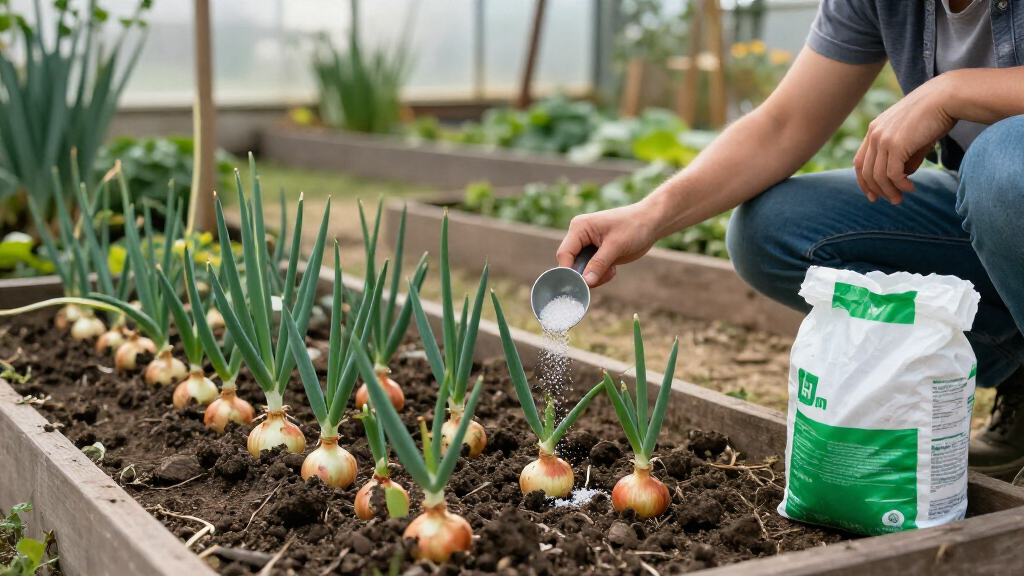
Before applying fertilizer, gardeners can test the soil, read the product label and measure the bed so application rates match the area and nutrient need. The guide advises keeping a record of fertilizer, compost and other feeds, placing side-dressings beside rows rather than against stems, and watering as product directions require.
As plants grow, growers can check soil moisture, watch for weeds and pests, and avoid treating every sign of poor growth as a nitrogen shortage. When bulbs mature and tops fall naturally, the guide recommends harvesting and curing them with good airflow until necks and outer skins dry. It gives no specific follow-up date or additional scheduled update.
onion bulb storage quality fertilizer
As an affiliate, we earn on qualifying purchases.
As an affiliate, we earn on qualifying purchases.
Key Questions
What fertilizer should I use for onions?
Use soil test results to identify what nutrients are lacking, then compare fertilizer labels and follow the chosen product’s directions. The guide does not recommend one universal blend for every garden.
When should I stop fertilizing onions?
Avoid heavy nitrogen applications late in the season, when bulbs are developing. Guidance on stopping at the start of bulbing varies by region, so follow local recommendations for your variety and growing conditions.
Does fertilizer alone make onion bulbs larger?
No. The guide says fertilizer can correct nutrient shortages but cannot compensate for shade, crowded planting or a variety poorly matched to local day length. Water and well-drained soil also matter.
How far apart should bulb onions be planted?
The guide says many garden references suggest spacing bulb onions about four to six inches apart. Planting dates and other practices depend on local climate and variety.
Can pale onion leaves mean the plants need fertilizer?
Not necessarily. The source says wet soil, pests and damaged roots can cause similar signs, so check growing conditions before adding nutrients.
Source: rss
Columbus Day / Indigenous Peoples' Day Picks
long weekend sales
As an affiliate, we earn on qualifying purchases.