TL;DR

Get garden gear delivered free — and shop member deals
- Fast, free delivery on millions of items
- Access to Prime Big Deal Days deals on October 6–7
- Prime Video, Amazon Music and more included
Fall can be a suitable time to plant trees, but the Planet Natural report identifies three reasons to pause: a waterlogged site, too little time for roots to establish before freezing, or unhealthy nursery stock. The decision depends on the tree, site, local conditions and aftercare—not the calendar alone.
A Planet Natural report advises gardeners to delay fall tree planting when the site drains poorly, freezing weather is too close for roots to begin establishing, or the nursery tree is already stressed. The guidance matters because planting in fall is not automatically suitable for every tree: soil, species, local climate and follow-up care all affect the decision.
The first warning sign is a planting site where water remains in the hole long after rain or irrigation. Tree roots need oxygen as well as moisture, and a persistently saturated hole can leave the root ball in a waterlogged pocket. The report recommends watching the site after a storm and addressing the drainage problem or choosing a better location or species. Adding gravel to the bottom of a hole will not correct poor drainage throughout the surrounding soil.
The second red flag is insufficient time for the roots to settle in before the ground freezes. That risk may be greater for a large tree planted late, a site at higher elevation, a species near the edge of its hardiness range, or a location exposed to drying winds or harsh sun. A calendar date alone cannot determine whether there is enough time; local freeze patterns, the site’s microclimate and the tree’s hardiness also matter.
The third is nursery stock that shows signs of stress or root problems. The report recommends checking bark, foliage and the root flare, and inspecting container roots when the nursery permits. Circling roots, black or slimy roots, and roots emerging through drainage holes warrant caution. Circling roots should be corrected before planting as appropriate for the tree; a tree should never be planted while still in its plastic nursery pot.
A Sound Start Depends on Roots
The choice affects whether a tree enters the ground with conditions that support root growth, rather than simply whether planting is completed before winter. Wet soil can deprive roots of oxygen, while a tree planted too close to freezing may have little time to settle into its new site. Existing root damage or stress can add another obstacle.
Waiting can also require care. A container-grown tree held until spring still needs protection from drying wind and strong afternoon sun, and its root ball needs regular checks and water when it begins to dry. Container roots face colder temperatures than roots protected by surrounding ground, so a tree’s hardiness rating does not by itself establish that the container will safely overwinter outdoors. The report advises asking the nursery for species-specific winter care when the delay will be extended.
These are reasons to weigh the risks, not a blanket instruction to postpone planting. If the tree is healthy, the soil is workable and drains well, the species fits the site, and there is time and water for establishment, fall planting may be appropriate. The source offers general guidance, not a site-specific diagnosis.
drainage improvement gravel for planting holes
As an affiliate, we earn on qualifying purchases.
As an affiliate, we earn on qualifying purchases.
When Fall Planting Can Work
Cooler air and soil that remains warm and workable can make fall a useful planting season. The report says a healthy container-grown tree in suitable soil can be planted successfully in early fall. The deciding conditions include drainage, the tree’s condition and hardiness, the time remaining before a freeze, and whether the owner can provide aftercare.
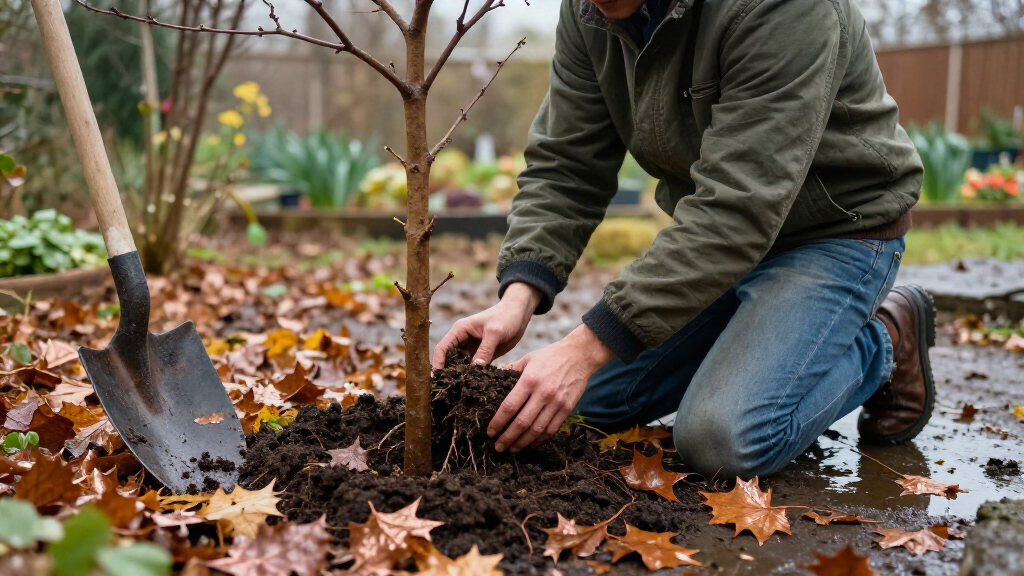
For a tree that passes those checks, the report recommends digging a hole no deeper than the root ball and wide enough for roots to expand into loosened surrounding soil. Keep the root flare visible at or slightly above the surrounding grade, backfill with native soil, water deeply to settle it, and spread a two-to-four-inch mulch ring without letting mulch touch the trunk.
After planting, check the root ball itself as well as nearby soil: container mix can dry at a different rate. Water through dry fall conditions while the ground remains unfrozen, avoiding constant saturation. Establishment can take years, particularly for larger trees, so planting does not end the care required.
As an affiliate, we earn on qualifying purchases.
Local Conditions Shape the Call
The source does not provide a universal latest planting date, a specific temperature cutoff, or location-by-location forecasts. Whether roots have enough time before freezing depends on the local first-freeze pattern, elevation, species and microclimate; those details are not specified for any particular reader’s site.
Nor does the report identify a single remedy for every drainage problem or prescribe one overwintering method for all container trees. Whether a tree can be held outdoors, heeled into mulch or soil, or should be overwintered by a nursery depends on climate and species. The source recommends seeking advice from the supplying nursery for a longer delay.
As an affiliate, we earn on qualifying purchases.
Check the Site Before Planting
Before deciding, inspect the site after rain, check the tree’s roots and condition, and compare its hardiness with local winter conditions. If those checks are favorable and the soil is workable, plant carefully and plan to water until the ground freezes. If a red flag remains, ask the nursery about holding the tree until spring and how to protect its root ball in the meantime.
For a tree being held, choose a protected outdoor spot away from drying winds and strong afternoon sun. Check the root ball often and water when it begins to dry, while allowing excess water to drain. Do not leave the container standing in water or cover it so tightly that drainage is blocked. Local conditions and the tree’s needs will determine whether that temporary plan is adequate.
As an affiliate, we earn on qualifying purchases.
Key Questions
Should every tree be planted in fall?
No. The report says fall can work when the tree is healthy, the site drains, the species suits the location and there is enough time and water for roots to settle in before freezing.
How can I tell if the planting site drains poorly?
Observe the site after rain or irrigation. If water remains in the planting hole long afterward, that signals a drainage problem to address before planting. Gravel at the bottom of the hole will not fix poor drainage across the soil profile.
What root problems should I look for in a container tree?
When the nursery allows inspection, look for a dense mass of circling roots, black or slimy roots, or roots escaping through drainage holes. The report recommends correcting circling roots before planting, using a method suited to the tree and root system.
How should I hold a tree until spring?
Keep it in a protected outdoor spot away from drying wind and strong afternoon sun. Check the root ball frequently and water when it starts to dry, while ensuring water can drain. For a longer delay, ask the nursery for species-specific overwintering advice.
Source: rss
Fall yard work Picks
leaf blowers
As an affiliate, we earn on qualifying purchases.